

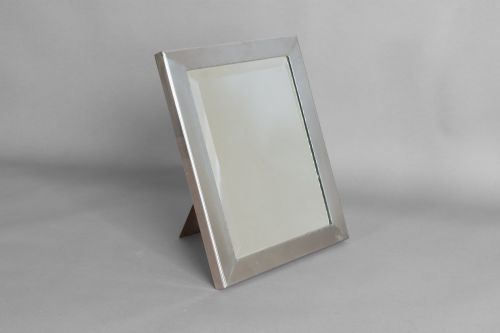
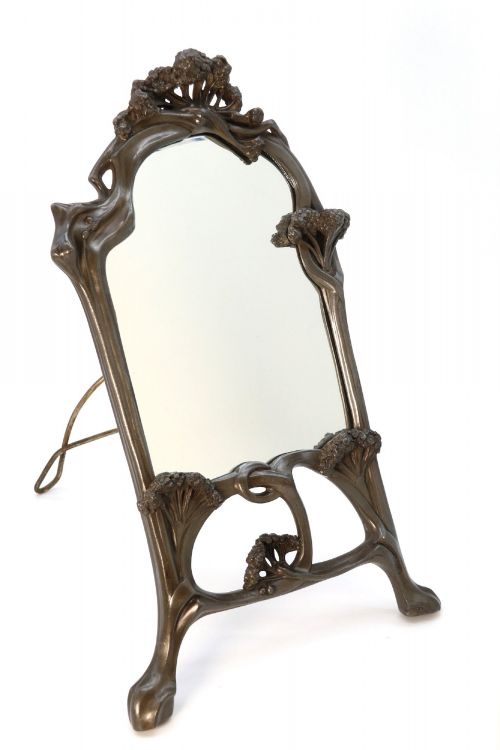


Antique Metal Easel
An antique metal easel holds mirrors, frames and plaques with the steady presence that tabletop displays require.
Antique Metal Easel
When you search for an antique metal easel, you encounter a specialised category of display stands and supportive frames designed to hold small mirrors, portraits, and clocks. These pieces serve to elevate table mirrors, vanity mirrors, and miniature paintings so they can be viewed upright on desks, dressers, and mantelpieces.
The versions most commonly met on this page combine metalwork structures with hinged backs or struts. They frequently appear integrated into picture frames, dressing mirrors, and small clocks, functioning as both structural supports and decorative objects in their own right.
How they were made
These items rely on cast and worked metals such as brass, gilt bronze, pewter, copper, and silver plate. Makers shaped the metal frames through casting and forming, often incorporating decorative details directly into the structure.
Surface decoration frequently involves champlevé enamel, gilt finishes, and paste stone settings. Many examples incorporate hinged struts at the back to allow adjustable positioning on flat surfaces.
Antique Metal Easel Retail Price Guide 2026
Typical asking prices for metal easel among the pieces listed under this phrase on Sellingantiques today, from the lower quarter to the upper quarter. They describe what is for sale here now, not the wider market.
Listings feature items spanning the Victorian era through the Edwardian period and into the mid-twentieth century.
What varies in quality
Quality in these pieces rests on the weight of the metal casting and the crispness of the chased or moulded ornament. Heavier gauges of brass, bronze, and pewter provide the stability required to support heavy glass mirrors and porcelain plaques without tipping.
The refinement of the integrated mechanical components, such as hinges, struts, and folding brackets, distinguishes finer work from standard production. Superior examples display careful finishing on the reverse sides and secure mounting of decorative enamel or paste stones.
Louis Auguste Moreau·Smiths Clockmakers
The Antique Metal Easel Glossary
- Strut easel
- A folding support attached to the back of a frame or mirror that allows it to stand upright on a table. This mechanism usually pivots on a hinge.
- Champlevé
- An enamelling technique where troughs or cells are hollowed out of the metal surface and filled with vitreous enamel before firing. It frequently appears on brass and gilt bronze desk accessories.
- Gilt bronze
- Bronze metal that has been coated with a thin layer of gold or gold-coloured wash. It provides a durable, reflective surface characteristic of decorative metalwork.
- Silver plate
- A base metal substrate covered with a thin layer of silver. This technique offered the appearance of solid silver at a lower production cost.
- Pewter
- A malleable metal alloy consisting primarily of tin. It was commonly utilised for domestic table objects and mirrors during the late nineteenth century.
Antique Metal Easel: Frequently Asked Questions
What items do antique metal easels hold?
These supports are designed to hold table mirrors, picture frames, portrait miniatures, and small desk clocks. They position these objects upright for display on desks and dressing tables.
They also accommodate porcelain plaques and small book stands, providing structural stability while framing the object.
How do you adjust a strut easel?
A strut easel typically uses a hinged metal arm at the back that swings outward to prop the frame at an angle. Adjusting the angle involves pivoting the strut until the piece rests securely on its base.
Care should be taken when moving older hinges to avoid stressing the metal joints or the surrounding frame.
Are these easels made of solid brass?
The metal composition varies across pieces, including solid brass, gilt bronze, pewter, copper, and silver-plated metals. Each material contributes a different weight and colour to the stand.
Heavier metals provide the necessary counterweight for supporting thick glass mirrors and heavy frames.
How do you date an antique metal stand?
Dating relies on stylistic indicators such as Art Nouveau curves, Art Deco geometry, or Victorian ornamentation. Manufacturing techniques and the presence of specific maker marks also help determine the period.
Materials like champlevé enamel or specific casting styles offer further clues to the decade of production.