



Antique Metal and Horn
Antique metal and horn pieces combine organic texture with durable alloy, offering distinctive historic utility for the collector.
Antique Metal and Horn
When you search for antique metal and horn, you are looking at items fashioned from organic animal material combined with various alloys, ranging from practical vessels to ornamental objects. These pieces bridge natural textures with manufactured elements, reflecting the domestic and utilitarian pursuits of past centuries.
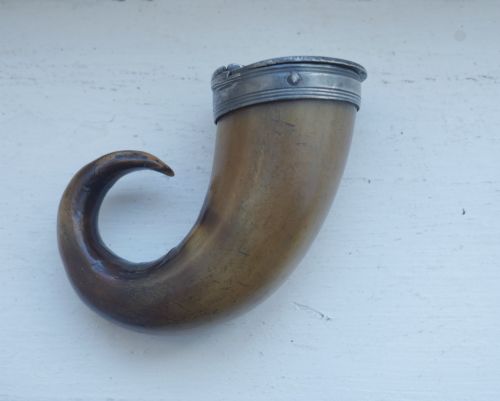
The versions you are most likely to meet on this page span several periods, notably the Victorian era and the eighteenth century. They take forms such as snuff mulls, powder flasks, dinner gongs, and cutlery sets, showing how makers integrated horn with copper, brass, white metal, and silver plate.
Originating from diverse traditions including Scottish craft, campaign equipment, and folk art, these artefacts demonstrate the versatile pairing of horn and metal. Each specimen reveals the distinct character imparted by natural horn when bound, riveted, or mounted in durable metalwork.
How they were made
Makers utilised natural horn, shaped through heat and pressure, alongside metals such as copper, brass, white metal, iron, and bronze. Carved details often adorned the horn surfaces, while metal mountings provided structural reinforcement and decorative contrast.
Techniques varied from the blacksmithing of cast iron to the delicate carving of powder flasks and snuff mulls. Artisans fitted metal collars, hinges, and stands to organic horn bases, creating sturdy objects designed for daily use or display.
Antique Metal and Horn Retail Price Guide 2026
Typical asking prices for metal and horn among the pieces listed under this phrase on Sellingantiques today, from the lower quarter to the upper quarter. They describe what is for sale here now, not the wider market.
Listings feature materials including horn, bronze, marble, copper, brass, and white metal across periods spanning the eighteenth to the twentieth century.
What varies in quality
Quality in antique metal and horn rests upon the fineness of the carving and the integrity of the metal fittings. Pieces featuring intricate hand-carved details on the horn and robust, well-fitted metal mounts stand apart from simpler utilitarian items.
The harmony between the organic material and the alloy dictates the overall standard. Superior examples display seamless integration where metal rims, hinges, or bases complement the natural grain and colour of the horn without masking its inherent qualities.
The Antique Metal and Horn Glossary
- Snuff mull
- A pocket container for holding ground tobacco, traditionally fashioned from ram's horn or other animal horn with a metal lid. These containers often feature Scottish regional designs.
- Powder flask
- A portable container used for carrying gunpowder, commonly constructed from carved horn and fitted with metal spouts and dispensers. They were essential accessories for firearms.
- Dinner gong
- A large resonance instrument intended for summoning guests to meals, frequently mounted on wooden frames using cow horn and silver-plated metal hardware. Their deep tone filled large Victorian halls.
- Campaign cutlery
- Portable eating utensils designed for travel and military use, often housed in fitted sets incorporating horn handles and durable metal blades. They represent practical craftsmanship for life on the move.
Antique Metal and Horn: Frequently Asked Questions
How were horn and metal items used?
These objects served practical daily functions, from storing gunpowder and snuff to sounding dinner calls in large households. Cutlery sets were used for dining on military campaigns or travels.
Many pieces also served decorative purposes, displaying intricate carving and polished metal mounts in Victorian interiors. Their dual nature made them both resilient and visually striking.
How do I care for antique horn?
Antique horn requires careful handling to prevent drying and cracking in excessively warm environments. Keeping pieces away from direct sunlight and sudden temperature changes helps preserve the material.
Light cleaning with a soft, dry cloth is usually sufficient for maintenance. Avoid harsh chemical cleaners that can damage both the organic horn and the adjacent metal fittings.
How do I identify Victorian pieces?
Victorian pieces often exhibit specific manufacturing techniques and styles associated with nineteenth-century production methods. Common indicators include the integration of silver plate, oak mounts, and distinct industrial or domestic forms.
Examining the fixings, such as screws or rivets, can also provide clues regarding the manufacturing date. Comparing the style to dated examples helps confirm the period of origin.