







Antique Measuring Instrument
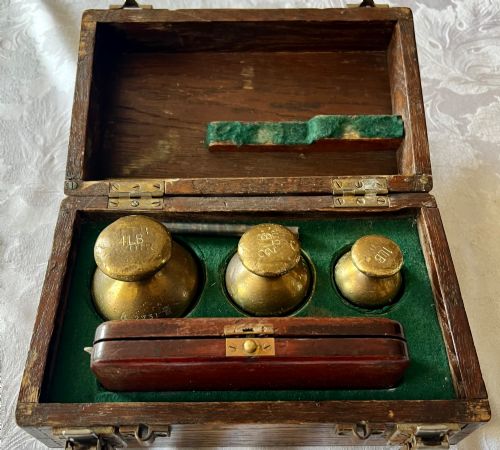
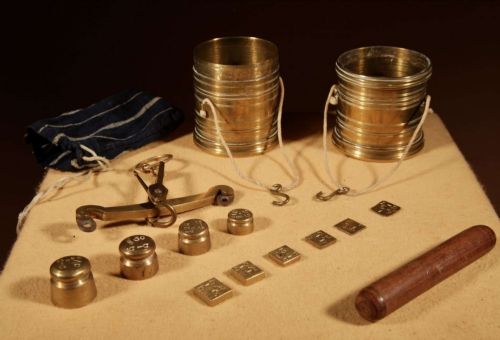
These antique measuring instruments are practical tools from past centuries in brass, wood, and glass, built for trade, science, and navigation.
Antique Measuring Instrument
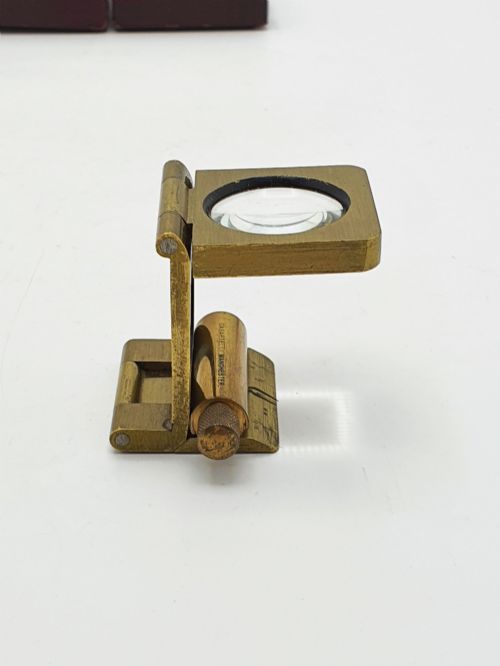
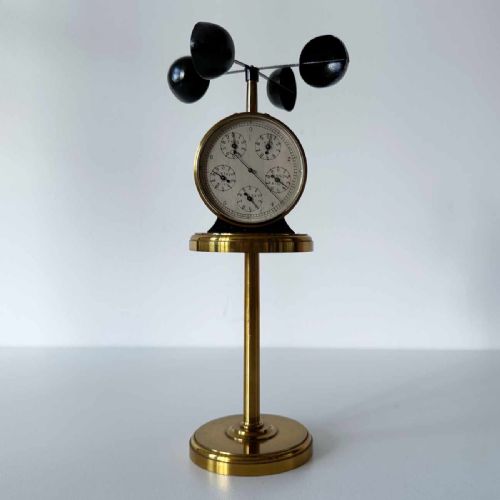
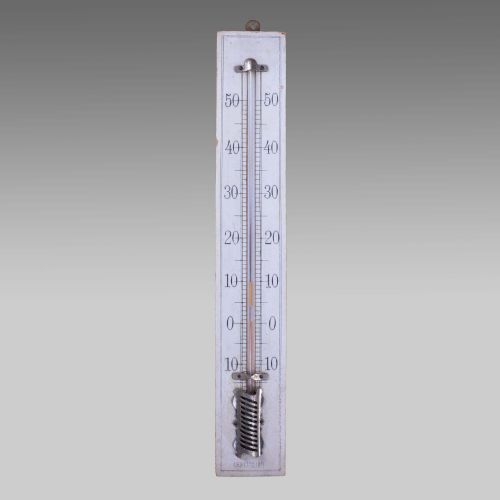
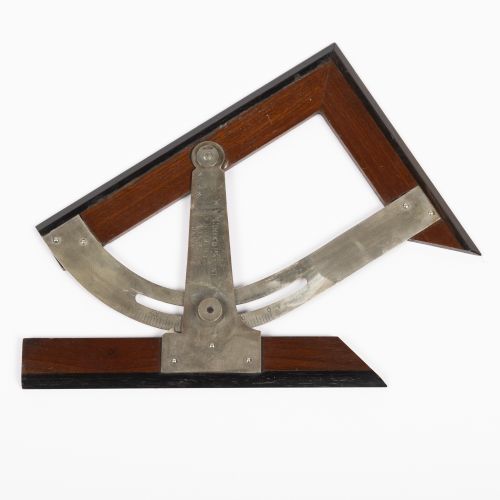
An antique measuring instrument encompasses devices designed to gauge quantities, dimensions, or environmental conditions across commercial and scientific contexts. The selection spans domestic and industrial applications, from pocket-sized linen testers and slide rules to large meteorological anemometers and standard yards.
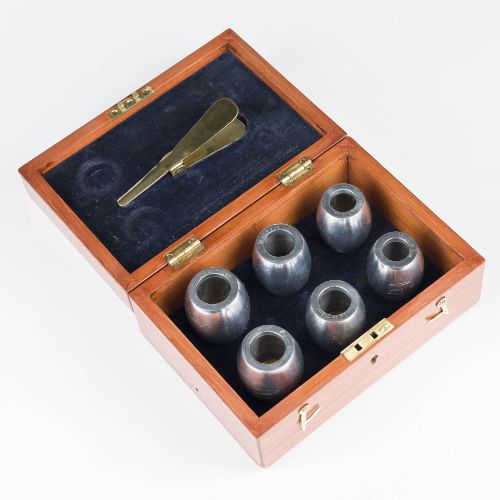
The objects present diverse forms typical of eighteenth, nineteenth, and early twentieth century production. Buyers encounter scientific instruments like radial theodolites and wind gauges alongside trade tools such as bushel balances, chondrometers, and excise officer rules.
Origins range across British, Dutch, and French workshops, utilising period materials appropriate to each specific function. These pieces reflect the precision engineering of their respective eras, utilising robust construction methods suited to daily usage in trade or laboratory settings.
How they were made
Brass and steel form the primary structural components for many scales, gauges, and scientific apparatuses. These metals provide the rigidity and durability necessary for accurate calibration and frequent handling.
Wood, particularly mahogany and boxwood, frequently appears in fitted cases and rule construction, complemented by glass lenses and velvet linings. These traditional materials offer both protection for delicate mechanisms and a tactile finish characteristic of period manufacture.
Antique Measuring Instrument Retail Price Guide 2026
Typical asking prices for measuring instrument among the pieces listed under this phrase on Sellingantiques today, from the lower quarter to the upper quarter. They describe what is for sale here now, not the wider market.
County officials once carried standard yards and floor plaques to ensure local markets kept honest measurements.
What varies in quality
Quality differentiates by the complexity of the mechanism and the precision of the engraved scales or graduations. Superior examples often retain original fitted cases, complete sets of weights or components, and legible maker inscriptions.
The choice of materials and the standard of finishing also distinguish standard trade tools from specialised scientific instruments. Finer pieces demonstrate superior assembly, refined metalwork, and robust housing designed for exacting measurements.
De Grave Short & Co·W & S Jones·Negretti & Zambra·J Hicks·W H Harling
The Antique Measuring Instrument Glossary
- Anemometer
- An instrument used to measure wind speed and pressure. These devices often feature rotating cups or vanes connected to dial indicators.
- Theodolite
- A precision optical instrument used for measuring angles in horizontal and vertical planes. They are commonly mounted on tripods for surveying and engineering tasks.
- Hydrometer
- A device utilised for measuring the relative density of liquids based on buoyancy. Sikes versions are specifically calibrated for determining spirit strengths.
- Chondrometer
- A portable device used for measuring the weight per bushel of grain. This apparatus helps determine the quality and density of agricultural crops.
- Slide rule
- A mechanical analog computer utilising logarithmic scales for mathematical calculations. Excise officers and merchants employed boxwood variants for taxation and trade computations.
Antique Measuring Instrument: Frequently Asked Questions
What are antique measuring instruments?
Antique measuring instruments are historical devices created to calculate physical properties, dimensions, or quantities for science, navigation, and trade.
These objects range from pocket devices to large industrial gauges produced in periods spanning the eighteenth to the twentieth centuries.
How were these instruments used?
They served practical functions such as assessing commercial goods, calculating taxes, surveying land, and recording meteorological data.
Professionals relied on them for precise calibration and standard measurements in governmental, industrial, and maritime environments.
How do I date an instrument?
Dating relies on maker signatures, patent dates, style characteristics, and materials typical of specific periods like the Victorian era or the eighteenth century.
Inscriptions and governmental stamps often provide specific production years or regional contexts.
Are these instruments still accurate?
Many retain their mechanical functionality, but their primary appeal lies in their historical engineering and craftsmanship rather than daily utility.
Collectors appreciate them as display pieces that reflect past scientific and industrial standards.