

Antique Match Stand
An antique match stand provides a desk or table with a safe container and striking surface for small lighting hazards.
Antique Match Stand
When searching for an antique match stand, a buyer encounters a focused variety of desk accessories and domestic containers designed to hold safety matches or tapers. These items emerge from the nineteenth and early twentieth centuries, appearing in forms ranging from silver desk pieces to carved novelty holders.
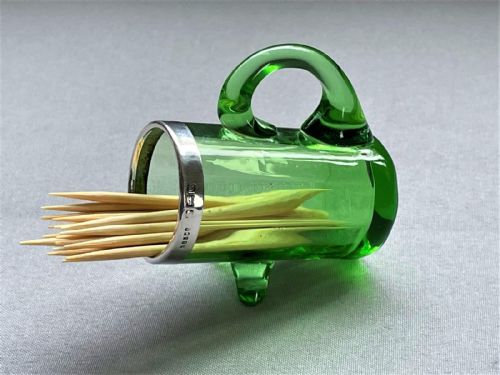
The selection on this page demonstrates that match holders often crossed paths with other materials, appearing in silver and mounted glass alongside turned wood and bronze. While many domestic items from the period survive only as fragments, these small desk containers remain intact due to their durable metal and ceramic construction.
What varies in quality
Quality rests upon the crispness of the casting and the depth of hand-carving on wooden and figural examples. Finer pieces display sharp details on mounts and balanced proportions between the container and the striking surface.
Material selection dictates the upper tier of the range, where heavy gauge sterling silver, thick threaded glass, or signed artistic carvings distinguish bespoke workshop production from standard domestic wares.
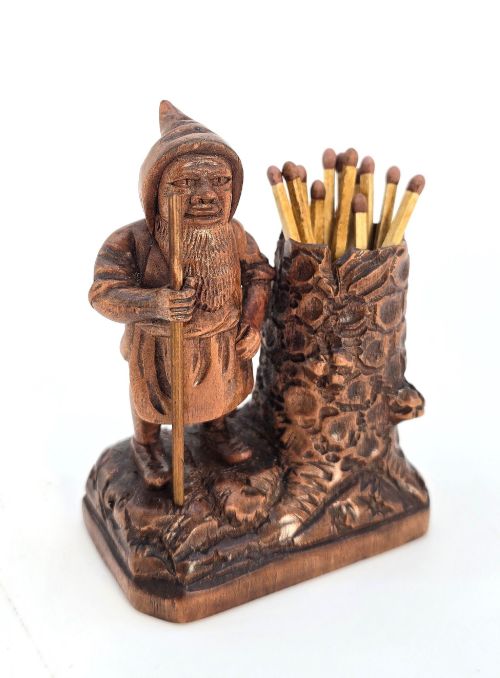
A carved limewood match holder shaped like a gnome stands ready with a box.
Kato Sanhei
The Antique Match Stand Glossary
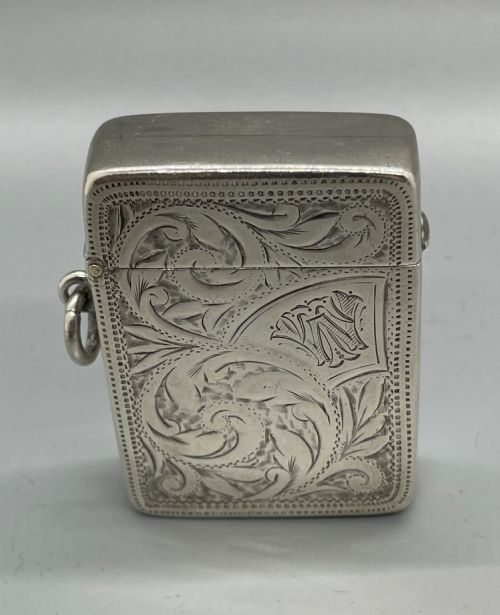
- Vesta case
- A small pocket container for matches, fitted with a hinged lid and a striated striking surface on the base. These portable boxes were widely carried in the nineteenth century.
- Match striker
- A heavy container or desk accessory featuring a textured glass or metal surface designed to ignite strike-anywhere matches. They often incorporate silver mounts or ceramic bodies.
- Gilt bronze
- An alloy treated with a gold amalgam layer to create a durable, gleaming metallic finish. This technique was common in nineteenth-century decorative desk accessories.
- White metal
- An alloy of low-melting-point metals used as a base for plating or as a distinct material in twentieth-century modernist designs. It provides a bright, silvery appearance without the cost of solid silver.
- Taper holder
- A small desk implement designed to hold a wax-coated string or spill for transferring a flame safely. They frequently accompany match stands on writing tables.
Antique Match Stand: Frequently Asked Questions
What is an antique match stand?
An antique match stand is a small domestic accessory designed to keep matches contained and ready for use on a desk, mantelpiece, or smoking table.
These pieces typically date from the nineteenth and early twentieth centuries, constructed from materials like silver, glass, bronze, and carved wood.
How did people use them?
Households placed these stands in rooms where lamps, candles, or fires required frequent lighting before the widespread adoption of electric switches.
The integrated striking surfaces allowed users to ignite matches quickly without searching for a separate abrasive surface.
How do I clean a silver match holder?
Silver match holders require gentle cleaning with a specialised microfibre cloth and mild silver polish to preserve the original hallmarks and fine chasing.
Avoid harsh chemical dips, which can strip the natural darkening in recessed decorative details.
Can I use modern matches in them?
Most antique match holders accommodate standard safety matches, though the original striking surfaces may be worn smooth from decades of past friction.
Collectors often place a modern strike-strip discreetly nearby if the original textured glass or metal no longer functions effectively.
How do I date a match striker?
Dating relies on hallmarks stamped into silver mounts, maker signatures, and stylistic indicators such as Art Deco geometric lines or Victorian ornamentation.
The weight of the glass and the composition of the base metal also offer reliable clues to the manufacturing decade.