



Antique Marquise Ring
An antique marquise ring delivers an elongated boat-shaped silhouette on the hand, prized for its finger-flattering profile and intricate cluster work.
Antique Marquise Ring
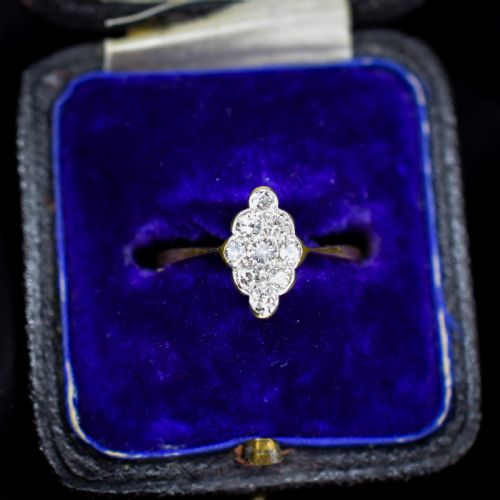
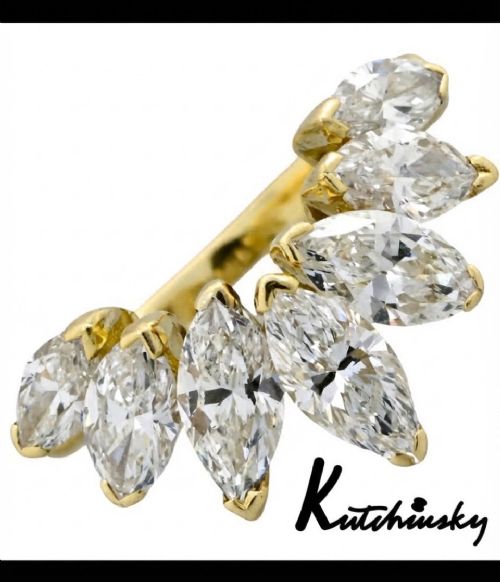
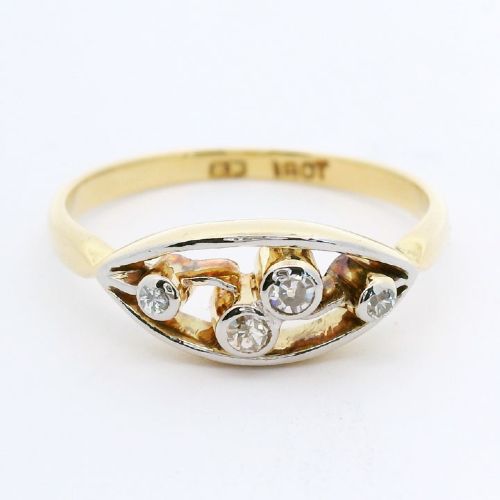
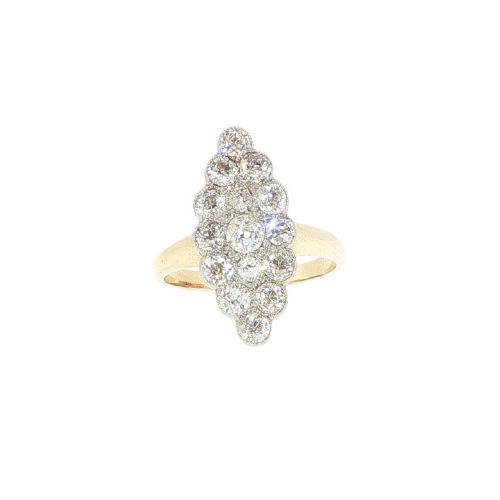
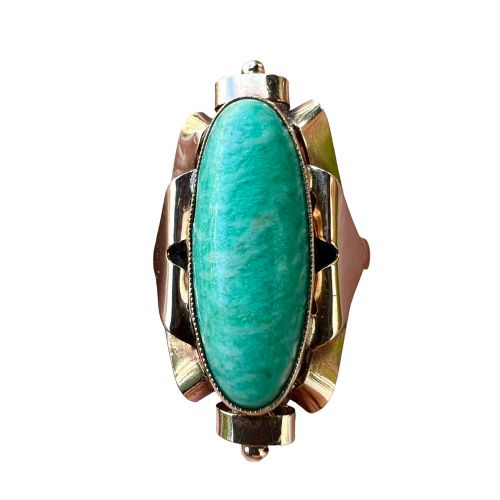
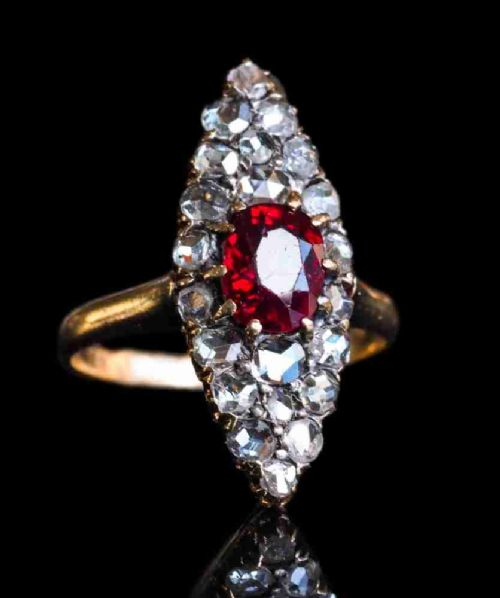
An antique marquise ring, also frequently termed a navette ring, presents a distinctive pointed-boat outline that stretches along the finger. The form appears primarily across Victorian, Edwardian, and Art Deco periods, translating into dramatic cocktail and dress rings.
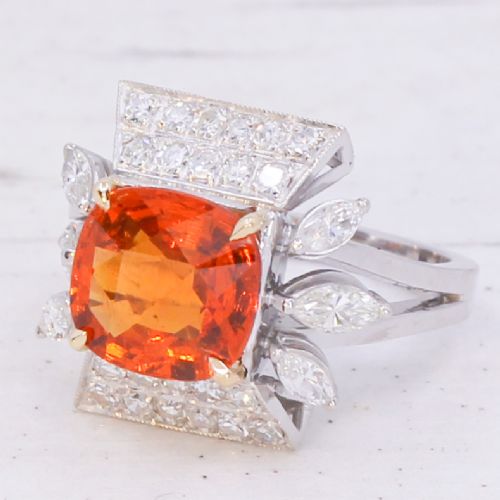
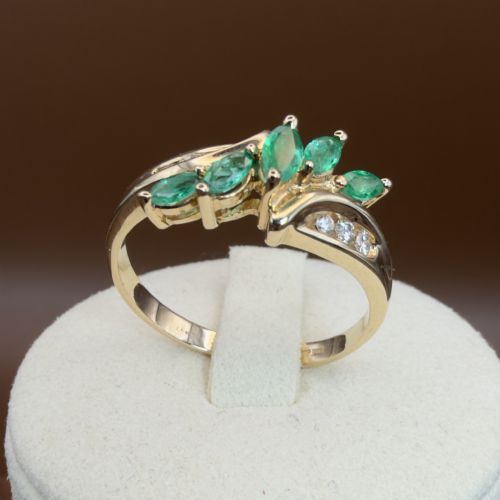
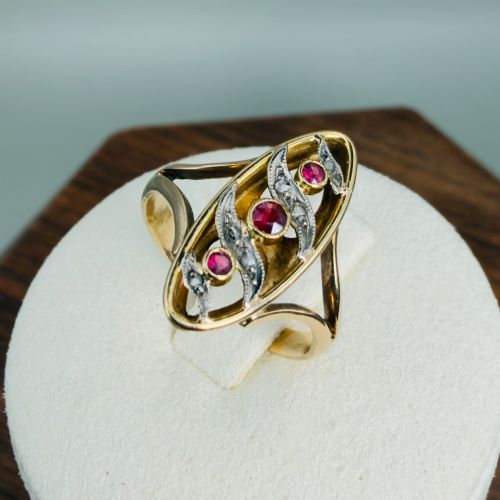
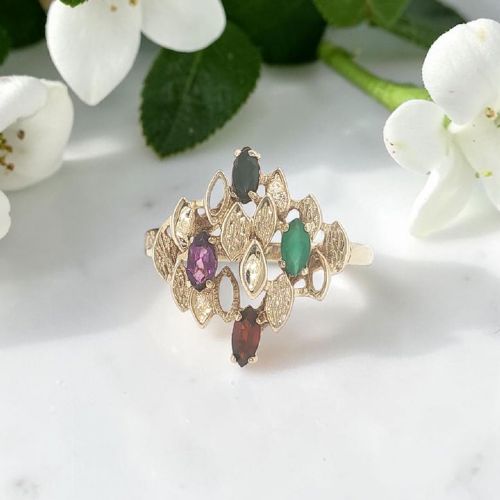
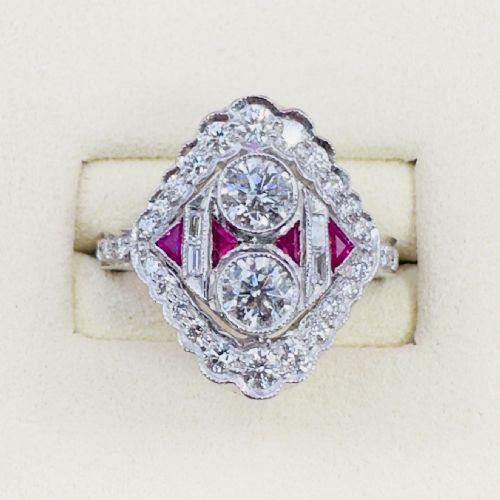
The most common versions encountered on this page pair old cut diamonds with sapphires, rubies, or emeralds set within tiered cluster arrangements. These pieces rely on geometric symmetry, often framed by delicate millegrain detailing along the edge of the metalwork.
Makers designed these rings to maximise the visual impact of smaller stones by clustering them tightly together on an elongated face. Buyers selecting this style typically look for original period character combined with a balanced, symmetrical outline.
How they were made
Goldsmiths constructed the foundational mounts of these pieces using combinations of 18ct yellow gold, 18ct white gold, and platinum. Platinum gained particular favour during the Edwardian and Art Deco eras for its strength, allowing jewellers to fashion exceptionally fine wirework and secure claw settings without bulk.
Stones were cut by hand, predominantly utilising old mine cuts, old European cuts, and rose cuts for diamonds alongside calibre-cut coloured gems. These hand-cut gems feature softer facet angles and distinct culets compared to modern stones, giving them a quieter, warmer internal light.
Materials recur across yellow gold, white gold, and platinum, frequently set with old cut diamonds alongside rubies, sapphires, and emeralds.
What varies in quality
Quality in these rings rests upon the integrity of the cluster setting and the precision of the stone matching. Superior examples maintain crisp, unrubbed geometric lines and securely mounted gems where the original proportions remain entirely unaltered by later resizing or clumsy repair work.
The choice and execution of the supporting metalwork dictate the overall refinement of the piece. Master jewellers achieved exceptional standard through precise pierced gallery work beneath the cluster, ensuring the ring sat comfortably while maintaining structural rigidity across its elongated span.
The Antique Marquise Ring Glossary
- Navette
- A French term meaning little ship, describing the pointed, boat-shaped silhouette shared with the marquise form. This geometry distinguishes the face of the ring.
- Old Cut
- A diamond cut executed by hand before modern machinery standardised proportions, resulting in higher crowns and smaller tables. These stones exhibit characteristic open culets.
- Millegrain
- A decorative technique featuring a row of tiny, raised metal beads bordering the edge of a setting. It frames the stones with a soft texture.
- Calibre-Cut
- Coloured gemstones shaped precisely to fit geometric channels or specific cluster patterns within Art Deco and Edwardian designs. The stones sit flush against one another.
- Gallery
- The openwork basket beneath the gemstone setting that supports the face of the ring above the finger. Intricate galleries indicate higher craftsmanship.
Antique Marquise Ring: Frequently Asked Questions
How do I wear an antique marquise ring safely?
Because of the elongated and pointed silhouette, these rings require a degree of care during daily wear to protect the end tips from knocks. Removing the ring during heavy manual tasks prevents undue stress on the shoulders and claw settings.
Pairing the ring with plain wedding bands or wearing it as a standalone cocktail piece reduces friction against neighbouring jewellery. Regular inspection by a professional jeweller ensures the tiny claws holding the navette cluster remain secure.
Are these rings suitable for daily engagement wear?
Many buyers choose these pieces as distinctive engagement rings because their historic character stands apart from modern mass-produced designs. The durability depends heavily on the specific materials used, with platinum and 18ct gold settings offering strong daily resilience.
Softer gems like pearls or emeralds require more caution than diamonds or sapphires when worn every day. Assessing the thickness of the original band helps determine if the ring requires strengthening before continuous daily use.
How can I tell a Victorian marquise ring from an Art Deco one?
Victorian examples frequently utilise yellow gold mountings paired with rich rubies, pearls, or deep-toned sapphires surrounding old-cut diamonds. The overall aesthetic leans towards ornate floral clusters and warm, romantic tones.
Art Deco pieces transition into platinum and white gold, favouring stark geometric symmetry, calibre-cut stones, and crisp millegrain borders. The design focus shifts from soft organic curves to sharp architectural lines.
What is the difference between a marquise and a navette ring?
In historical and modern jewellery terminology, marquise and navette describe the exact same pointed, boat-shaped silhouette. Makers used both terms interchangeably across the Victorian, Edwardian, and Art Deco periods.
Individual dealers might prefer one word over the other based on regional tradition or the specific stylistic nuances of the piece. Both names indicate an elongated cluster design that stretches gracefully across the knuckle.