



Antique Marble Vases
These antique marble vases, ranging from Grand Tour bronzes to Chinese export stands, bring classical gravity and solid stone presence into a room.
Antique Marble Vases
When you search for antique marble vases, you encounter a distinct class of decorative vessels and supportive display furniture produced primarily during the nineteenth century. These objects bridge the gap between classical sculpture and interior decoration, drawing heavily on ancient Greek, Roman and Qing Dynasty design traditions.
Originating from periods such as the Victorian era, the French Empire and the broader Grand Tour movement, these items served as focal points in period drawing rooms and libraries. Today, buyers select them to anchor a mantelpiece, adorn a side table or elevate a botanical display within a traditional interior.
How they were made
The physical construction of these objects relies on the careful marriage of turned stone and cast metal. Artisans shaped blocks of Sienna, white, green or Breccia Medicea marble on lathes or by hand, polishing the stone to reveal natural veining and quartz inclusions.
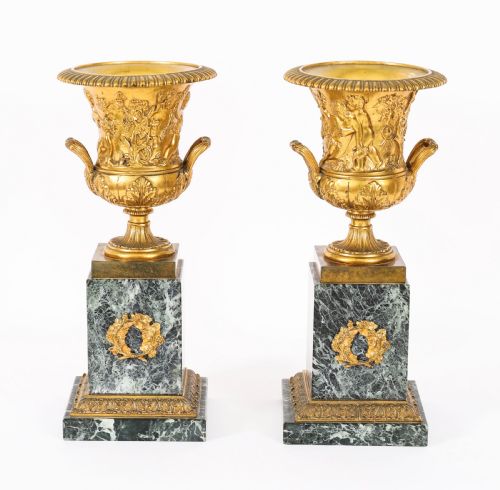
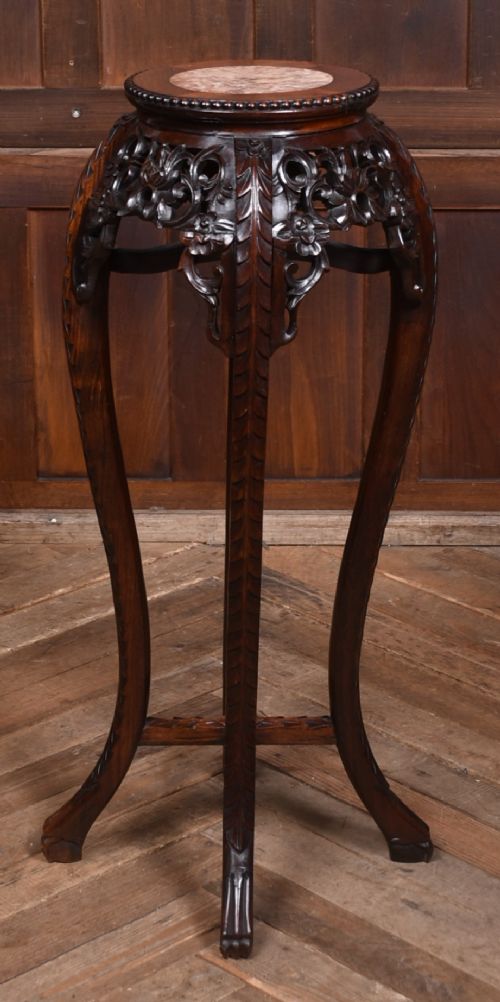
Metal components such as handles, feet and collars utilise bronze, ormolu, gilt bronze and brass, often cast via the lost-wax method and subsequently chased or patinated. In Asian pieces, craftsmen joined dense tropical hardwoods like hongmu using traditional joinery without metal fasteners, housing marble inserts snugly within the timber frames.
Canines occasionally make an appearance, such as the German Shepherd sculpted by Michel Decoux guarding an Art Deco clock garniture.
What varies in quality
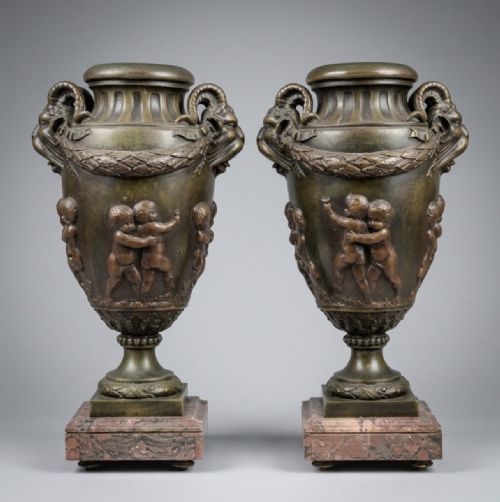
The secondary mountings reveal the hand of the maker through the depth of the chasing on the bronze or ormolu and the precision with which the metal meets the stone. Heavier castings, intricate figural details such as cherubs or Bacchus masks, and integrated stonework separate workshop masterpieces from standard decorative wares.
Selim Bright·Michel Decoux
The Antique Marble Vases Glossary
- Cassolette
- A dual-purpose decorative vessel featuring a reversible lid that transforms a covered vase into an incense burner or candle holder. These often appear in French Empire and Louis XVI styles.
- Grand Tour
- A cultural journey undertaken by wealthy young Europeans in the eighteenth and nineteenth centuries to study classical art. Souvenirs brought back included miniature bronze and marble reductions of famous antiquities.
- Ormolu
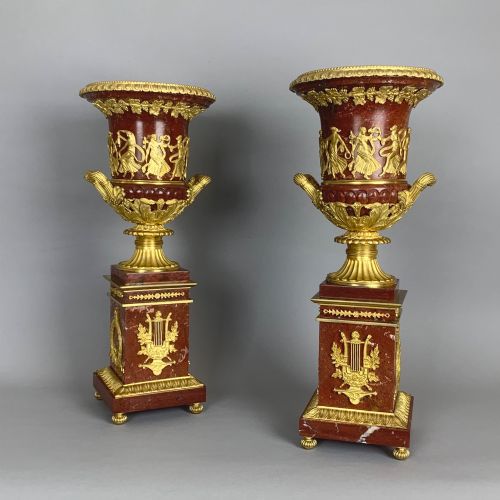
- Finely ground high-carat gold mercury-gilded onto a bronze base, creating a rich golden surface found on mounts and handles of nineteenth-century pieces.
- Tazza
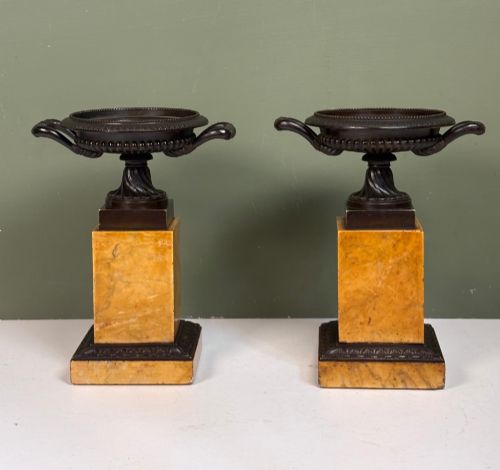
- A shallow saucer-like vase or bowl raised on a stem and foot, designed for display on a table or plinth. They frequently combine marble bases with patinated bronze bodies.
- Pietra dura
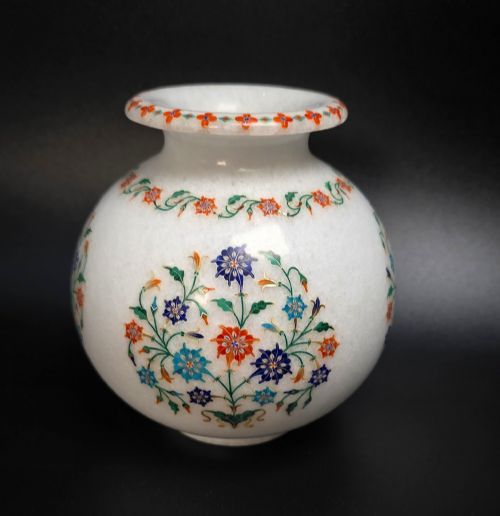
- An artistic technique of inlaying cut and fitted polished coloured stones into a contrasting background base, seen on specialised marble pieces from the Raj period.
Antique Marble Vases: Frequently Asked Questions
What is a Grand Tour marble vase?
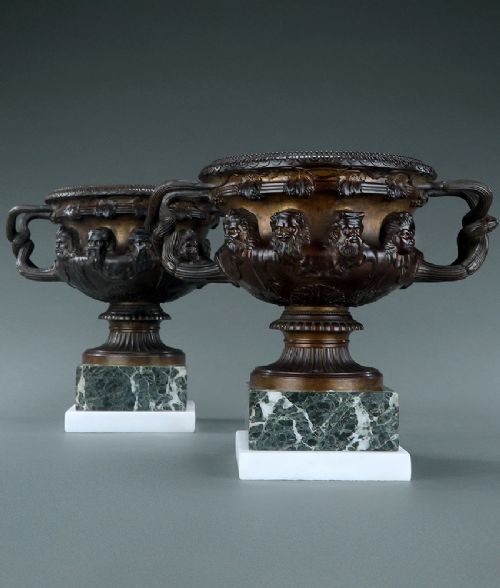
These pieces are nineteenth-century European souvenirs modeled after famous classical antiquities discovered during archaeological excavations in Italy. Travellers purchased them to display their classical education and refined taste at home.
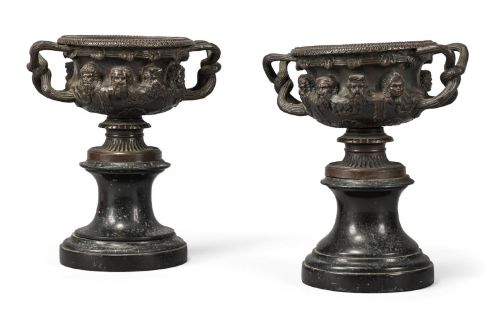
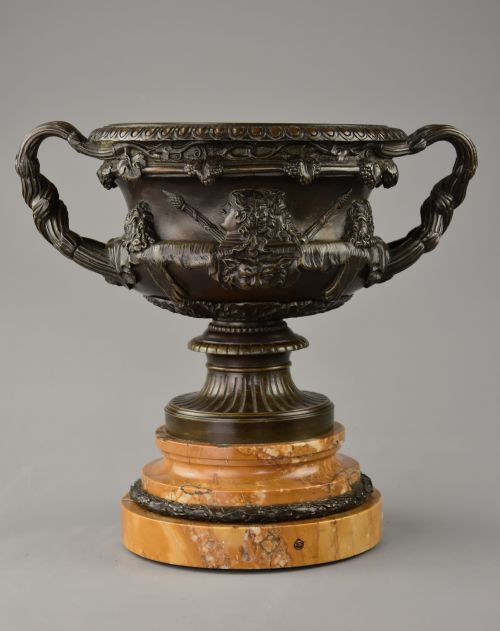
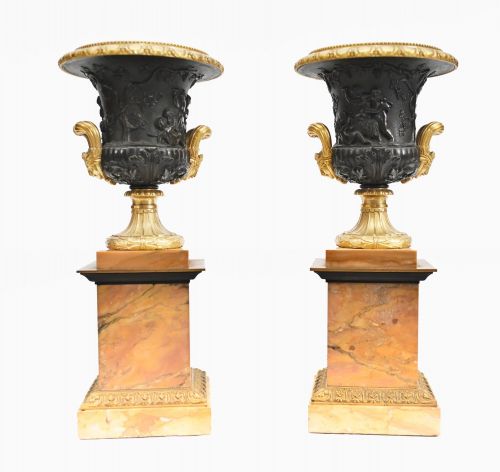
They typically combine patinated bronze reductions of ancient vessels with turned marble plinths or columns. Common classical subjects include the Warwick vase, the Medici vase and the Albani vase.
How do I distinguish French Empire from Louis XVI styles?
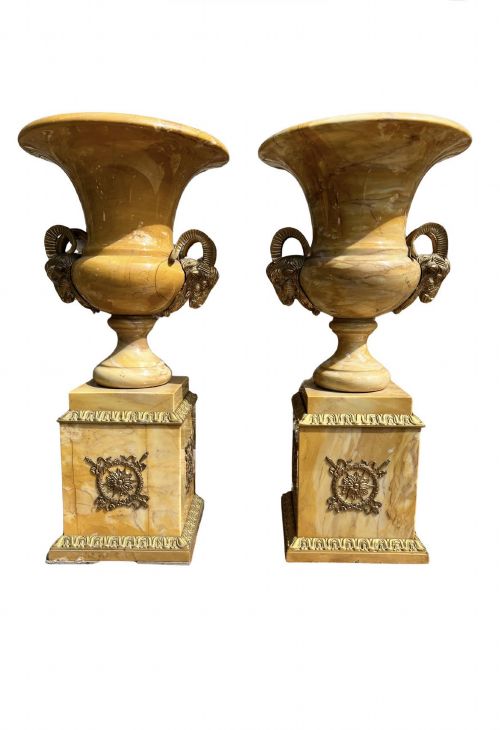
French Empire pieces, dating from the early nineteenth century, favor bold military motifs, heavy gilt bronze mounts and deep-colored marbles like Sienna. They project a monumental and imposing classical presence.
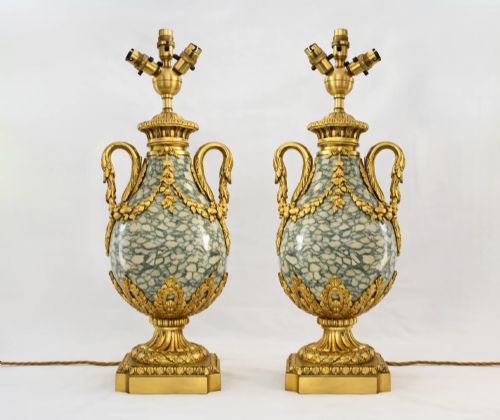
Louis XVI style items display lighter, more restrained neoclassical ornamentation, incorporating delicate swags, ribbons and fluted columns. They prioritize symmetry and refined elegance over sheer bulk.
What is a cassolette used for?
A cassolette functions as a decorative urn with a reversible lid that conceals an internal well. Turning the lid over reveals either a solid top for display or a pierced burner insert.
In period interiors, these served as both ornamental mantel garnitures and functional vessels for diffusing scented oils or burning incense during gatherings.
Where should I place a marble vase stand?
These low or tall tables, often featuring inset rouge or variegated marble tops within carved hardwood frames, suit corners or beside seating. They provide a stable, moisture-resistant surface for heavy ceramic planters or bronze sculptures.
Ensure the stand sits on an even floor surface, as dense stone tops create top-heavy weight distribution that requires steady support.