



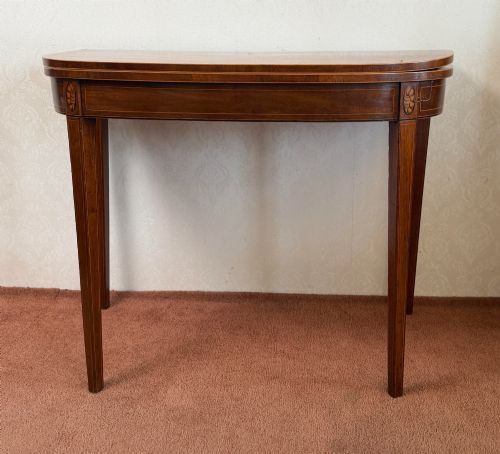
Antique Mahogany Demilune
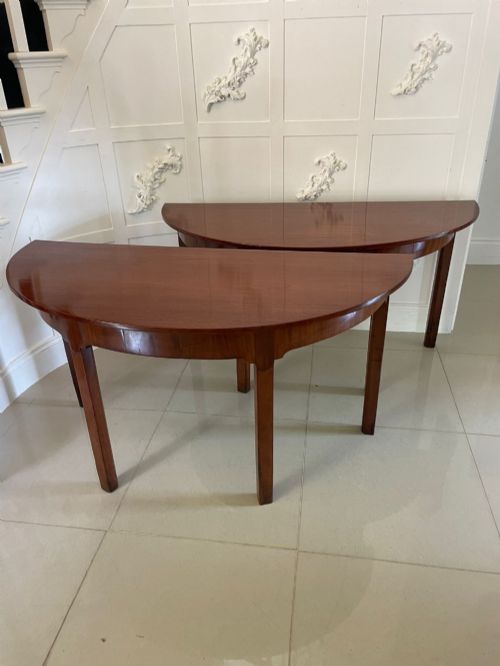
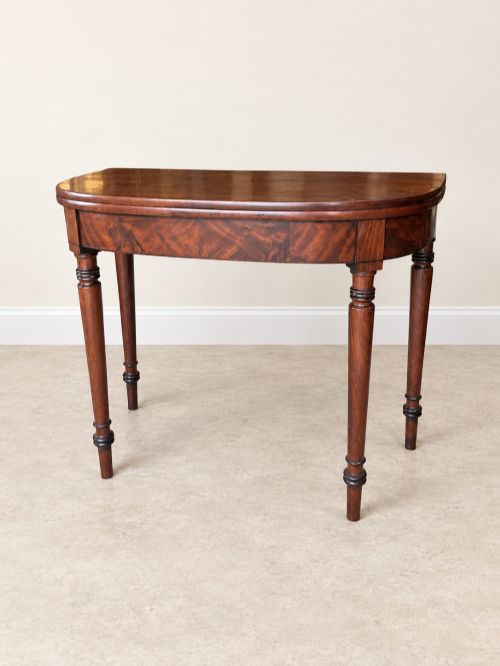
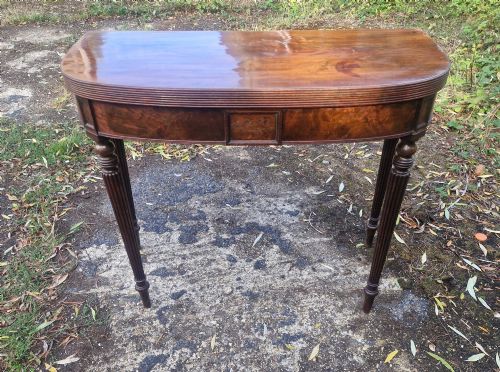
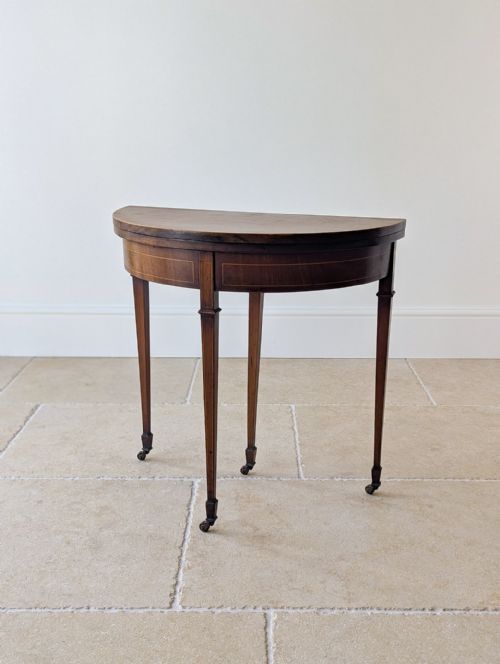
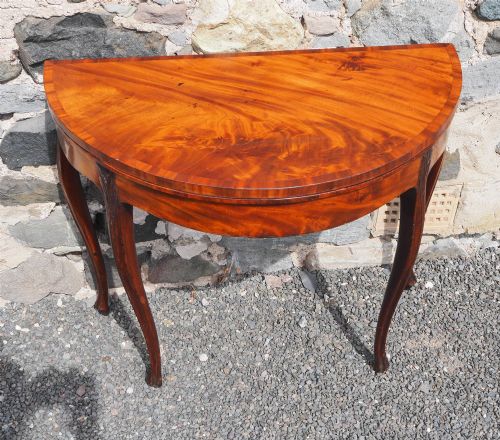
Antique mahogany demilune tables are half-round console and card pieces that bring elegant curved form and rich timber grain to narrow spaces.
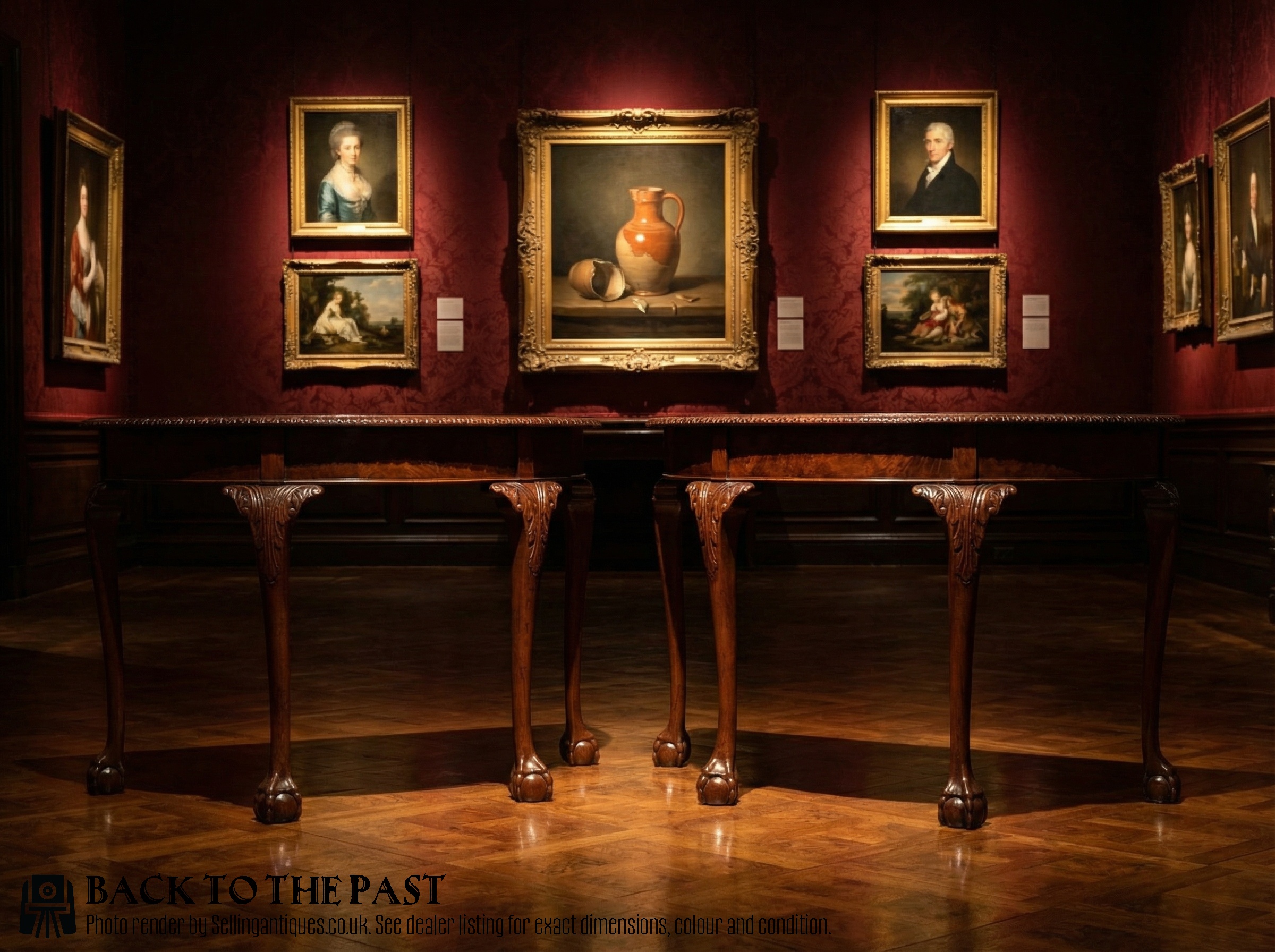
Antique Mahogany Demilune
When you search for antique mahogany demilune tables, you encounter half-round forms designed to sit flush against a wall in hallways and principal rooms. The pieces appearing most frequently originate from the Georgian and Regency periods, alongside later Victorian and Edwardian interpretations.
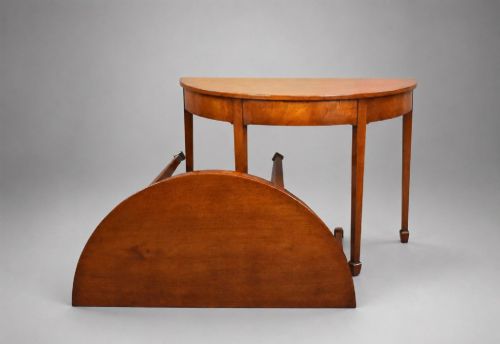
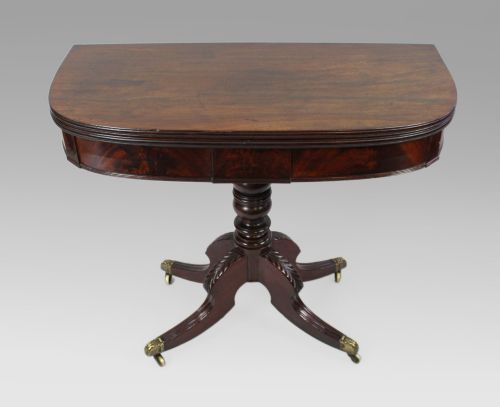
The primary forms include console tables, folding card tables, and tea tables, often featuring clever hinged tops that open to double their surface area. Makers of the 18th and 19th centuries utilised this semi-circular geometry to soften rigid room angles while offering practical occasional surfaces.
Materials and construction
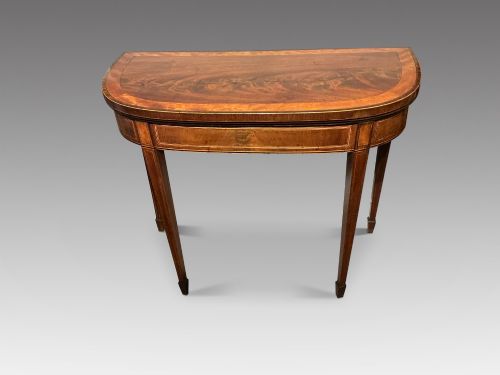
Cabinet makers relied upon solid mahogany and rich flame mahogany veneer applied to supportive secondary timbers, frequently enhanced by contrasting boxwood inlay and satinwood banding. Structural stability was achieved through precise joinery and hinged wooden or brass mechanisms designed to support fold-over tops.
Surfaces were brought to a warm lustre through traditional polishing techniques that highlighted the natural grain patterns of the wood. Details such as boxwood stringing and brass fittings were integrated carefully into the curved friezes and tapered legs.
Several tables retain clever hidden compartments inside their folding frames once used to store gaming counters and playing cards.
Separating top quality from ordinary pieces
Quality rests heavily upon the choice of timber, visible in the depth of figured mahogany and the precision of contrasting boxwood inlay. Superior examples display balanced proportions, crisp edge details, and robust hinge mechanisms that operate smoothly.
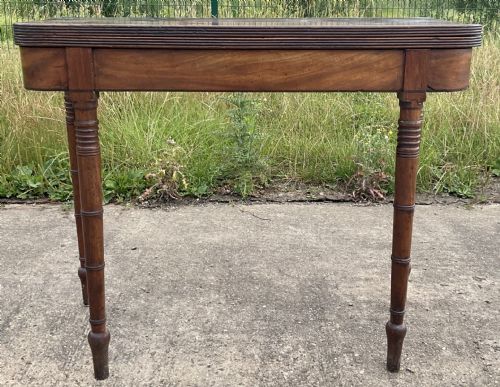
The handling of the curved apron and the integration of tapered or reeded legs distinguish master craftsmanship from utilitarian production. Pieces retaining their original polished surfaces and matching pairs command greater appreciation among collectors.
Bruce & Burns of Edinburgh·Gillows
The Antique Mahogany Demilune Glossary
- Demilune
- Half-moon shape, describing furniture designed with a flat back edge to stand against a wall. This profile became popular during the late 18th century for space-saving console and card tables.
- Card table
- A folding table designed for evening games, featuring a baize-lined interior and a hinged top. Many examples use a rotating swivel action or swing leg to support the opened leaf.
- Console table
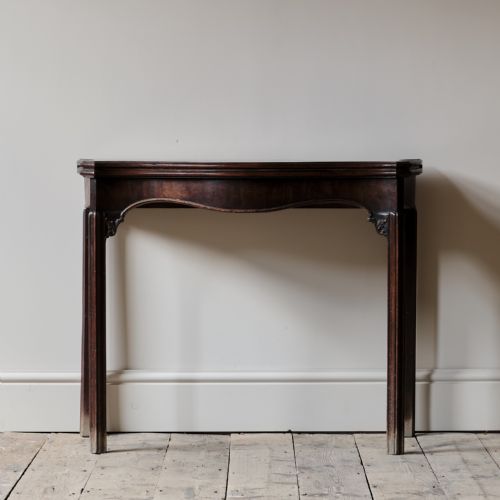
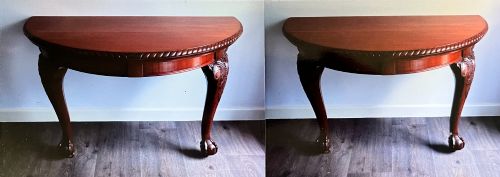
- A decorative table fixed or placed flat against a wall, frequently supported by ornamental legs. They often served as serving surfaces or display pedestals in formal halls.
- Figured mahogany
- Timber exhibiting natural patterns such as flame, feather, or fiddleback effects in the grain. Cabinet makers selected these logs for the most prominent table tops and drawer fronts.
- Boxwood inlay
- Narrow strips or geometric motifs of pale boxwood inserted into dark mahogany surfaces. This technique creates sharp visual contrast along borders and table edges.
Antique Mahogany Demilune: Frequently Asked Questions
How were demilune tables used originally?
These half-round tables served as decorative console pieces in entrance halls or were pulled into the centre of rooms as card and tea tables when entertaining guests.
Their versatile design allowed households to expand surface areas quickly by unfolding the hinged top leaf.
Can I use a demilune table as a desk?
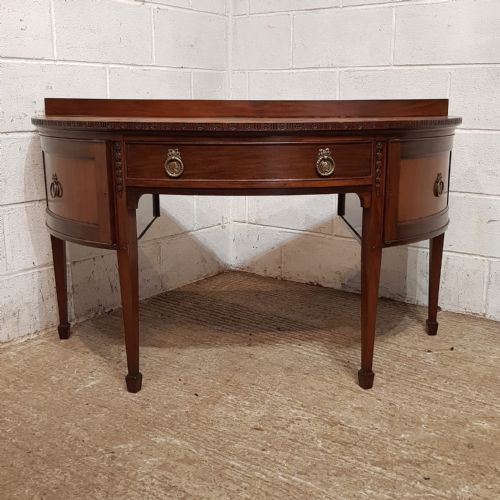
Certain demilune pieces, particularly card tables and side desks, offer suitable surface depth for occasional writing.
However, the curved back edge means they must remain against a wall rather than floating in open space.
What is the difference between console and card tables?
Console tables feature fixed tops designed purely for display or wall placement, whereas card tables incorporate folding leaves and lined interiors.
Card tables generally conceal a pivoting leg or swinging frame to support the opened surface during games.