
Antique Mahogany Cooler
An antique mahogany cooler holds bottles at the dining table or sideboard, bringing rich timber and brass work to historic rooms.
Antique Mahogany Cooler
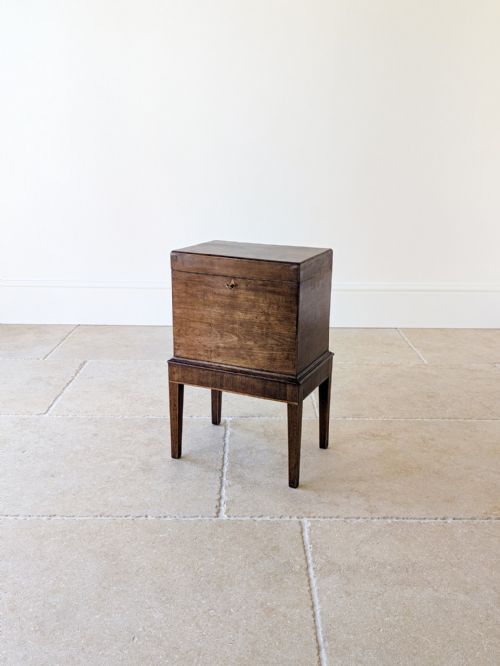
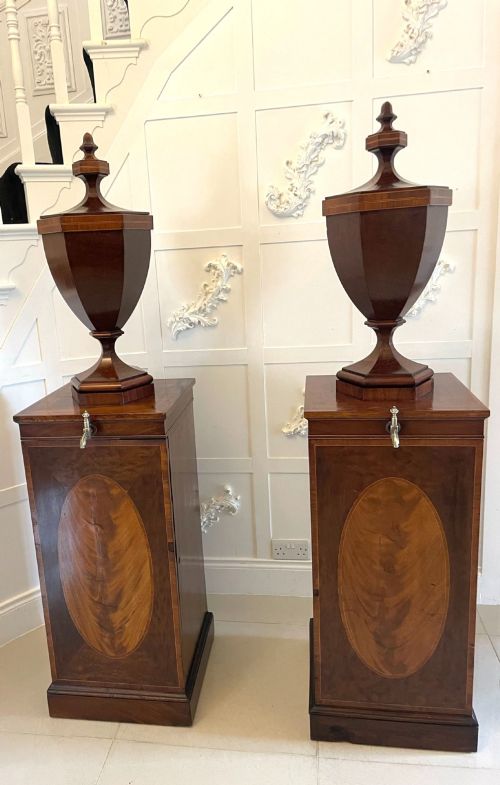
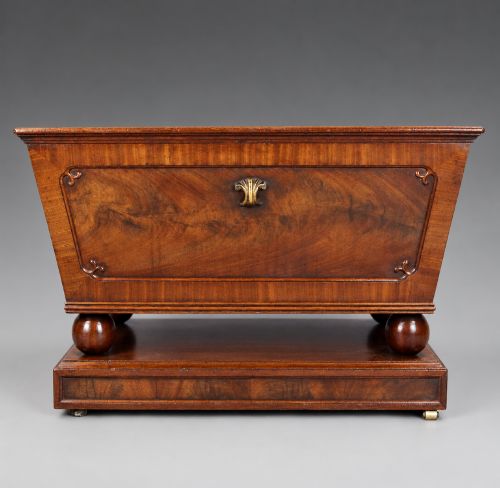
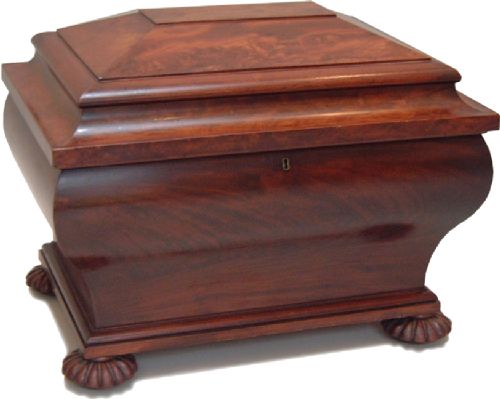
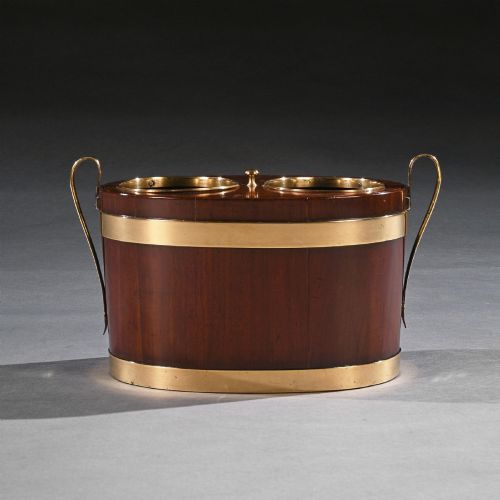
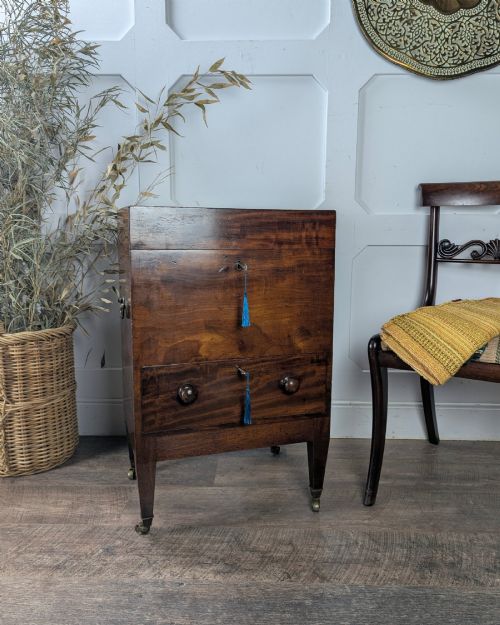
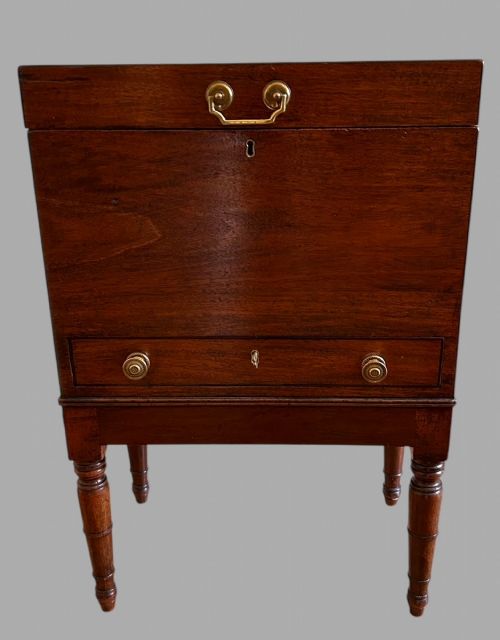
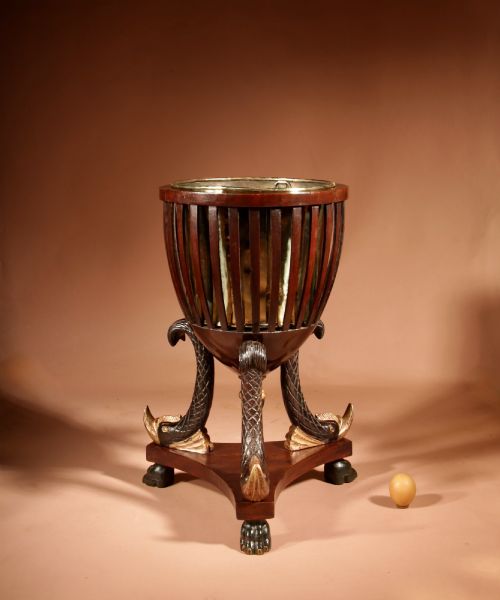
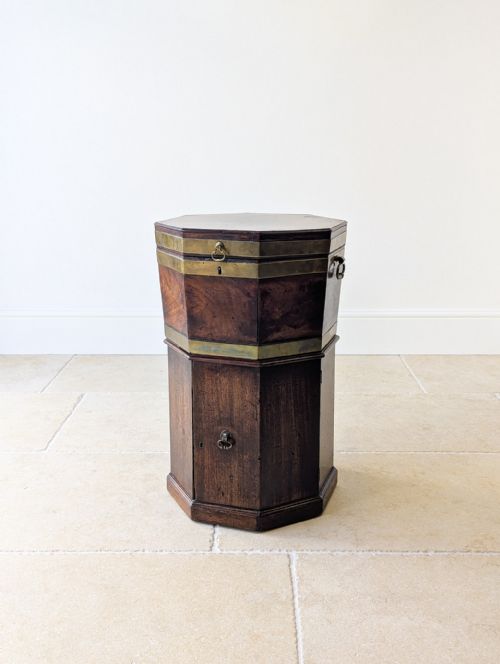
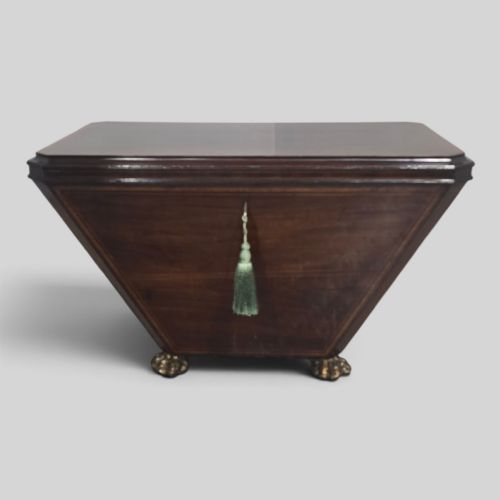
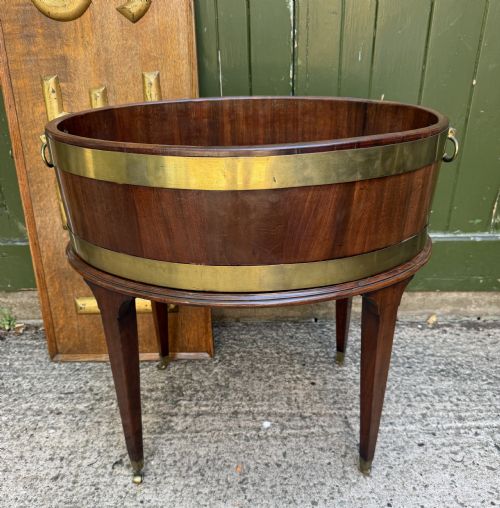
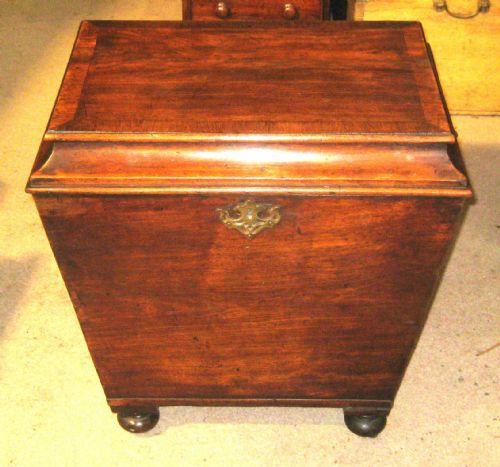
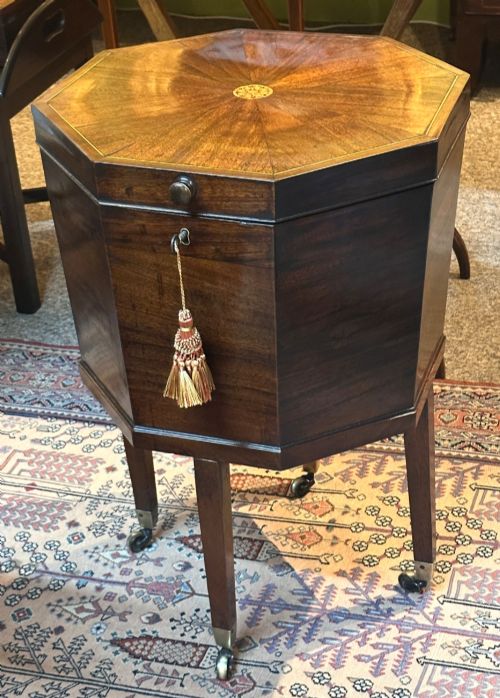
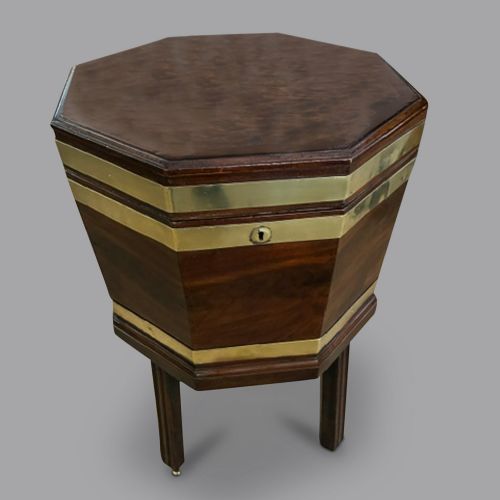
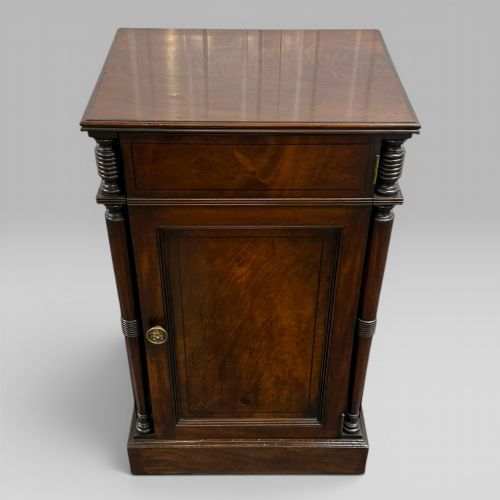
The antique mahogany cooler category encompasses cellarettes, wine coolers, jardinières, and plate buckets designed to chill bottles or hold plants in dining rooms and parlours. Buyers mostly encounter Georgian and Regency examples taking octagonal, oval, sarcophagus, or boat shapes.
Makers shaped these timber vessels to stand on their own bracket feet, floor pedestals, or separate stands depending on the period and function. Many examples date from the late eighteenth century through the early nineteenth century, constructed to hold ice or water.
Interior liners made of lead, zinc, or metal survive in many pieces to catch melting ice or hold potted plants. The form evolved from octagonal brass-bound buckets to architectural sarcophagus bodies resting on paw feet.
Materials and construction methods
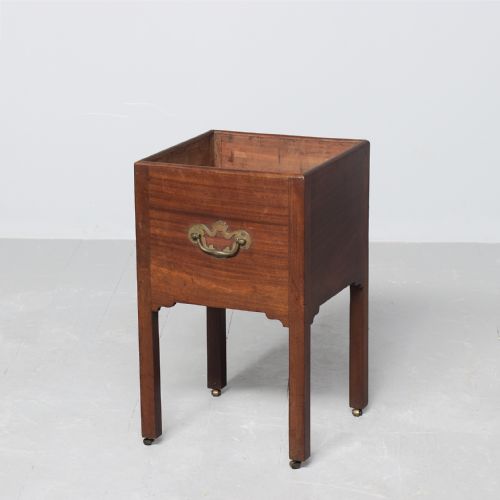
Cabinet makers utilised solid mahogany and flame mahogany veneers over secondary timbers, often accentuating the grain with boxwood inlay or ebonised details. Coopered construction with wooden staves allowed vessels like peat buckets and wine cisterns to hold water securely.
Brass bands, drop handles, lion paw feet, and ormolu mounts provide structural reinforcement and decorative contrast against the dark timber. Liners fashioned from lead or zinc protect the internal wood from moisture during use.
Listings for antique mahogany cooler examples span the Georgian, Regency, and Victorian periods, incorporating brass, boxwood inlay, and zinc.
Evaluating craftsmanship and survival
Quality rests on the choice of timber figure, such as richly grained flame mahogany, paired with crisp brass binding and well-executed dovetail or coopered joints. Original interior liners and matching stands elevate an example far above pieces that have lost their internal metalwork or substructures.
Refined proportions, such as slender tapering legs or finely carved classical details, separate standard utility pieces from high-status furniture commissions. The crispness of inlaid boxwood lines and the integrity of the original brass handles signal superior workshop production.
Edwards and Roberts·Gillows
The Antique Mahogany Cooler Glossary
- Cellarette
- A lockable container used for storing wine bottles beneath or beside the dining table. They frequently feature lead linings and brass carrying handles.
- Coopered
- Built using curved wooden staves bound tightly with metal bands, much like a traditional barrel. This method kept vessels watertight for holding ice and bottles.
- Sarcophagus
- A monumental architectural shape resembling an ancient stone coffin, popular for Regency wine coolers resting on paw feet. These often display bold carved scrollwork and panelled mahogany.
- Jardinière
- An ornamental stand or container designed to hold potted plants or flowers within a room. Many mahogany coolers were later adapted or originally built for this purpose.
- Ormolu
- Gilt-bronze decorative mounts applied to furniture surfaces to create rich metallic highlights. This technique appears on French-influenced Regency and Empire pieces.
Antique Mahogany Cooler: Frequently Asked Questions
What is an antique mahogany cooler used for?
These vessels originally held ice and water to chill wine bottles and champagne during formal dining. Today, collectors frequently repurpose them as plant jardinières, log baskets, or striking freestanding decorative storage boxes.
Their substantial timber presence and metal liners make them practical for holding modern items while retaining their historical character in a living space.
How do I identify a Georgian cooler?
Georgian coolers typically display octagonal or oval bodies secured with tight brass bands and side carrying handles. They often date from the eighteenth century and rely on coopered stave construction rather than heavy carved plinths.
Later Regency versions tend to adopt architectural sarcophagus forms with paw feet and bold mahogany grain patterns.
Are the metal liners original?
Many surviving pieces retain their early lead or zinc liners, which protected the timber from melting ice and moisture. Finding a cooler with an intact interior metal lining is a significant bonus for authenticity.
Some examples have lost these liners over the centuries, which is common given their utilitarian history of holding damp contents.