



Antique Mahogany Barware
Antique mahogany barware consists of drinking accessories crafted to hold bottles and decanters.
Antique Mahogany Barware
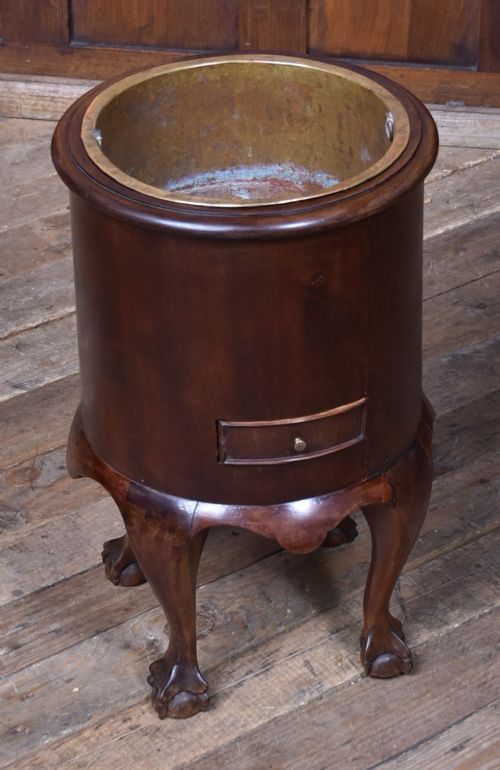
When you search for antique mahogany barware, you are looking at drinking accessories from the eighteenth and nineteenth centuries designed for storing and serving wine and spirits. These pieces span forms such as wine coasters, cellarettes, coolers, tantaluses, and serving trays used in formal dining and entertaining.
You are most likely to meet nineteenth century and Georgian examples on this page, including brass-bound bottle holders, inlaid decanter tantaluses, and timber wine coolers. The selection includes paired bottle coasters alongside larger freestanding champagne buckets and cellarettes.
The objects reflect the social rituals of historic dining rooms where bottles required sturdy timber containers and precious decanters needed secure housing. Each piece demonstrates how past households managed and displayed their drink collections.
How they were made
Maker workshops built these items primarily from solid mahogany and hardwood, sometimes adding decorative elements like satinwood inlay or brass handles and mounts. Timber was selected for grain pattern and strength to support heavy glass decanters and liquid-filled bottles.
Metalwork played a structural and decorative role, with sterling silver, old Sheffield plate, and brass utilised for rims, galleries, and locking mechanisms on tantaluses. Joinery techniques ensured that wooden frames could withstand the weight of multiple glass bottles without warping.
Antique Mahogany Barware Retail Price Guide 2026
Typical asking prices for mahogany barware among the pieces listed under this phrase on Sellingantiques today, from the lower quarter to the upper quarter. They describe what is for sale here now, not the wider market.
Victorian hosts locked their whiskey away in tantaluses, inventing a polite way to keep thirsty guests from overindulging.
What varies in quality
Quality in these items rests on the precision of the cabinetwork and the integration of metal mounts with the timber body. Finer examples show careful timber selection, crisp carving, and well-fitted interior partitions designed to hold specific bottle sizes.
The refinement of hardware, such as engraved silver mounts or robust brass carrying handles, distinguishes standard utility pieces from high-status objects commissioned for grand dining rooms. Original fittings and intact locking mechanisms elevate the standing of a piece.
John & Thomas Settle
The Antique Mahogany Barware Glossary
- Wine coaster
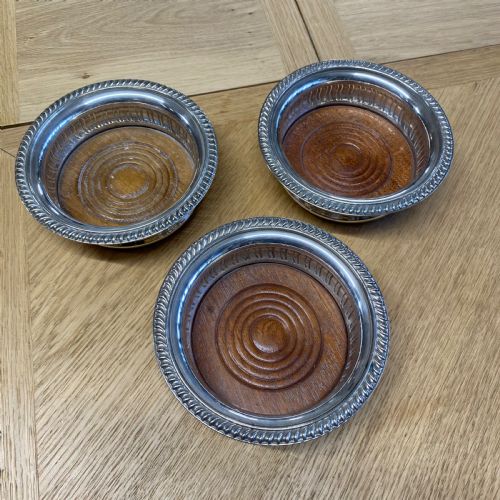
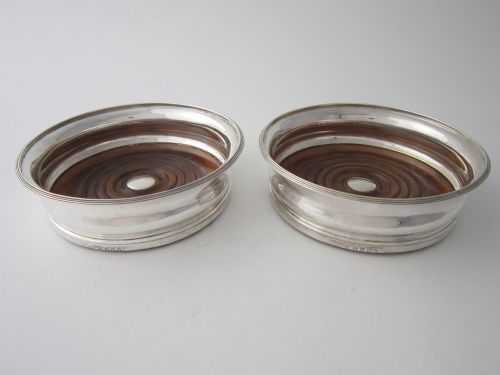
- A small shallow tray, often with a wooden base and a silver or brass rim, designed to hold a wine bottle and protect the table. They were frequently made in pairs to travel along the dining table.
- Cellarette
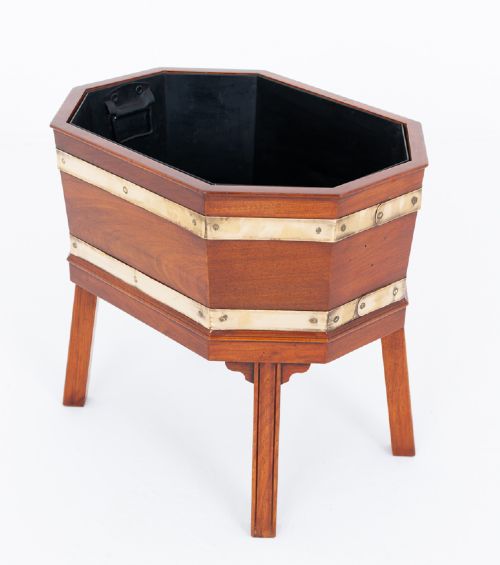
- A lockable container used for storing wine bottles securely near the dining table before serving. They range from freestanding floor-standing furniture pieces to smaller tabletop boxes.
- Tantalus
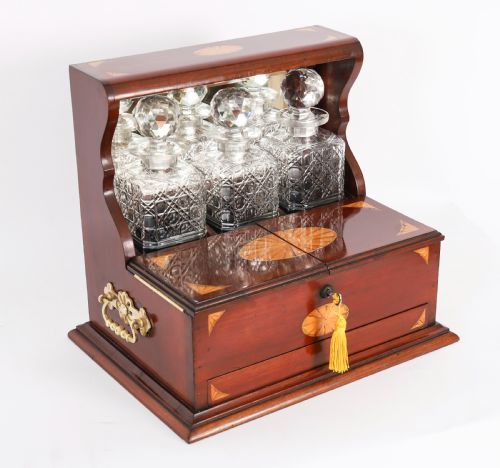
- A locking drink cabinet holding decanters in a frame that prevents their removal until the mechanism is unlocked with a key. The name playfully refers to the frustration of seeing the liquor without being able to pour it.
- Galleried tray
- A serving tray featuring a raised pierced metal or wooden border around the edge to prevent items from sliding off. These were utilised for carrying glassware and bottles.
- Old Sheffield plate
- A composite material made by fusing a thin sheet of silver to a thicker copper base, common in nineteenth century tableware. This technique preceded modern electroplating.
Antique Mahogany Barware: Frequently Asked Questions
What is a tantalus?
A tantalus is a locked wooden frame that holds decanters securely visible while preventing access without a key. They became popular in the nineteenth century for safeguarding spirits.
Items of this type often feature mahogany frames combined with brass or silver-plated hardware. They sat on sideboards in Victorian dining rooms.
How were wine coasters used?
Wine coasters held individual bottles of wine and were passed around the dining table after the servants withdrew. Their wheeled or felted bases allowed them to slide smoothly across mahogany surfaces.
Pairs of coasters were common, allowing host and guests to share different vintages. The raised rims kept condensation off the polished timber.
What is a cellarette?
A cellarette is a dedicated timber container designed to hold multiple wine bottles close to the dining table. Eighteenth and nineteenth century examples often stood on legs or directly on the floor.
Inside, individual compartments separated the bottles to prevent them from clinking together. Many included lead-lined interiors to hold ice for cooling.
How do I date mahogany barware?
Dating relies on stylistic clues, construction methods, and materials such as brass mounts or silver hallmarks. Georgian pieces typically display different joinery and proportions compared to Victorian or later nineteenth century items.
Makers' marks on metal components can provide precise manufacturing years. The type of timber preparation and secondary woods also help establish the era of origin.