
Antique Magazine
When you search for an antique magazine rack, you enter a world of compartmentalised wooden stands and pivoted metal holders designed to keep periodicals neat in the nineteenth and early twentieth centuries.
Antique Magazine
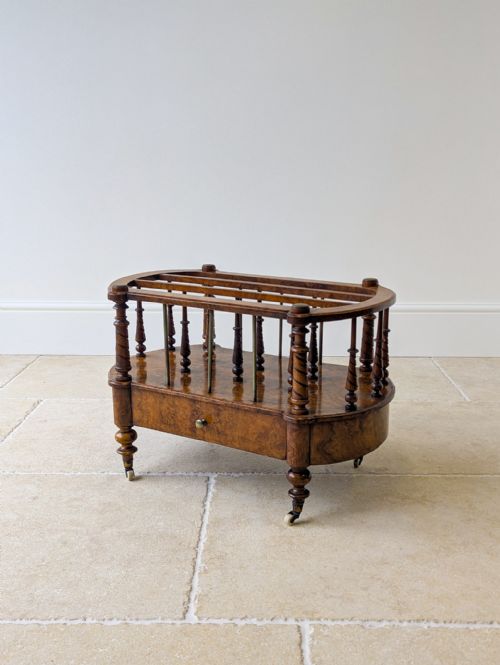
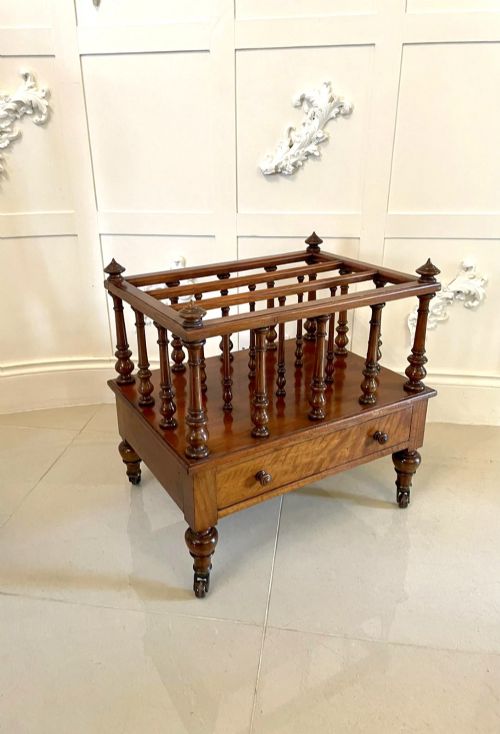
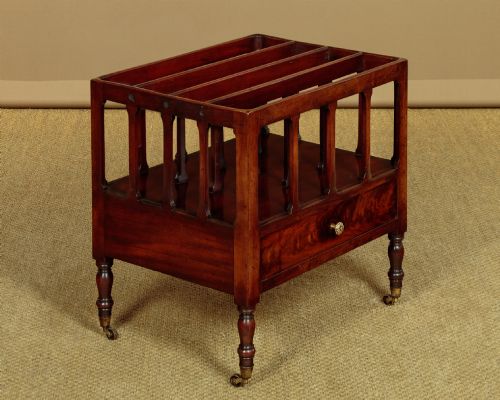
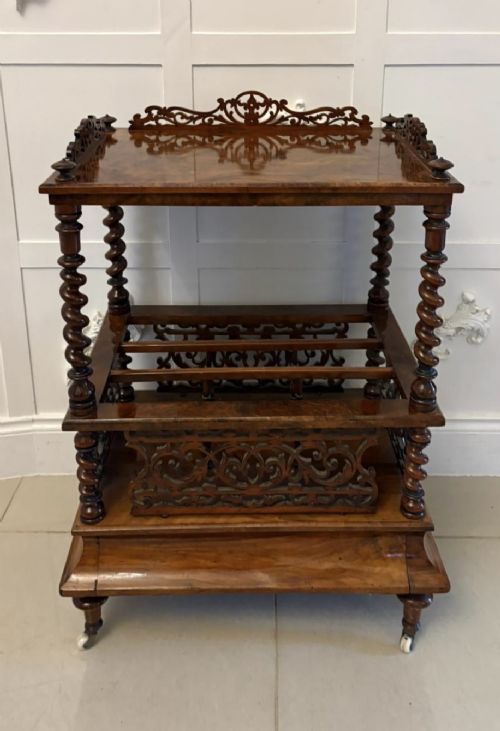
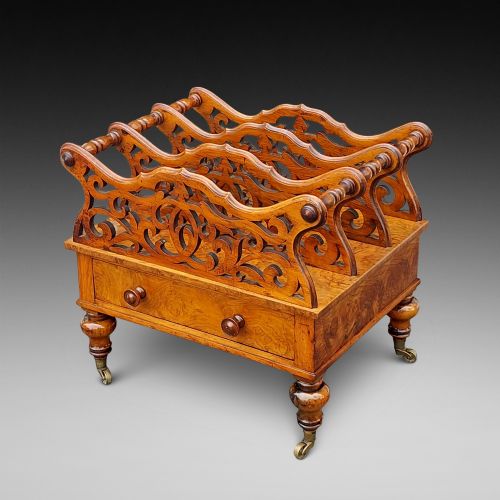
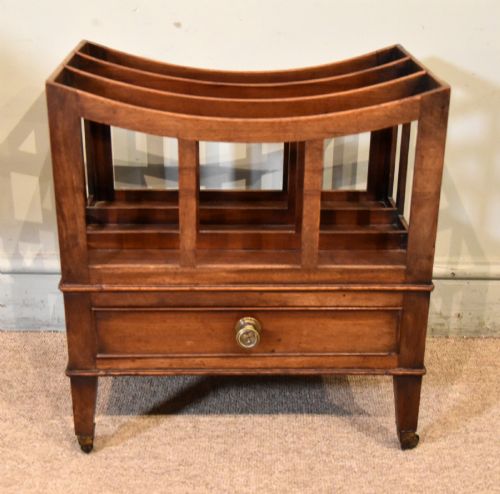
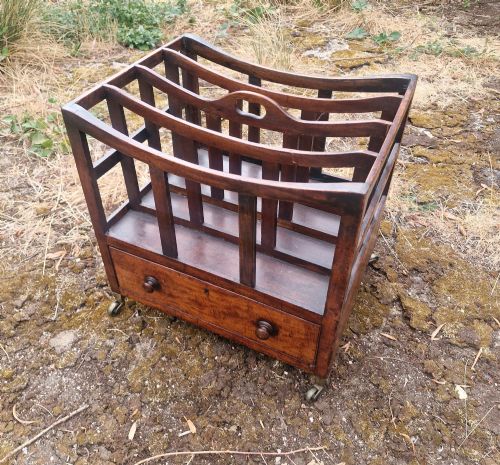
An antique magazine piece usually takes the form of a Canterbury, a traditional multi-tiered stand originally built for sheet music or newspapers that now functions as a periodical holder. These pieces span from the Georgian and Regency eras through the Victorian period and into Edwardian and Arts and Crafts workshops.
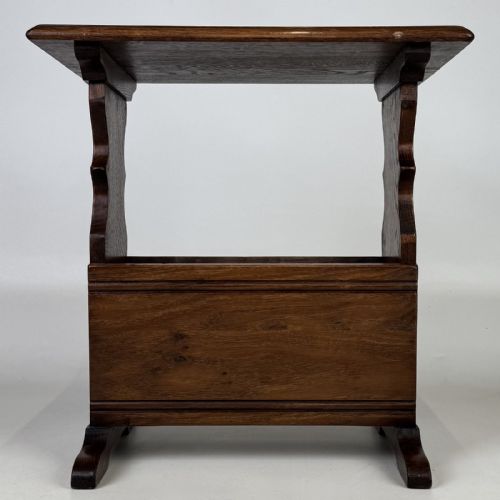
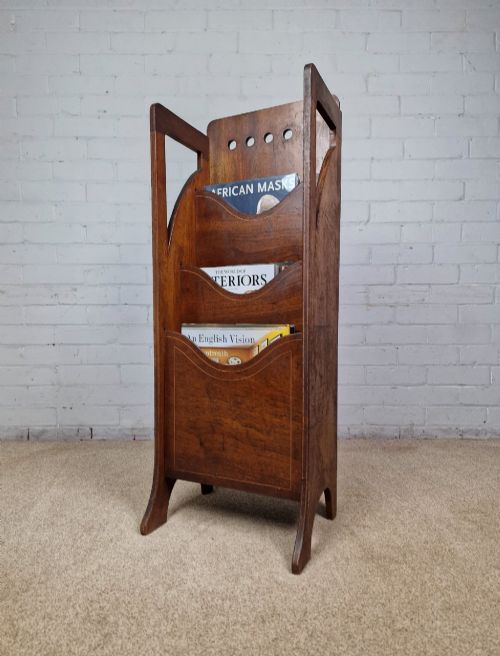
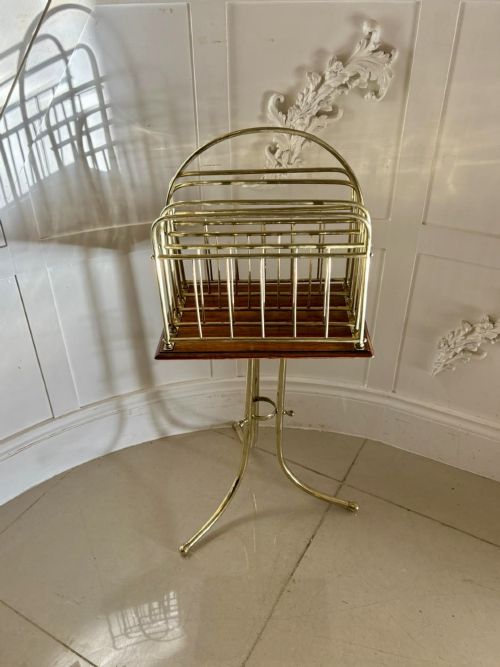
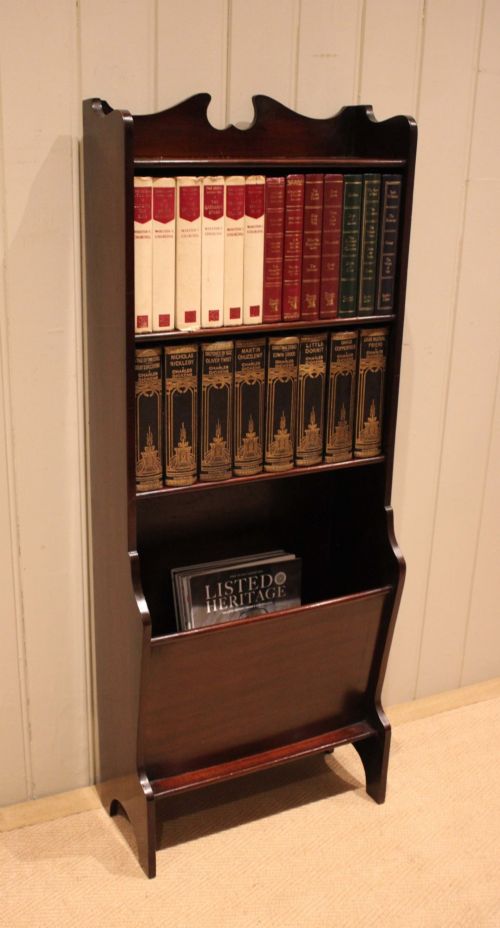
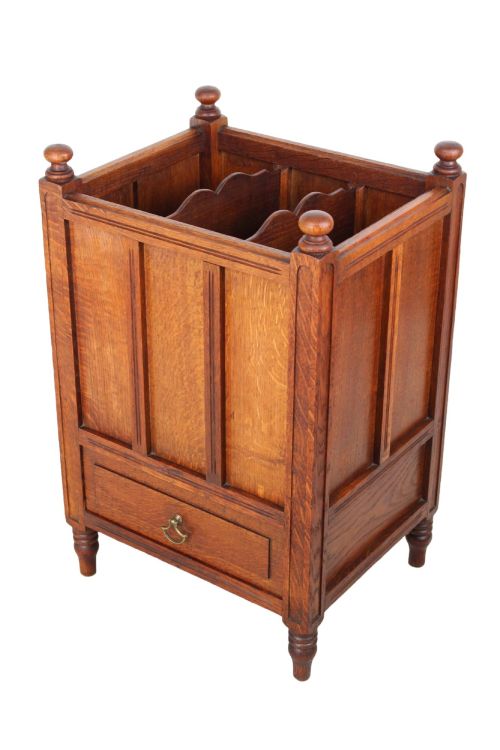
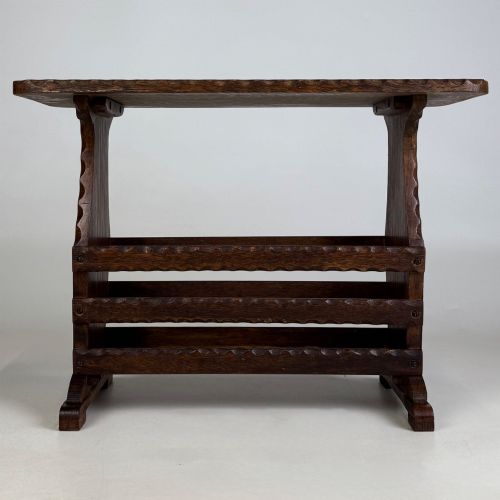
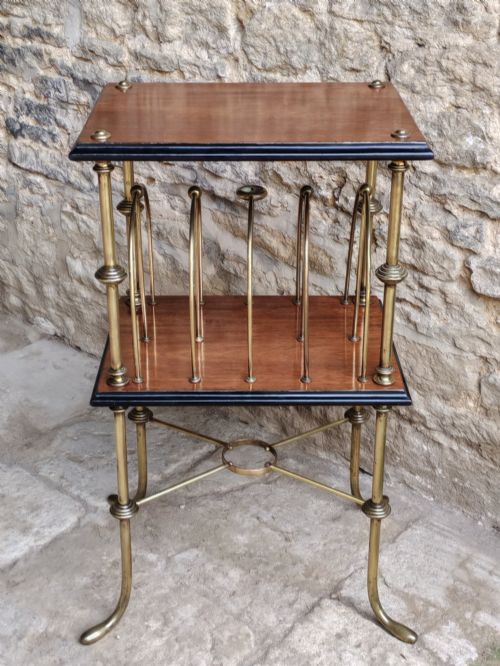
The most common formats met on this page are mahogany, walnut, and burr walnut canterburys alongside oak side tables and wall shelves fitted with dedicated slots. Makers also produced revolving book stands, bamboo tidies, and brass frames to meet changing domestic storage habits.
How they were made
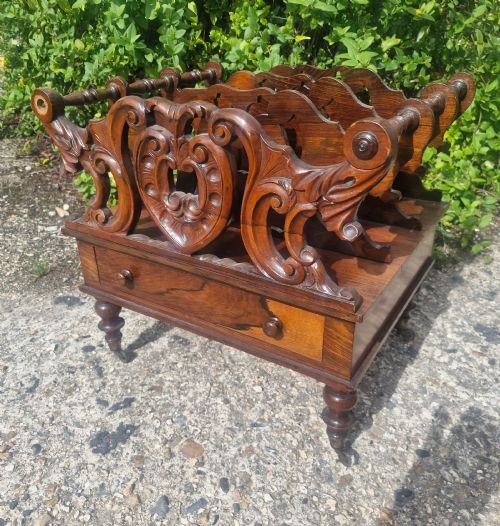
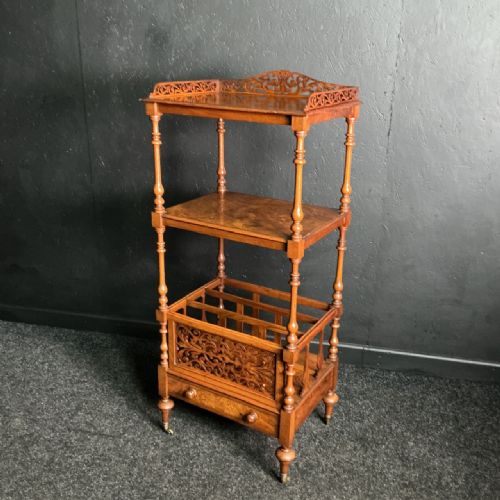
Cabinetmakers built these pieces using dense hardwoods such as mahogany, walnut, and rosewood, frequently selecting burr veneers for figured table tops and panelled sides. Turnery appears in spindle supports, while brass casters, handles, and hinges provide structural reinforcement and mobility.
Lighter alternatives utilised bamboo and wicker with bound joints, whereas later industrial outputs incorporated solid oak and bentwood alongside cast metal elements for rotating book stands.
Several Victorian pieces arrived intended for sheet music before finding a second life holding weekly periodicals.
What varies in quality
Quality reveals itself in the selection of timber veneers and the precision of the joinery used to construct the vertical partitions and drawers. Pieces featuring finely turned spindles, hand-carved details, and integrated castors sit at the upper end of the range.
Simpler constructed oak or bamboo stands from later periods display straightforward peg or screw assembly, while finer nineteenth-century examples employ dovetail joints and elaborate marquetry inlay.
William Tonks & Sons·James Purdey & Sons·Langford
The Antique Magazine Glossary
- Canterbury
- A low, freestanding stand with partitioned sections for holding papers, magazines, or music sheets, often featuring a low drawer beneath.
- Burr Walnut
- A highly prized wood veneer taken from the knotted growths of the walnut tree, displaying intricate swirling grain patterns.
- Whatnot
- A piece of open shelving supported by vertical pillars, used for displaying or storing books and periodicals in a drawing room.
- Aesthetic Movement
- A late nineteenth-century style focusing on visual beauty, frequently expressed through Japanese-inspired bamboo and ebonised frames.
- Tidy
- A nineteenth-century term for a small compartmentalised rack or stand intended to keep desks and side tables free of loose sheets.
Antique Magazine: Frequently Asked Questions
What is a Canterbury?
A Canterbury is a low stand divided into vertical sections designed to hold books, sheets of music, and periodicals off the floor.
Cabinetmakers first produced them in the eighteenth century, and they evolved through the Regency and Victorian periods into versatile occasional furniture.
How were magazine racks used?
These pieces sat beside armchairs and in drawing rooms to keep current newspapers, journals, and weekly periodicals organised and close at hand.
Many designs included a small drawer at the base for spectacles or writing implements, combining storage with a convenient side table surface.
How do I identify a Victorian piece?
Victorian examples often feature rich burr walnut veneers, serpentine shapes, and turned spindles that reflect the period's preference for ornate woodwork.
Earlier Regency pieces lean towards clean mahogany lines with brass mounts, while Edwardian versions favour simpler oak frames and inlaid borders.
Can I use an antique rack daily?
These sturdy wooden and metal stands function well for holding modern magazines, art books, and daily newspapers in a contemporary interior.
Placing them away from direct heat sources helps protect nineteenth-century veneers and polished wood surfaces from drying out.