

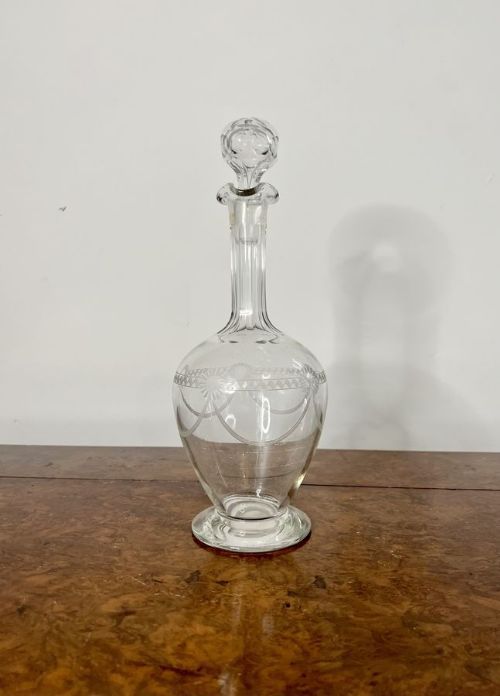


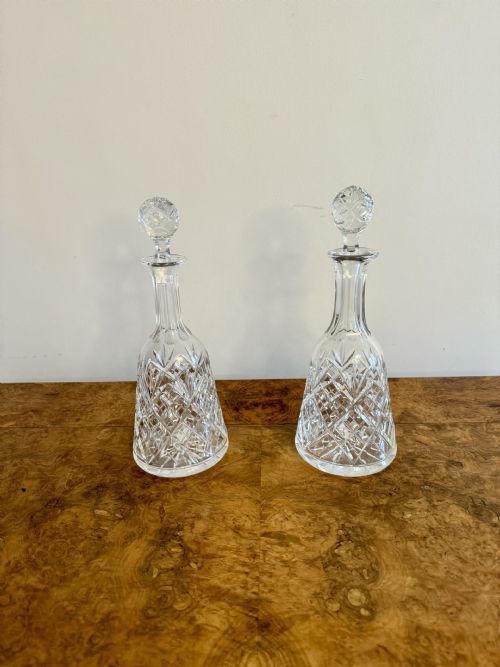


Antique Liquor Carafe
An antique liquor carafe serves spirits with undeniable grace, bringing period craftsmanship directly to the modern table.
Antique Liquor Carafe
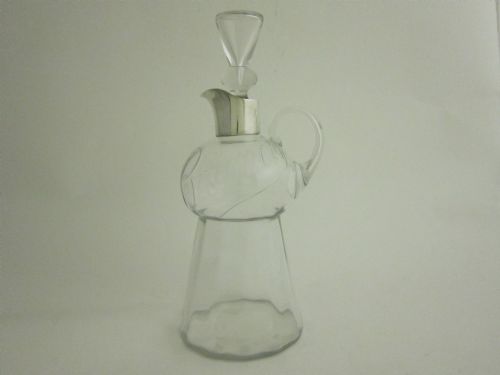
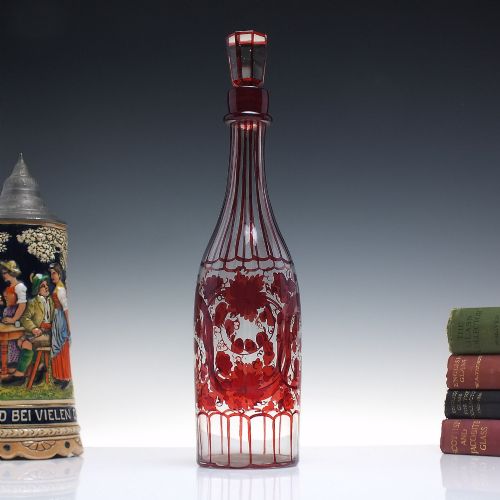
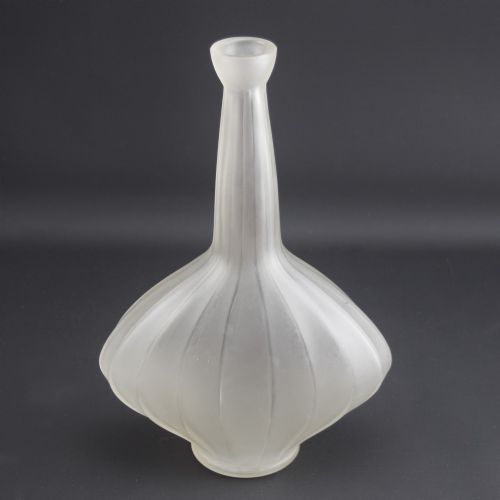
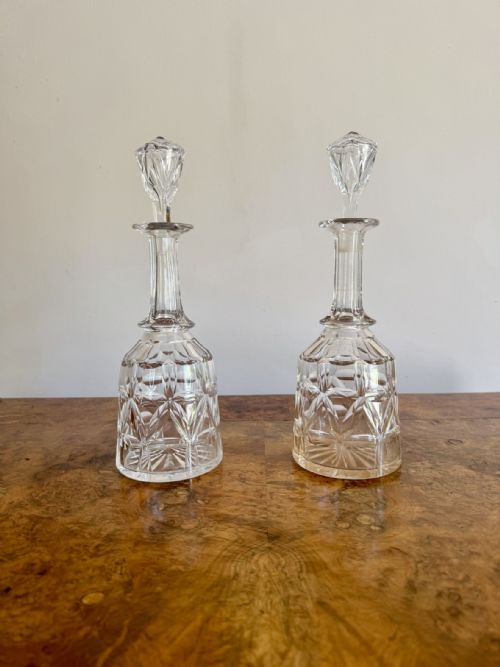
An antique liquor carafe takes several forms across the periods represented here, appearing as decanters, whisky noggins, spirit bottles, claret jugs, and matching decanter sets. These pieces range from compact personal gin bottles to substantial pairs intended for formal service.
The selections span from the mid-nineteenth century through the Edwardian era and into the Art Deco period of the nineteen-thirties. Victorian and Edwardian examples predominate, accompanied by occasional mid-century works and specialised spirit containers.
How They Were Made
Makers utilised clear glass, lead crystal, and cut crystal, often shaping pieces through optical blowing or heavy facet cutting to catch the light. Coloured glass varieties - including ruby, green, and cranberry hues - demonstrate skilled pigment work during the manufacturing process.
Many vessels incorporate sterling silver or silver-plated collars, mounts, and stoppers, frequently bearing hallmarks that record the assay office and date. Hand painting and polychrome enamel decoration further adorn specific nineteenth-century and Edwardian examples.
Listings feature glass, cut crystal, and sterling silver across Victorian, Edwardian, and Art Deco periods.
What Varies in Quality
The standard of cutting and clarity distinguishes the glass bodies, with deep, crisp facets and heavy lead crystal standing apart from lighter, simpler vessels. The integration of metalwork dictates overall refinement, separating standard silver plate from substantial hallmarked sterling silver mounts and fitted stoppers.
Cohesion within decanter sets and matching glass groups elevates the piece, alongside the presence of documented maker details or specific engraved liquor labels such as brandy and whisky.
James Powell·Hukin & Heath·Freeman & Son Ltd·Val Saint Lambert·Orfèvrerie Produx Saint Hilaire
The Antique Liquor Carafe Glossary
- Decanter
- A vessel used for holding and serving liquor. These glass containers often feature stoppers to preserve the contents.
- Whiskey Noggin
- A small spirit decanter designed for individual service. They typically incorporate a handle and a silver collar or mount.
- Claret Jug
- A specialised pouring vessel intended for wine. Examples often combine glass bodies with elaborate silver-gilt or plated mounts.
- Optically Blown
- A glassmaking technique where molten metal is inflated in a ribbed mould to create subtle internal patterns. This method produces light-catching ridges in the vessel wall.
- Silver Collar
- A metal band fitted around the neck of a bottle or decanter. Hallmarks stamped upon this band indicate the metal standard and year of assay.
Antique Liquor Carafe: Frequently Asked Questions
What is a whiskey noggin?
A whiskey noggin is a small, single-serving decanter fitted with a handle and a silver collar or mount.
These compact vessels were designed for individual portions during the Victorian and Edwardian periods.
How do I clean an antique decanter?
Cleaning requires warm water and mild detergent, avoiding harsh abrasives that might scratch the interior glass.
Stoppers should be washed separately and left out until the vessel is completely dry.
Are stoppers original to the decanter?
Matching the ground glass number on the stopper to the neck helps confirm originality.
Many period pieces retain their matching blown or cut stoppers, though replacements do occur.
How do I identify the period?
Hallmarks on silver collars provide exact dates of manufacture, while cut glass styles and colours indicate Victorian or Edwardian origins.
Form and decorative techniques also distinguish nineteenth-century vessels from nineteen-thirties Art Deco designs.