

Antique Link Necklace
An antique link necklace brings together centuries of goldsmithing through heavy watch chains, delicate guard chains and intricate love knot patterns.
Antique Link Necklace
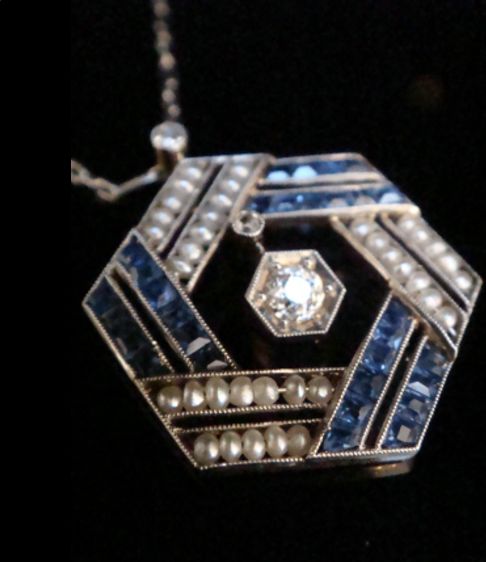
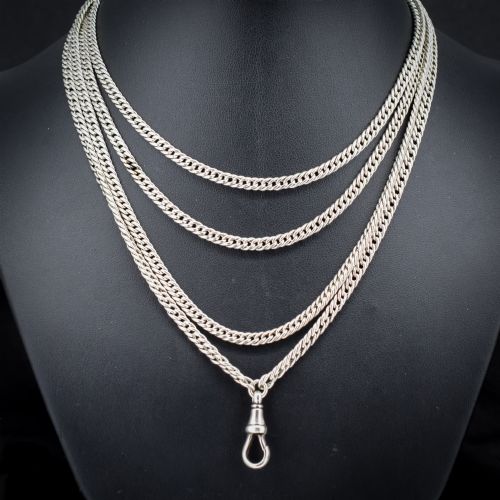
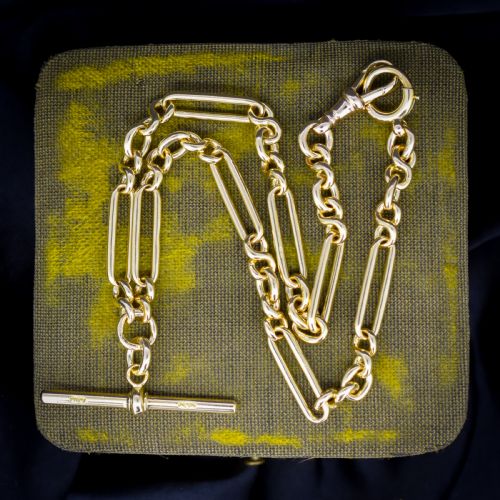
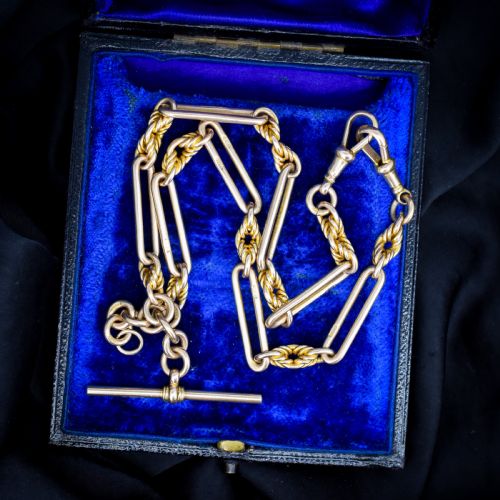
An antique link necklace often originates from functional Victorian and Edwardian watch chains, pocket watch chains and longuards adapted for wear around the neck. The listings show heavy double alberts, trombone links, and long guard chains alongside gem-set pendants from the nineteenth and early twentieth centuries.
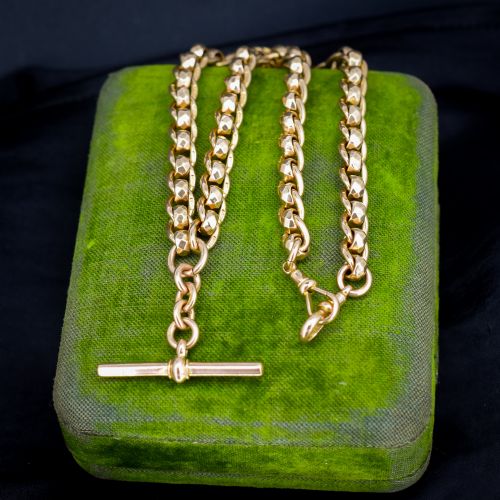
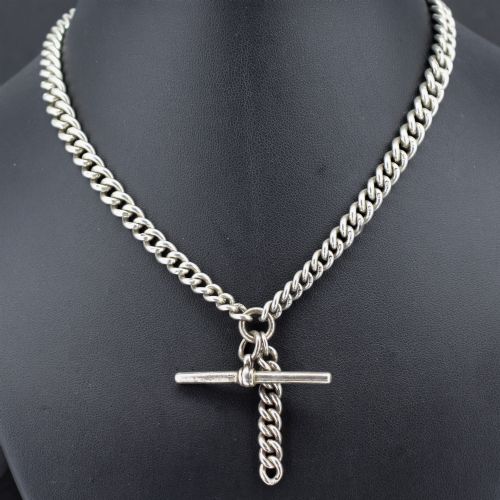
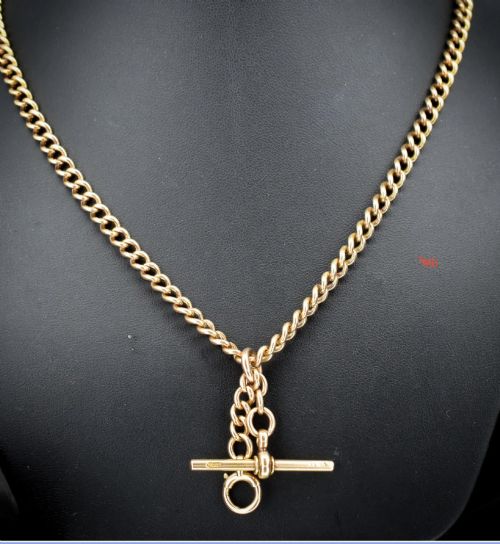
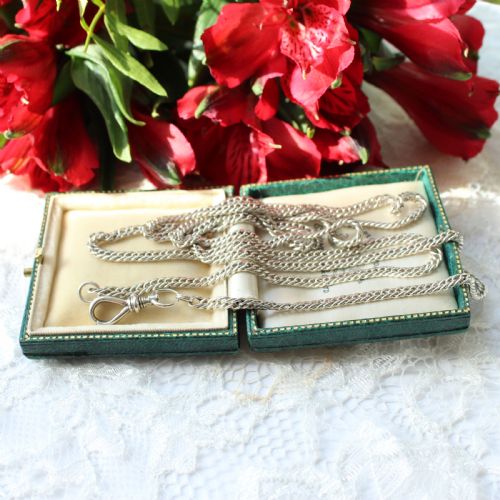
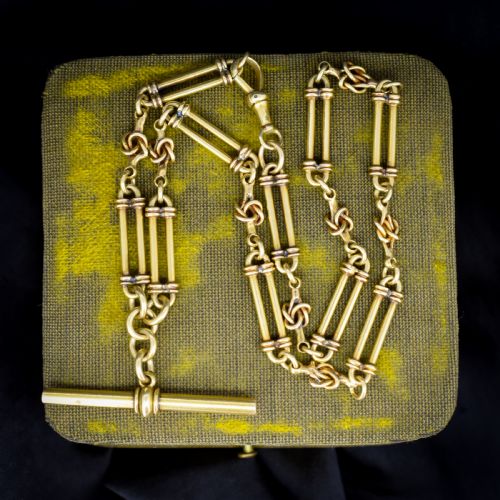
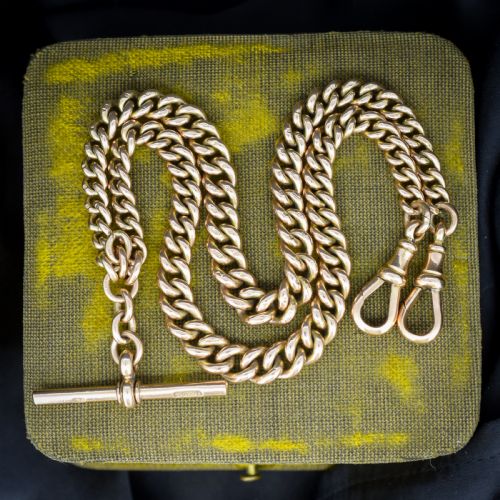
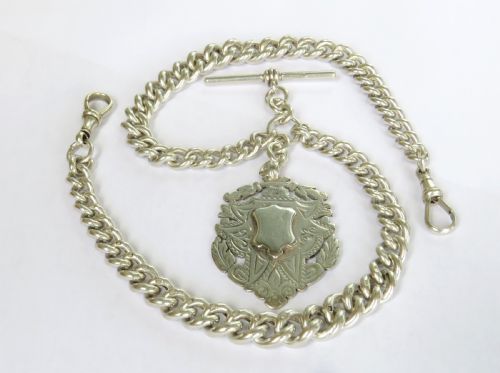
The version most commonly met on this page is the gold or silver albert chain, complete with dog clips, bolt rings, or T-bars that reflect their utilitarian origins. These pieces range from short, solid curb link chains to lengthy guard chains spanning over sixty inches.
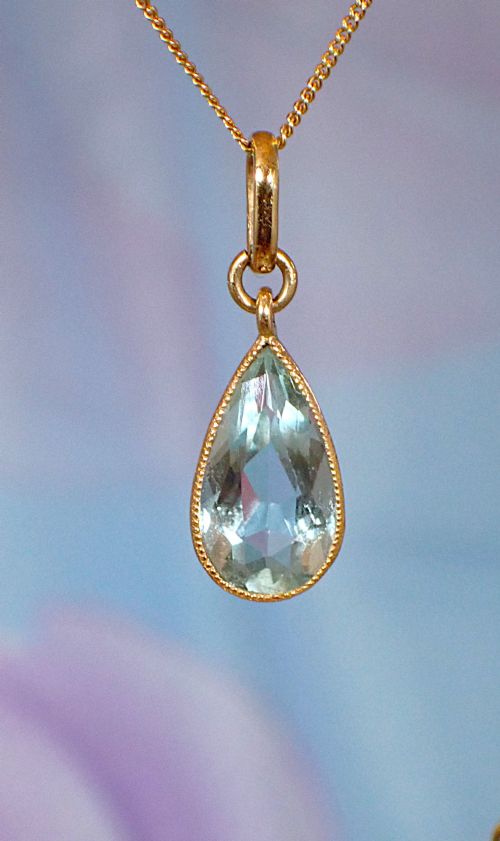
Pieces span eras from the late nineteenth century through the Art Deco period of the 1920s and 1930s, incorporating styles such as Arts and Crafts moonstone drops and French antique elements.
How they were made
Goldsmiths constructed these chains predominantly in 9ct, 15ct, and 18ct yellow and rose gold, as well as sterling silver and platinum. Many links bear individual hallmarks recording the assay office, such as Chester, and the year of manufacture.
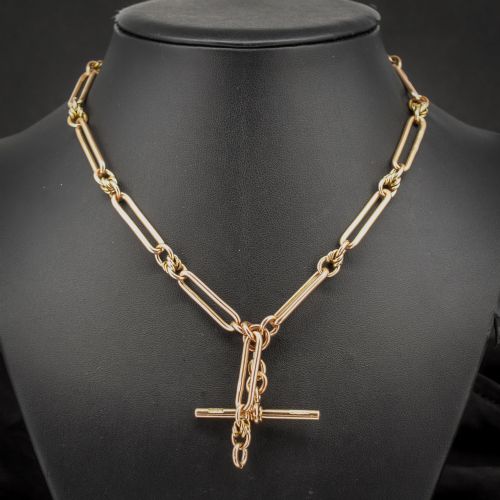
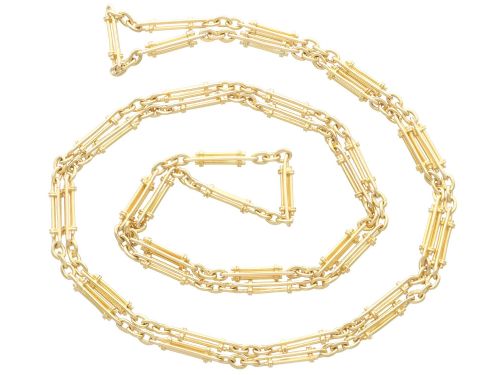
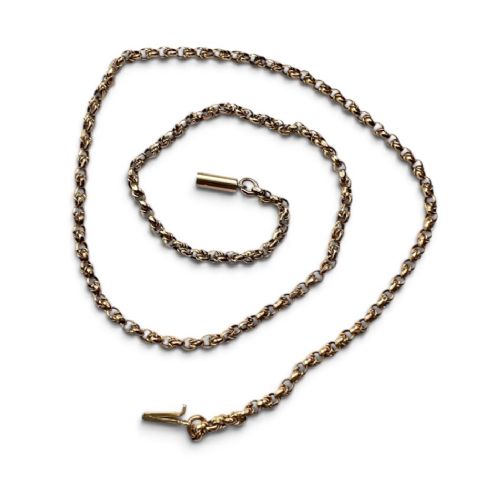
Makers formed distinct link patterns - including trombone, love knot, paper, flat curb, and fancy designs - by hand-assembling stamped or drawn wire components. Secure fastenings like dog clips, screw-locks, and bolt rings were soldered or integrated mechanically into the ends.
Antique Link Necklace Retail Price Guide 2026
Typical asking prices for link necklace among the pieces listed under this phrase on Sellingantiques today, from the lower quarter to the upper quarter. They describe what is for sale here now, not the wider market.
The listings feature silver and gold pieces spanning the Victorian, Edwardian, and Art Deco eras.
What varies in quality
The integrity of the individual links and the presence of complete hallmarks on every component separate standard examples from finer specimens. Graduated curb links require precise proportional scaling along the length of the chain.
Original attachments such as T-bars, dog clips, and matching sliding components retain the historical completeness of the piece. The weight of the precious metal and the complexity of fancy link formations dictate the tier of craftsmanship.
The Antique Link Necklace Glossary
- Albert chain
- A short watch chain designed for pocket watches, frequently worn today as a necklace.
- Dog clip
- A spring-loaded snap fastener attached to the ends of watch chains for securing pocket watches or charms.
- T-bar
- A transverse bar attached to the centre of an albert chain used to anchor the chain through a waistcoat buttonhole.
- Longuard chain
- An exceptionally long necklace style, often exceeding thirty inches, originally intended to hold lorgnettes, watches, or lockets close to the waist.
- Trombone link
- A geometric elongated link shape alternating with smaller round or oval rings, named after the visual rhythm of musical instruments.
Antique Link Necklace: Frequently Asked Questions
How do I wear a converted watch chain?
Many pieces retain their original dog clips and T-bars, allowing you to wear them as a single strand or double them around the neck.
You can also attach pendants or charms directly to the dog clip for a custom arrangement.
What is the difference between an albert and a longuard?
Albert chains are shorter lengths designed originally to drape across a waistcoat or secure a pocket watch.
Longuards measure substantially longer, often reaching sixty inches or more to permit slipping over the head without opening the clasp.
How do I read gold purity marks on these necklaces?
British pieces typically display carat stamps such as 9ct, 15ct, or 18ct indicating the proportion of pure gold in the alloy.
Earlier items often rely on these fractional stamps before the introduction of numerical decimal standards.
Are all links hallmarked individually?
Finer pieces feature tiny stamped hallmarks on every individual link to guarantee the standard of the precious metal.
Simpler or lighter chains may only bear a stamp on the clasp or a designated master link.