




Antique Linen Sampler
An antique linen sampler records alphabets, maps, and verses stitched by young hands across the Georgian and Victorian eras.
Antique Linen Sampler
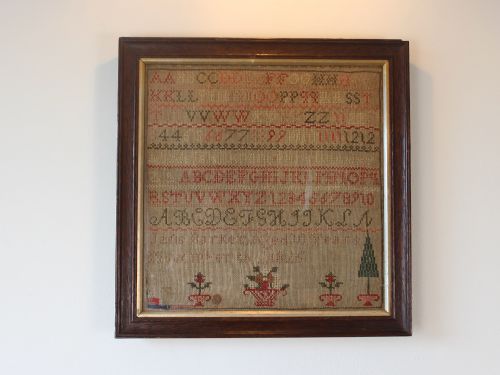
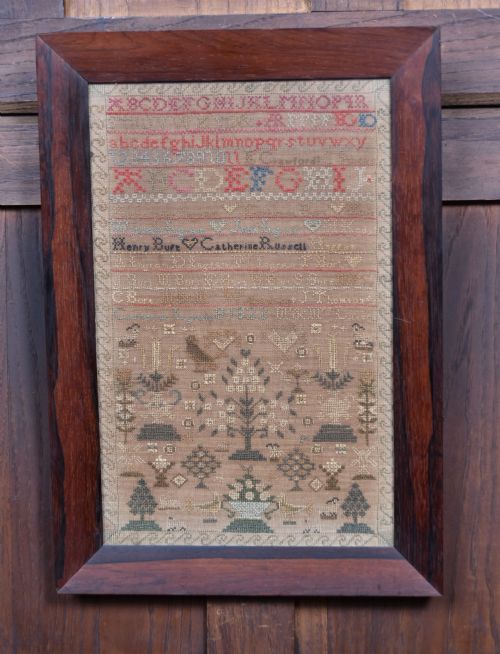
An antique linen sampler is a textile panel worked with needle and thread to practice stitches, record alphabets, or display pious verses and maps. When you search for an antique linen sampler, you encounter pieces originating primarily from the eighteenth and nineteenth centuries, often signed and dated by children or young women.
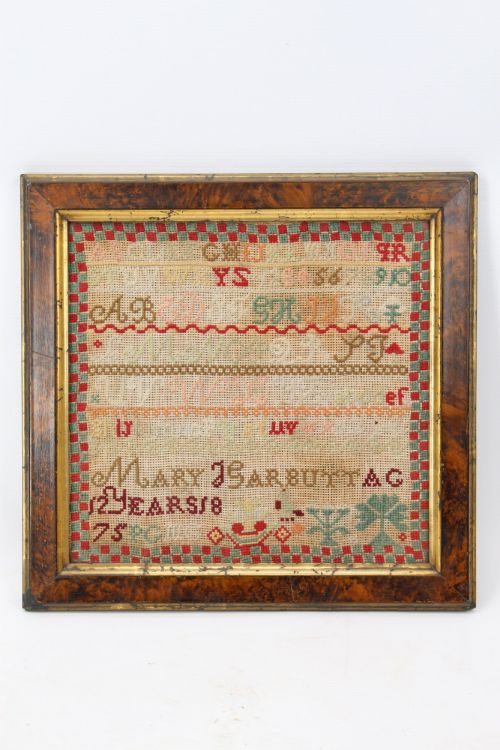
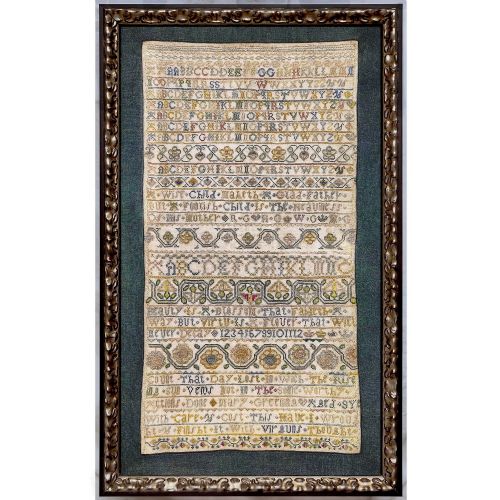
The most common examples on this page are Victorian and Georgian works framed as wall art. These pieces typically present rows of letters, numerals, and moral sayings, occasionally accompanied by motifs of houses, flora, and fauna.
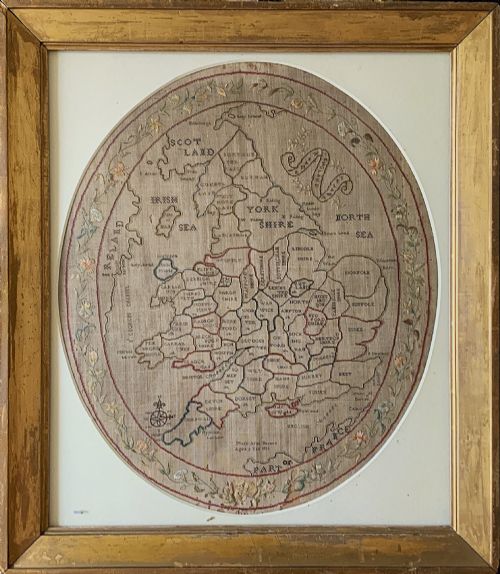
Beyond standard alphabet exercises, the selection includes cartographic needlework, such as maps of England and Wales, alongside religious texts like the Lord's Prayer and the Ten Commandments.
Materials and construction
The foundation of these works is woven linen, serving as an even-weave grid for the needleworker. Upon this fabric, makers deployed wool, silk, and silk thread to execute a variety of stitches.
Makers stitched alphabets, numbers, and pictorial scenes using counted thread techniques, ensuring precise geometric placement across the linen ground. Frame mountings in wood and glass frequently protect these delicate textiles from environmental wear.
Antique Linen Sampler Retail Price Guide 2026
Typical asking prices for linen sampler among the pieces listed under this phrase on Sellingantiques today, from the lower quarter to the upper quarter. They describe what is for sale here now, not the wider market.
A young stitcher meticulously recorded the Crystal Palace into her linen grid, capturing world's fair excitement with a needle.
Quality and execution
Quality rests in the regularity of the stitch work and the complexity of the composition. Finer examples display meticulous tension, sophisticated pictorial designs, and well-preserved silk or wool threads.
The inclusion of specific maker details, such as the age of the child, the date, and the location or school, elevates the historical interest of the textile. Map samplers and detailed scriptural verses also demand greater technical skill than basic alphabet grids.
Mary J Garbutt·Mary Banion·Mary Greening·Annabella Samon·Jane Wettmore·Louiss Elkins·Elizabeth Horn·Ann Hodson·Margaret Ann Blackow·Maggie Muir·Sarah Baker·Mary Mason·Ann B Gilies·Sarah Anne Hudson·Martha Hall·Mary Street·Rachel·Emma and Hannah Barnes·Sarah Reading·Jane Pattinson·Eleanor Grady·Susan Mary Williams·Mary Pinfold
The Antique Linen Sampler Glossary
- Band sampler
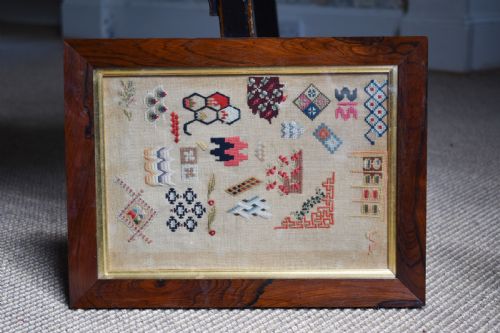
- A long, narrow textile displaying horizontal rows of diverse embroidery stitches. This early format allowed makers to archive stitch patterns for future reference.
- Alphabet sampler
- A needlework panel focused on rows of capital and lower-case letters alongside numerals. These pieces served to demonstrate literacy and needle proficiency.
- Map sampler
- An educational embroidery depicting geographical regions, such as countries or counties, with embroidered borders and place names. They combined needlework instruction with geography.
- Stitch error
- An unintentional deviation in the pattern or spelling by the maker. Such human mistakes reveal the youthful hand behind the work.
- Ground fabric
- The base material upon which embroidery is worked. In these examples, this foundation consists of woven linen.
Antique Linen Sampler: Frequently Asked Questions
How old is an antique linen sampler?
Most surviving examples date from the eighteenth and nineteenth centuries, spanning the Georgian and Victorian periods. Earlier pieces from the late seventeenth century occasionally appear.
Dates are frequently embroidered directly onto the linen alongside the maker's name and age, providing a clear record of origin.
Why did children stitch these samplers?
Young girls stitched samplers to demonstrate their mastery of needlework, literacy, and virtue. Schools and academies set these tasks as part of a formal education.
Completing a complex alphabet or map proved a girl's patience, precision, and domestic capability.
How should I display a framed sampler?
Keep textile art away from direct sunlight to prevent the fading of silk and wool threads. UV-filtering glass provides essential protection for the aged linen and fibres.
Maintain stable indoor humidity levels to ensure the historic fabric and wooden frames do not degrade over time.
What do stitch errors tell us?
Stitch errors reveal the authentic, unhurried hand of a child learning to compose letters and numbers. A misplaced letter or a corrected spelling adds personal character to the textile.
Rather than detracting from value, these minor mistakes highlight the true domestic origin of the piece.