





Antique Library Whatnot
An antique library whatnot holds books and curiosities upon stacked open shelves, bringing practical tiered display to domestic rooms.
Antique Library Whatnot
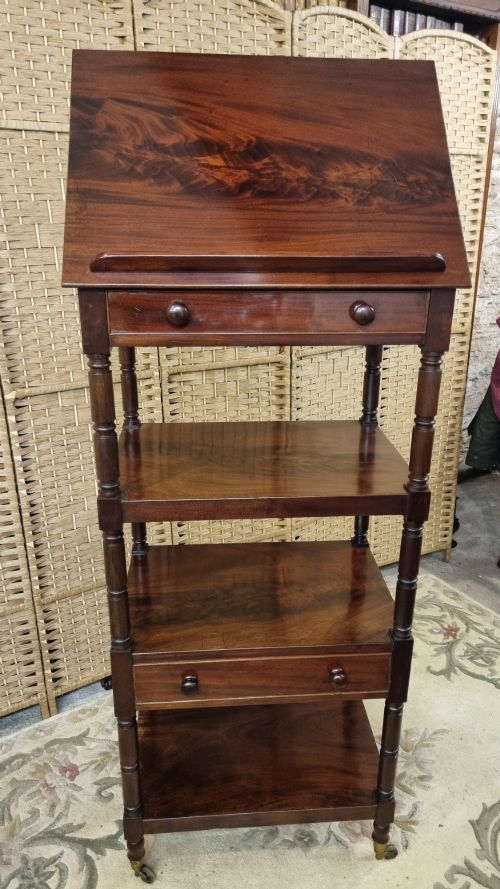
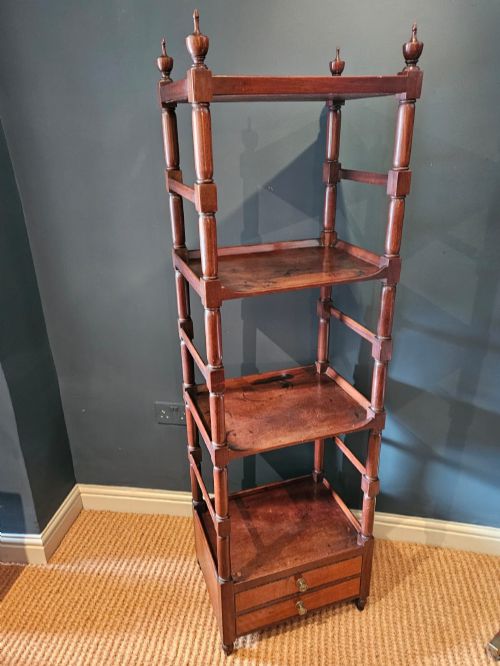
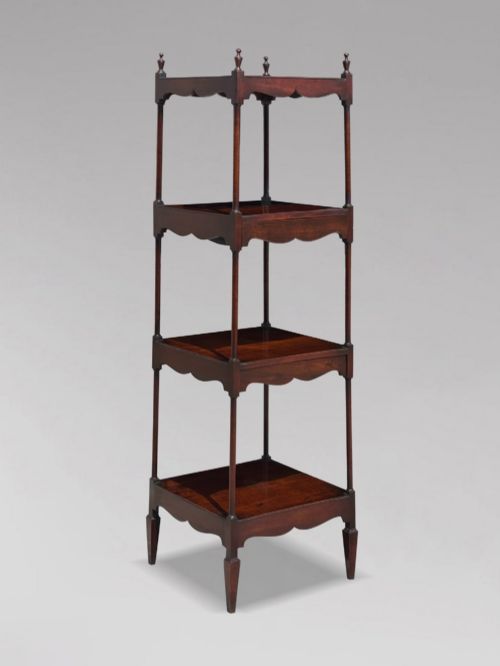
An antique library whatnot stands as a tiered shelving unit designed for books, papers, and small objects in studies and sitting rooms. The pieces available here cross the Georgian, Regency, and Victorian periods, alongside early twentieth-century examples.
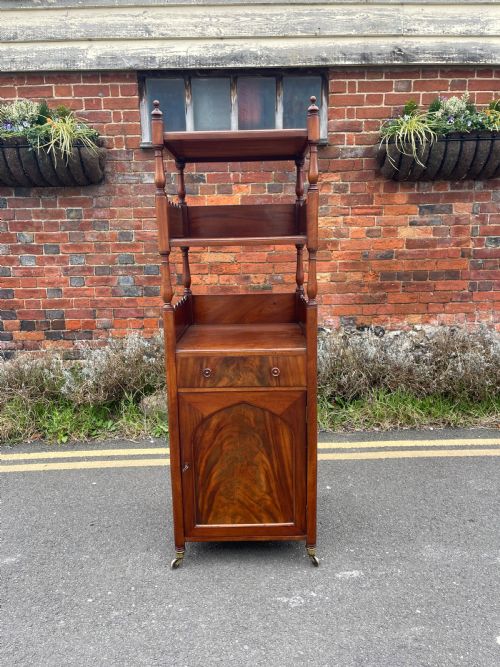
Most items on this page take the form of open bookcases or etageres constructed with three or four tiers. Mahogany and rosewood dominate the forms, frequently supported by turned columns or brass castors.
Specialised variations appear among the listings, including music stands, pieces with cupboard bases, and diminutive walnut etageres. These items reflect the domestic storage needs of the eighteenth and nineteenth centuries.
Materials and construction
Cabinetmakers constructed these pieces primarily in rich timber species such as mahogany and rosewood, occasionally utilising walnut. The wood grain provides the main visual surface across the shelves and upright supports.
Makers integrated brass elements, including castors for mobility and ormolu mounts for decoration. Upright supports frequently feature turned woodwork to separate the tiers.
Antique Library Whatnot Retail Price Guide 2026
Typical asking prices for library whatnot among the pieces listed under this phrase on Sellingantiques today, from the lower quarter to the upper quarter. They describe what is for sale here now, not the wider market.
Some nineteenth-century makers thoughtfully placed tiny wheels on the legs so readers could chase their books around the room without standing up.
Assessing quality in tiered shelving
Quality rests in the choice of timber and the crispness of the turned supports. Finer examples show careful selection of grain figures across the tiers and panels.
Attribution to known workshops elevates certain pieces, distinguishing standard cabinet work from high workshop production.
Gillows
The Antique Library Whatnot Glossary
- Whatnot
- A set of open shelves for displaying or holding small objects and books. This piece of furniture became popular during the late eighteenth century.
- Etagere
- A French term for a piece of furniture consisting of a number of open shelves for displaying ornaments. It is functionally similar to a whatnot.
- Castor
- A small wheel fixed to the legs of furniture to allow easy movement. Brass versions frequently appear on nineteenth-century library pieces.
- Regency
- A British design period spanning the early nineteenth century, characterised by classical revival motifs and refined proportions. Pieces from this era often utilise dark timbers.
Antique Library Whatnot: Frequently Asked Questions
What is an antique library whatnot used for?
These tiered pieces held books, papers, and decorative items within studies and libraries. Their open shelving kept frequently used volumes close to hand.
Over time, owners also used them to display small ornaments and collections in domestic rooms.
How do I identify a Regency whatnot?
Regency pieces often feature dark timbers like rosewood or mahogany, alongside classical column supports and brass castors. Their proportions reflect the neoclassical design tastes of the early nineteenth century.
Makers from this era occasionally incorporated mirrors or small drawer bases into the tiered structure.
Where should I place a whatnot in my home?
These shelving units suit studies, living rooms, and hallways where vertical storage is required without heavy enclosed cabinetry. Their open sides maintain a light visual presence in smaller spaces.
Ensure the piece sits away from direct heat sources to protect the polished timber surfaces.
What materials are common in these pieces?
Mahogany and rosewood appear most frequently across the listings, supplemented by walnut in later examples. Brass hardware such as castors provides functional detail.
Ormolu mounts occasionally decorate the finer Regency and Georgian items.