

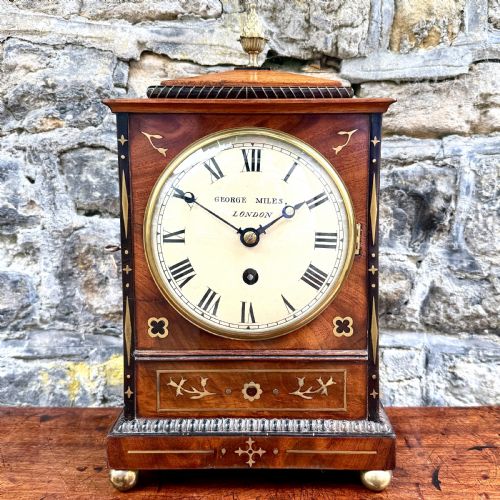


Antique Library Timepiece
An antique library timepiece is a precision clock made to sit quietly among books, offering simple timekeeping without the distraction of striking trains.
Antique Library Timepiece
When you search for an antique library timepiece, you are looking at compact, portable clocks designed specifically for reading rooms and studies during the Georgian, Regency, and Victorian periods. These pieces range from classic mahogany and rosewood cases to elaborate five-glass brass designs housing single fusee movements.
How they were made
Cabinetmakers built the housings using timbers such as figured mahogany and rich rosewood, frequently incorporating glass panels to reveal the interior mechanics. Brass and gilt brass frames provided structural support and decorative contrast, particularly in the later multi-glass designs.
The movements relied on single fusee mechanisms and platform escapements to maintain steady tension and accurate timekeeping within a compact footprint. Makers mounted these steel and brass movements securely inside wooden or glass cases designed for stability.
Antique Library Timepiece Retail Price Guide 2026
Typical asking prices for library timepiece among the pieces listed under this phrase on Sellingantiques today, from the lower quarter to the upper quarter. They describe what is for sale here now, not the wider market.
Some miniature pieces came with optional wall brackets, proving that even clocks enjoyed having their own furniture.
What varies in quality
The distinction between ordinary and superior pieces rests on the precision of the movement and the finesse of the case construction. Higher quality examples feature signed dials from notable makers, crisp timber veneers, and uncompromised glass panels that fit flush into their brass or wooden surrounds.
Proportion and restraint also dictate the calibre of a piece. Simpler, well-proportioned timber cases demonstrate finer cabinetwork than heavier, uninspired reinterpretations, while signed London movements elevate the standing of the work considerably.
Bush of London·Webster Cornhill London·Phillips Brothers·Arnold and Frodsham·McCabe London·John Massey London
The Antique Library Timepiece Glossary
- Fusee
- A conical pulley used in spring-driven clocks to equalise the diminishing power of the mainspring as it unwinds. This mechanism helps the clock maintain a consistent rate throughout its running period.
- Platform escapement
- A self-contained escapement unit that replaces a traditional pendulum, allowing smaller clocks like carriage and library timepieces to run accurately in portable formats.
- Timepiece
- A clock that tells the time without any striking mechanism for hours or quarters. These models focus entirely on pure timekeeping.
- Five-glass clock
- A timepiece housed in a glazed brass or wooden case with glass panels on the top and all four sides. This construction allows maximum light into the movement.
- Bracket clock
- A portable clock originally designed to sit on a wall bracket or a furniture ledge. Over time, the term came to describe shelf-mounted mantel clocks of similar proportions.
Antique Library Timepiece: Frequently Asked Questions
What is a library timepiece?
A library timepiece is a portable clock made without a striking train, designed to keep time quietly in a study or reading room.
These clocks prioritise steady mechanical accuracy and understated elegance over audible hourly strikes.
How do I wind these clocks?
Most of these pieces utilise a key-wound fusee movement that requires gentle turning at regular intervals to maintain tension on the mainspring.
Care must be taken not to overwind the movement, keeping the winding rhythm steady and measured.
Where should I place a library timepiece?
They suit stable surfaces away from direct sunlight, excessive heat sources, and heavy vibrations that might disturb the delicate platform escapement or pendulum.
A mantelpiece, a sturdy desk, or a dedicated wall bracket provides an ideal environment for display.
How do I identify a Victorian library clock?
Victorian examples often feature darker ebonised woods, rosewood cases, or multi-glass brass frames housing platform escapements dating from the mid to late nineteenth century.
Signatures on the dial or movement backplate often help pinpoint the exact period and maker.