


Antique Library Stool
An antique library stool offers sturdy access to high shelves or a comfortable seat by the desk, combining practical utility with period craftsmanship.
Antique Library Stool
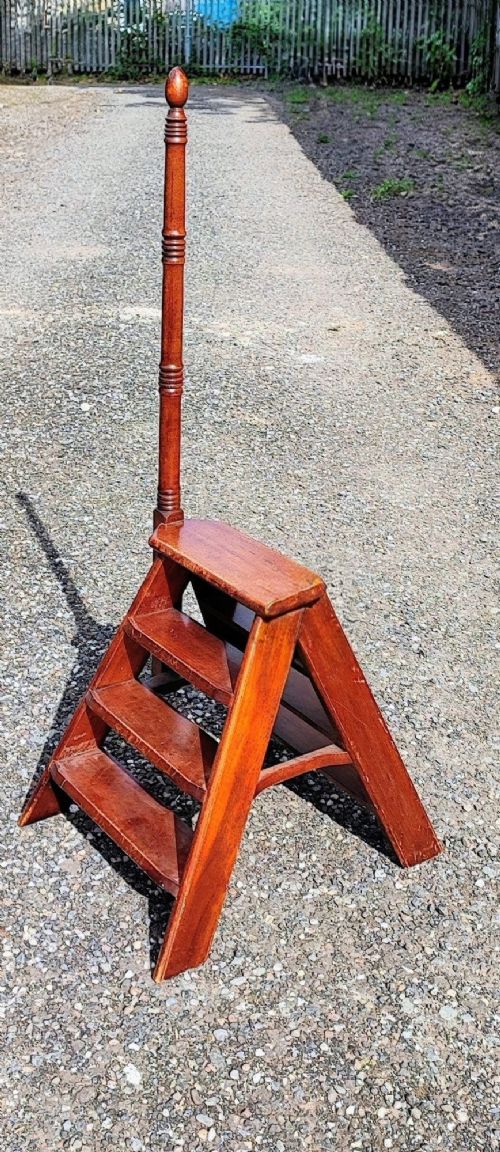
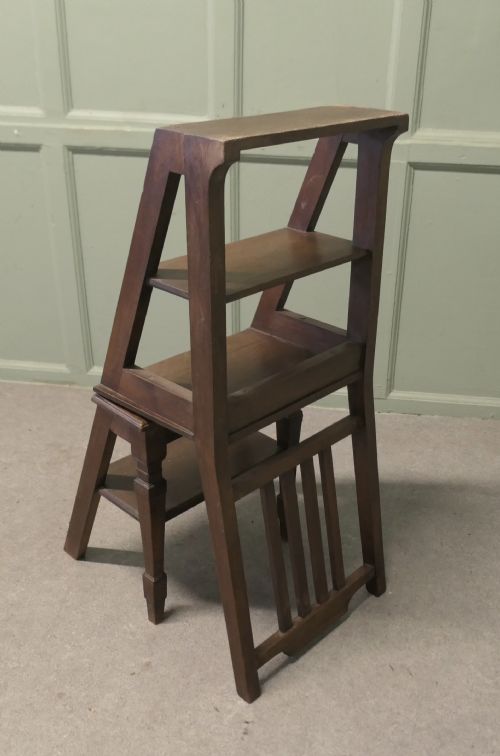
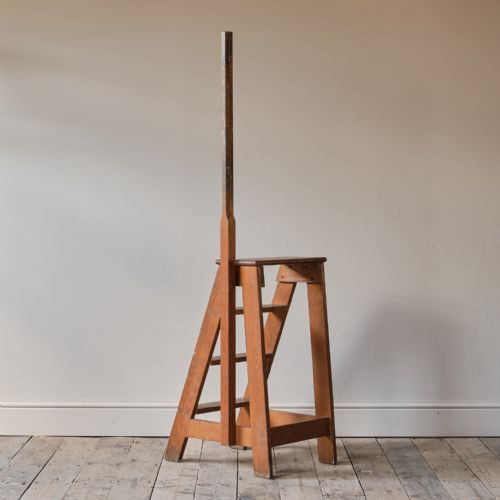
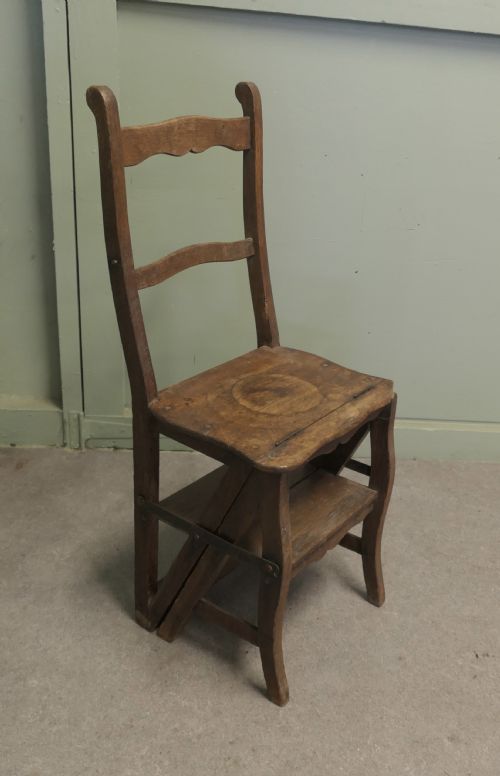
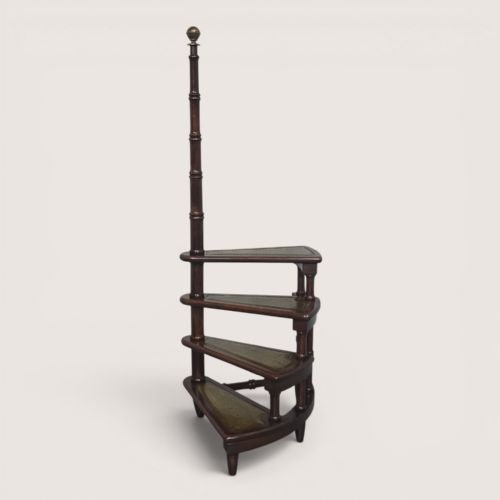
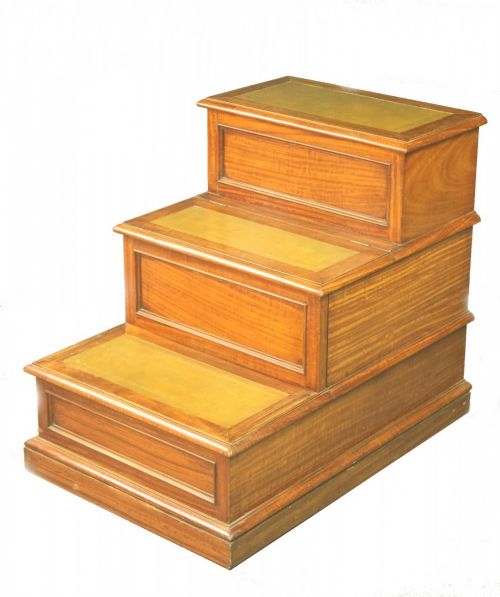
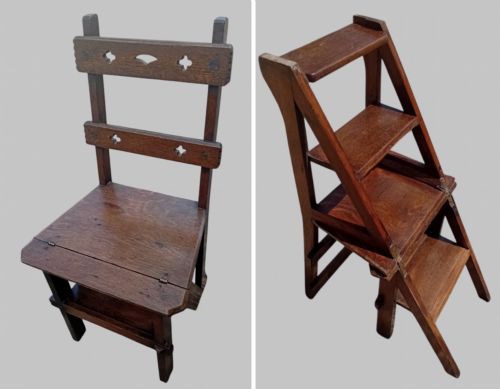
When you search for an antique library stool, you encounter a variety of forms designed for studies and domestic spaces, from traditional stepped flights to metamorphic chairs that unfold into ladders. The pieces span periods such as the Georgian, Regency, Victorian, and Edwardian eras, reflecting changing domestic requirements for reaching high bookshelves.
Mahogany and oak predominate among the surviving examples, often fitted with leather treads or upholstery. You will also find variations including spiral steps, bed steps, and folding designs that double as armchairs or footstools.
The selection ranges from utilitarian pine and oak ladders to finely figured mahogany flights bearing period details. Each form serves the dual purpose of seating and elevation, constructed to endure frequent use in private libraries and studies.
How they were made
Cabinetmakers utilised dense timbers such as mahogany, oak, and walnut to ensure structural stability under weight. These hardwoods were frequently joined using traditional mortise and tenon techniques, providing the rigidity required for repeated climbing and folding.
Railway companies occasionally required sturdy steps, resulting in robust utility pieces finding their way from platforms into private studies.
What varies in quality
The distinction between standard examples and finer pieces lies in the selection of timber and the precision of the mechanical hinges. Superior items display well-figured mahogany or golden oak with crisp carved details and secure joints that operate without binding.
Makers who supplied high-end domestic interiors invested greater care in secondary woods, leather quality, and secondary finishes. The integration of clever folding mechanisms in metamorphic chairs separates utilitarian workshop output from refined library furniture.
James Shoolbred·A W N Pugin·Mathew Gregson·J Jarvis
The Antique Library Stool Glossary
- Metamorphic
- Furniture designed to transform from one form of object into another, such as an armchair converting into a flight of library steps.
- Tread
- The horizontal flat surface of a step upon which a person places their foot when climbing.
- Bed steps
- A small flight of steps formerly placed beside a high traditional bed to assist with mounting, often sharing similar construction to library steps.
- Cock-fighting stool
- A low padded seat traditionally featuring a sloping support or chest rest, used for spectator sports or reading.
- Gothic Revival
- A design style drawing inspiration from medieval architecture, frequently characterised by pointed arches, tracery, and heavy oak timbers.
Antique Library Stool: Frequently Asked Questions
What is a metamorphic library stool?
A metamorphic library stool is a dual-purpose piece of furniture that conceals a folding set of steps within a chair or footstool frame. It allows a reader to transition from sitting at a desk to reaching high shelves without fetching a separate ladder.
These pieces use clever pivot joints and brass hinges to shift forms securely. They were particularly popular in nineteenth-century domestic libraries where space efficiency mattered.
How do I date an antique library stool?
Dating relies on observing the primary timber, construction methods, and prevailing decorative style of the period. Georgian and Regency pieces often feature rich mahogany with classical lines, while Victorian and Edwardian examples show heavier oak or walnut builds.
Hardware such as brass hinges and the type of leather tooling also offer clues to the era of manufacture. Makers' stamps or workshop signatures, when present, provide a precise point of origin.
Were these stools used only in libraries?
While designed primarily for scholarly environments and home studies, many variations served multiple rooms in the house. Bed steps assisted occupants into high nineteenth-century beds, and window stools doubled as comfortable seating.
Folding designs suited smaller domestic spaces where freestanding ladders proved cumbersome. Their sturdy timber construction meant they moved easily between rooms as needed.
How should I care for leather treads?
Leather treads benefit from occasional cleaning with a damp cloth and treatment with a suitable leather preservative to prevent drying and cracking. Avoiding direct sunlight helps preserve the colour and integrity of the original hide.
Gentle maintenance preserves both the gilt tooling and the surface texture. Regular dusting prevents abrasive particles from wearing down the leather grain over time.