






Antique Library Display Case
An antique library display case secures precious volumes behind glass panes, offering both storage and a clear view.
Antique Library Display Case
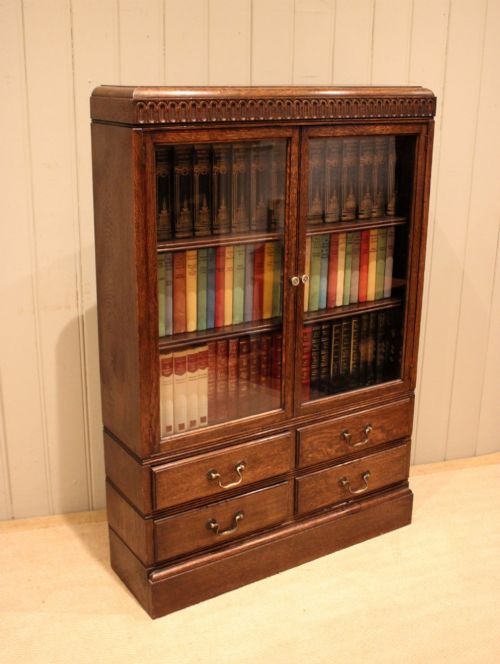
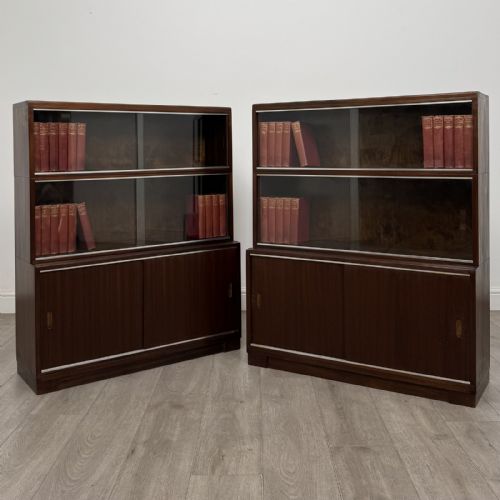
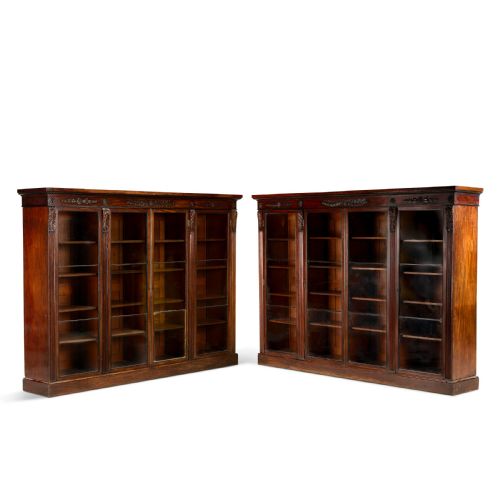
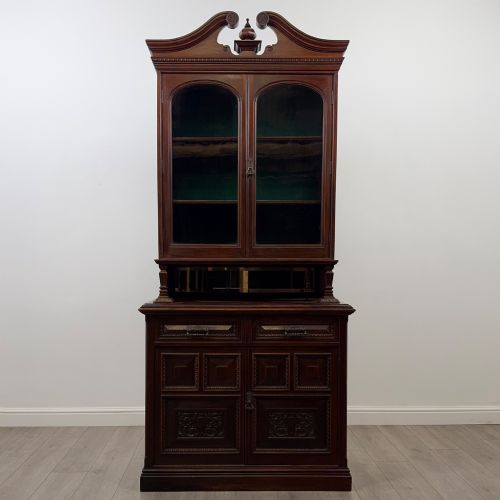
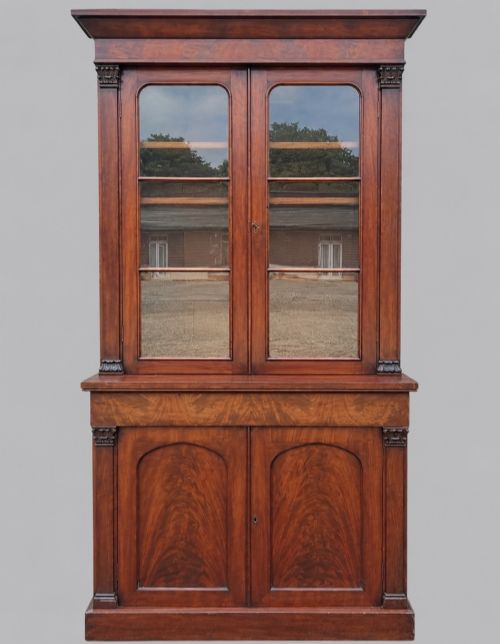
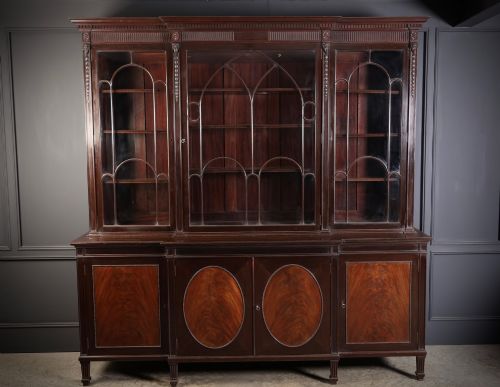
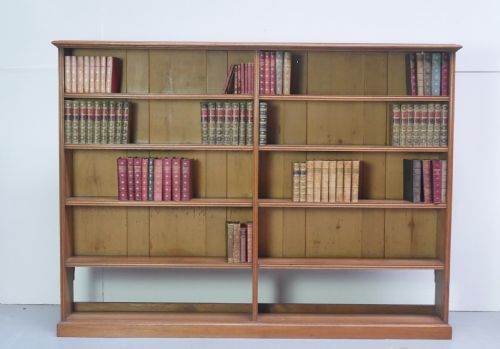
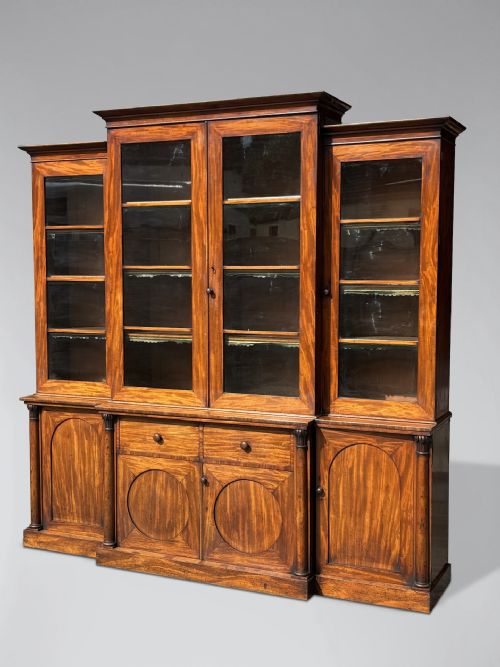
An antique library display case combines functional book storage with visible display space, often taking the form of tall bookcases, breakfronts, and cabinets. The examples found here span several distinct periods, most notably the Victorian era, the Edwardian period, and the Georgian style.
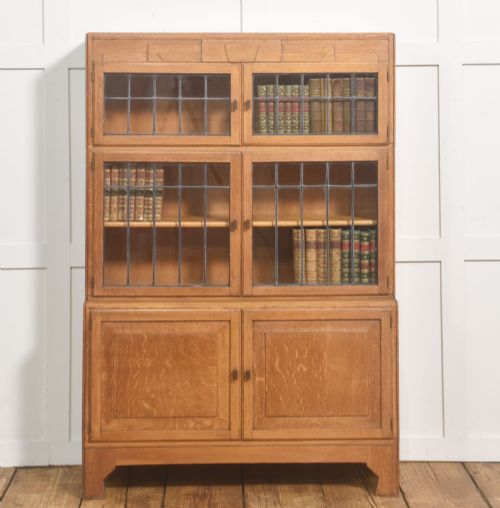
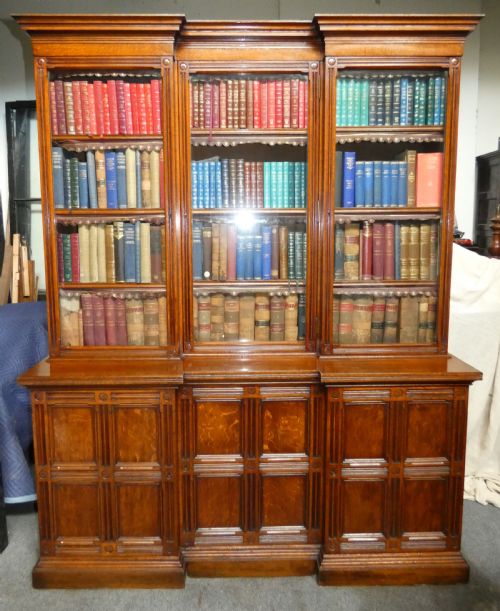
Most pieces encountered on this page rely on substantial timber construction, frequently featuring glazed doors to protect volumes while keeping titles visible. Forms range from modular stacking designs to large breakfront configurations with multiple doors and adjustable shelving.
The selection includes variations from the nineteenth century into the early twentieth century, showing both straightforward utilitarian oak and finely figured mahogany or walnut. Buyers often encounter pieces tailored for domestic libraries, ranging from narrow two-door cupboards to massive architectural units.
Materials and construction
Cabinet makers relied primarily on mahogany, oak, and walnut to build these large pieces, often adding satinwood inlay for decorative contrast. Timber selection dictated the structural stability required to support heavy rows of books across tall shelves.
Glass panels were set into wooden frames or held with lead came, while brass hardware such as handles, hinges, and locks added functional detail. Many units utilised modular stacking technology or partitioned sections to ease transportation and installation in large rooms.
Antique Library Display Case Retail Price Guide 2026
Typical asking prices for library display case among the pieces listed under this phrase on Sellingantiques today, from the lower quarter to the upper quarter. They describe what is for sale here now, not the wider market.
Listings feature mahogany, oak, and walnut cabinets spanning the Georgian, Victorian, and Edwardian periods.
Distinguishing quality across the range
Superior quality in an antique library display case depends heavily on the choice of timber and the precision of the cabinet work. Finer examples display carefully matched wood veneers, subtle inlay work, and well-proportioned architectural details such as swan neck pediments.
The sophistication of the glazing bars and the integration of adjustable shelving systems separate standard utilitarian furniture from exceptional cabinet making. Makers known for high-end retail production applied rigorous joinery standards that ensured doors aligned properly and large breakfront structures remained rigid over time.
Maple and Co.
The Antique Library Display Case Glossary
- Breakfront
- A large cabinet design where the central section projects forward from the flanking outer sections. This configuration creates architectural depth and allows for varied internal storage.
- Astral glazed
- A glass door divided into smaller panes by thin wooden or metal bars called glazing bars. This treatment lightens the visual weight of large bookcase doors.
- Swan neck pediment
- A decorative architectural feature topping a cabinet, formed of two curved brackets that rise to face each other in a graceful scroll.
- Globe Wernicke
- A proprietary system of modular stacking bookcases popular in the early twentieth century. Each tier functions as an independent glazed shelf unit.
- Lead came
- Flexible lead strips used to hold individual small panes of glass together in leaded windows and cabinet doors. It provides structural support while framing the glass.
Antique Library Display Case: Frequently Asked Questions
How are antique library display cases dated?
Dating relies on observing construction methods, timber choices, and prevailing stylistic details such as pediments and glazing bar patterns. Pieces often span from the Georgian period through to the Edwardian era.
Examining secondary woods, drawer linings, and hinge types helps narrow the decade of manufacture. Makers' stamps or labels, when present, provide definitive attribution.
Were these cases used exclusively for books?
While primarily designed to house bound volumes in private libraries, many larger cabinets served multiple purposes. Glazed doors protected fragile collections of papers and objects as well as books.
Owners frequently utilised adjustable shelves to accommodate varying folio heights and display curiosities alongside their reading material.
How do I care for a mahogany bookcase?
Maintain stable room humidity and keep timber away from direct heat sources to prevent wood splitting and veneer lifting. Regular dusting with a soft, dry cloth preserves the finish.
Avoid silicone-based polishes and apply traditional beeswax sparingly when the wood appears dry to maintain its natural lustre.