





Antique Library Decor
Antique library decor brings together nineteenth-century leather-bound volumes, carved bookends and terrestrial globes to give a study gravity and a settled feel.
Antique Library Decor
When searching for antique library decor, buyers encounter a mix of functional desk accessories, literary sets and cabinet pieces originating from the eighteenth to the twentieth centuries. The selection centres on items designed for a gentleman's study or library, including bookends, barometers, globes and runs of leather-bound volumes.
The objects most frequently met on this page span the Victorian and Edwardian periods, alongside Georgian sets and Art Deco accessories. These pieces range from practical works like desk calendars and chess sets to decorative sculptures and busts depicting historical figures such as William Shakespeare and Hippocrates.
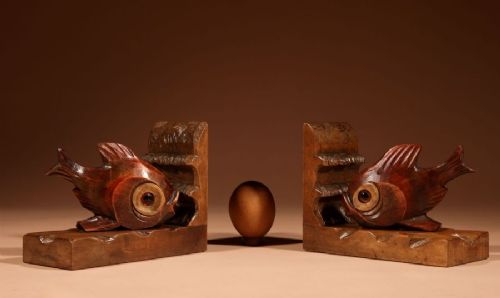
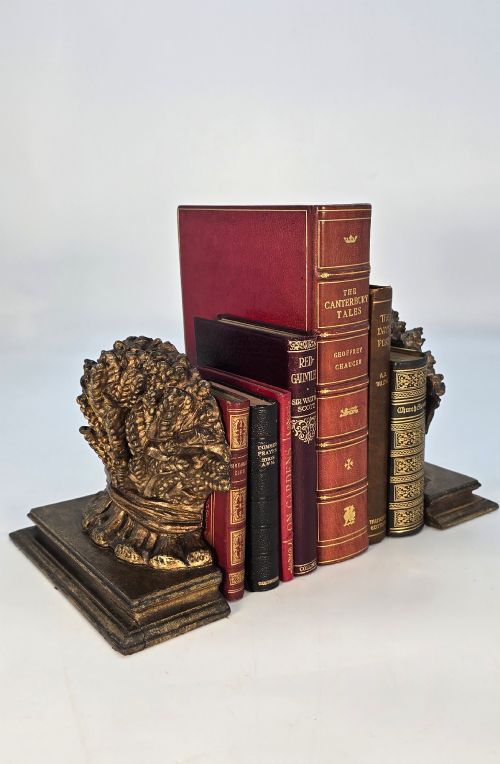
Forms derive directly from traditional study furnishings, encompassing pairs of carved wooden or brass bookends, terrestrial globes on stands, and multi-volume book sets in uniform bindings. Each piece contributes to the scholarly atmosphere of a room through traditional materials and period craftsmanship.
Materials and construction
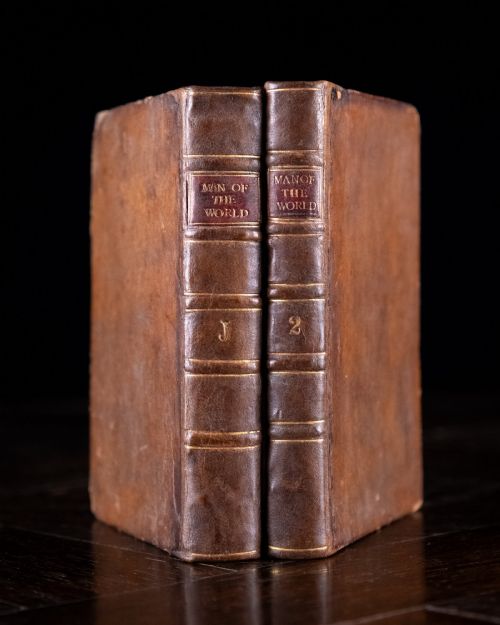
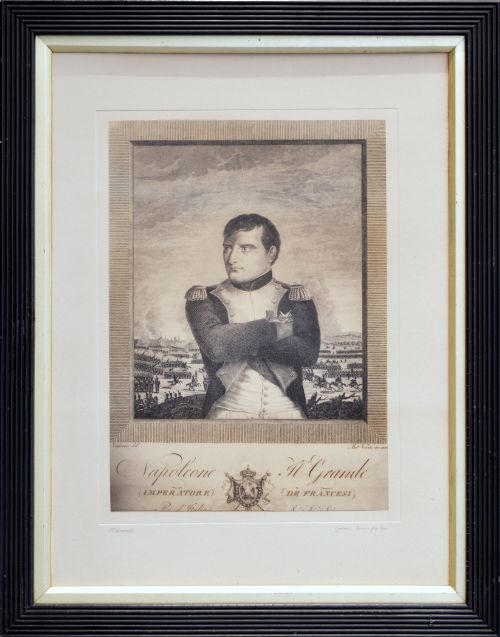
Paper and leather form the basis of the literary items, seen in antiquarian book sets, cloth-bound volumes and prints featuring gold leaf tooling. Bindings were executed by hand, often incorporating marbled endpapers and raised bands on the spines.
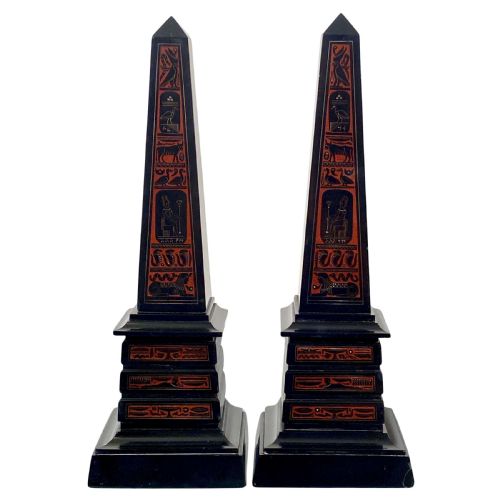
Metals and stone provide weight and structure for scientific instruments and desk ornaments, employing brass for barometers and globes, and marble or simulated stone plaster for busts and obelisks. Glass protects dial faces and terrestrial globes, while bronze and cast metal serve for sculptural bookends.
Antique Library Decor Retail Price Guide 2026
Typical asking prices for library decor among the pieces listed under this phrase on Sellingantiques today, from the lower quarter to the upper quarter. They describe what is for sale here now, not the wider market.
The listings show nineteenth-century scientific instruments alongside eighteenth-century volumes and twentieth-century bookends.
Judging the standard of pieces
The standard of a piece rests upon the crispness of the hand-carving and the integrity of the materials, such as the depth of grain in burr walnut or the fidelity of cast bronze details. Finer items display meticulous attention to anatomical proportion in figures and animals, whereas lesser examples show softer edges and simpler cast lines.
Completeness dictates quality in book sets and scientific apparatus, where uniform bindings, intact brass meridians on globes, and working barometer mercury tubes elevate a piece. Partial sets or replacements diminish the historical cohesion of the grouping.
Provenance and maker attribution separate standard decorative objects from notable works, particularly in signed terrestrial globes by makers like Malby or Crunchley, or publisher bindings executed by established binderies.
J and R Tonson·Thornton Smith Co·Henry Young and Son·Thomas Malby·Crunchley
The Antique Library Decor Glossary
- Antiquarian books
- Volumes printed or published a long time ago, typically before the nineteenth century, valued for their age and printing history.
- Territorial globe
- A spherical map of the earth mounted on an axis and stand, used historically for reference and education.
- Banjo barometer
- A wall barometer featuring a rounded top and an elongated lower section shaped like a banjo, popular during the nineteenth century.
- Grand Tour
- Cultural travel undertaken by wealthy young Europeans in the eighteenth and nineteenth centuries, bringing home souvenirs like marble obelisks and bronze busts.
- Tree calf
- A type of calfskin book binding treated with acid to produce a dark, branching pattern resembling the branches of a tree.
Antique Library Decor: Frequently Asked Questions
How do I date an old globe?
Dating a terrestrial globe relies upon examining the geographical boundaries, country names and shipping routes printed on the gores. Cartographers often updated political borders, allowing a close estimate of the year of manufacture.
Makers' signatures printed near the cartouche also provide a specific working period for the firm that produced the globe.
Were bookends common in historical libraries?
Heavy bookends emerged primarily in the late nineteenth and early twentieth centuries as libraries transitioned from closed built-in shelving to open desk arrangements. Earlier collections relied on shelves fitted with book rails or books stacked flat.
Carved wooden and metal figures became popular accessories to keep smaller selections upright on desks and side tables.
What is a wheel barometer?
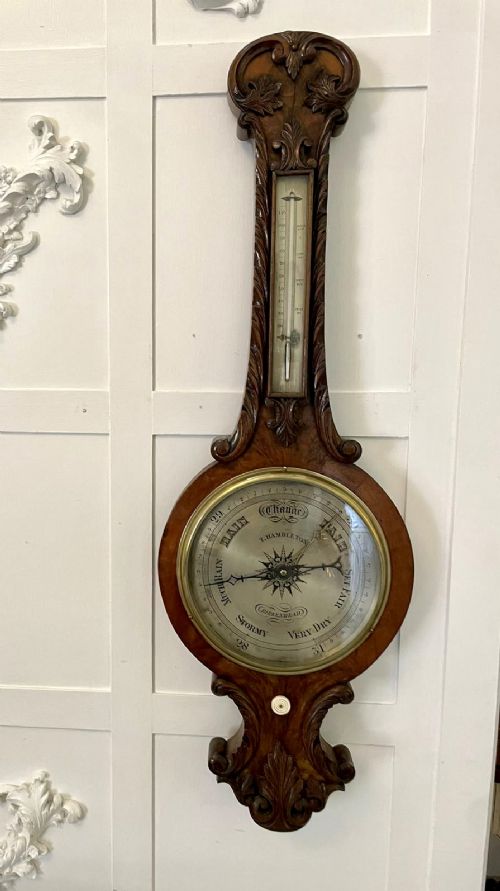
A wheel barometer uses a traditional siphon tube containing mercury connected to a mechanical pulley and pointer. Changes in atmospheric pressure cause the mercury to move, turning the needle around a visible dial.
These instruments were housed in decorative wooden cases, frequently made of mahogany or walnut with bone or brass indicator dials.
How are complete book sets catalogued?
Book sets are recorded by author, title, publication date and total number of volumes comprising the edition. Uniform bindings indicate whether the set was published together or rebound later as a matching series.
Descriptions note the material of the binding, such as leather or cloth, and any publisher stamps on the spine or endpapers.