



Antique Letter Tray
An antique letter tray organises correspondence with period style, bringing handsomely crafted timber, brass and marble directly to the modern desktop.
Antique Letter Tray
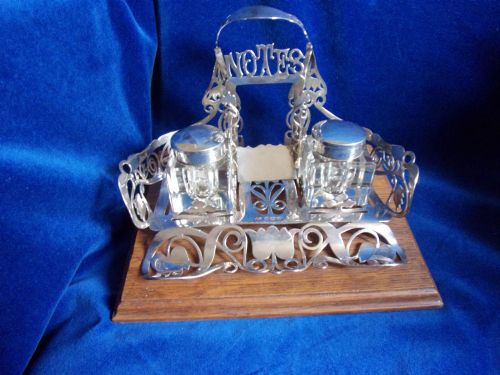
An antique letter tray encompasses desk accessories, letter racks, desk organisers, and butler's cutlery trays designed to keep workspaces orderly. The pieces appearing on this page span the Georgian, Victorian, and George V periods, reflecting the shifting domestic habits of nineteenth and early twentieth-century offices and studies.
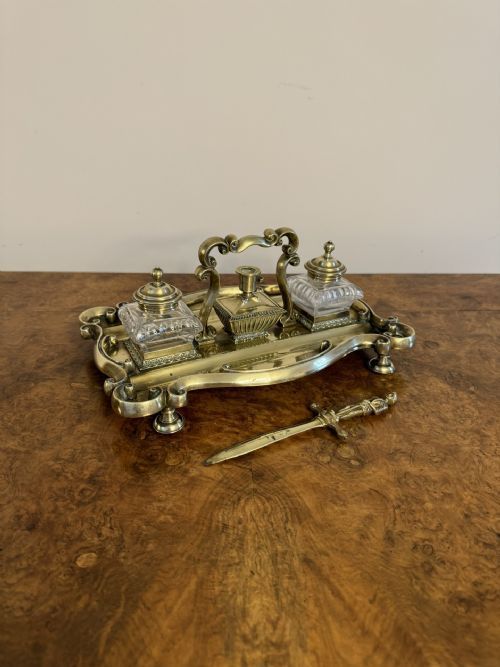
The most common forms you meet here include mahogany desk boxes, tiered wooden tidies raised on bun feet, and heavy brass or gilt bronze desk sets incorporating letter holders and inkwells. Alongside traditional wood and metal, makers utilised materials such as Ashford black marble, bone alphabet letters, and papier-mache to create functional desktop furnishings.
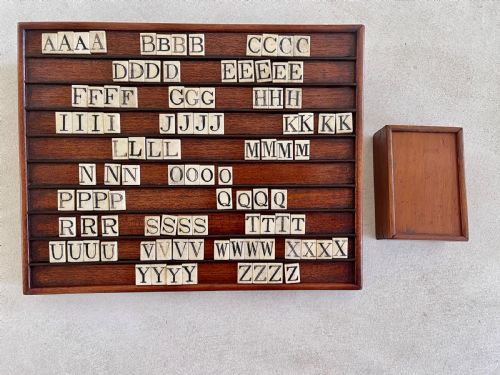
Beyond standard letter receptacles, the evidence reveals novelty pieces such as cricket bat and ball letter racks, alongside alphabet slopes that served both utilitarian and educational purposes. Each item demonstrates how Victorians and Georgians expected everyday desktop items to combine solid utility with decorative ambition.
How they were made
Makers fashioned these pieces from dense hardwoods like mahogany and walnut, frequently incorporating brass fittings, hinges, and cut glass inkwells to withstand daily handling. Cabinetmakers constructed boxes and trays with careful joinery, sometimes concealing secret drawers within the framework of an oak desk tidy.
Foundry workers cast metals into intricate forms, producing gilded bronze ormolu desks sets and brass novelty letter racks shaped like cricket equipment or detailed with playing cats and kittens. Stonemasons shaped Derbyshire Ashford black marble into polished obelisks and heavy paperweights, while other pieces received hand-applied paint, lacquer, or delicate bone inlay.
Antique Letter Tray Retail Price Guide 2026
Typical asking prices for letter tray among the pieces listed under this phrase on Sellingantiques today, from the lower quarter to the upper quarter. They describe what is for sale here now, not the wider market.
What varies in quality
The standard of a piece rests upon the weight and finish of its materials, distinguishing heavy cast brass and solid mahogany from lighter, simpler constructions. Superior items display crisp casting detail on bronze mounts and precise dovetail joinery that remains tight after generations of use.
Design ambition separates basic utility from exceptional desk furniture, as seen in pieces featuring tiered shelving, secret compartments, or intricate novelty themes. The integration of diverse materials, such as cut crystal paired with ormolu or inlaid bone on timber slopes, signals a higher grade of craftsmanship.
The Antique Letter Tray Glossary
- Ashford Black Marble
- A dark, compact limestone from Derbyshire inlaid with coloured mineral specimens in floral or geometric designs. Craftsmen polished this stone to a high gloss for Victorian desk ornaments and paperweights.
- Ormolu
- Gilded bronze utilised for decorative mounts, desk sets, and letter racks during the nineteenth century. The technique involves applying a mercury and gold amalgam to bronze before heating.
- Desk Tidy
- A compartmented tabletop accessory intended for stationery, pens, and correspondence. These pieces evolved in various configurations of wood, brass, and leather.
- Alphabet Slope
- A desktop writing box fitted with partitioned slots and accompanied by bone or wooden letters. These objects served an educational function for children learning to read and spell.
Antique Letter Tray: Frequently Asked Questions
What is an antique letter tray used for?
These items serve to organise mail, writing paper, and visiting cards on a desk or hall table. In period homes, they managed the steady flow of daily correspondence.
Today, they function practically for sorting modern mail or holding stationery while adding period character to a workspace.
How do I date an antique desk tidy?
Dating relies on identifying the prevailing style, timber choices, and manufacturing techniques evident in the piece. Georgian items typically show restrained mahogany construction, while Victorian pieces often incorporate heavier brass or novel decorative themes.
Examining fixings like screws, hinges, and drawer construction provides further clues to the decade of manufacture.
Are these desk accessories made of solid wood?
Many pieces feature solid timbers such as mahogany, walnut, or oak, particularly in structural carcases and butler's trays. Cabinetmakers selected these dense woods for durability.
Some decorative items also incorporate veneers, papier-mache, or stone elements alongside the primary wooden framework.
Did letter racks come as part of larger desk sets?
Letter holders frequently formed part of comprehensive desk sets that included inkwells, blotters, and pen trays. Wealthy households purchased matching suites for their libraries and studies.
Individual letter racks and tidies were also produced as standalone items for smaller desks.