





Antique Letter Knife
An antique letter knife is a desk accessory designed to slit envelopes cleanly, combining practical utility with refined period craftsmanship.
Antique Letter Knife
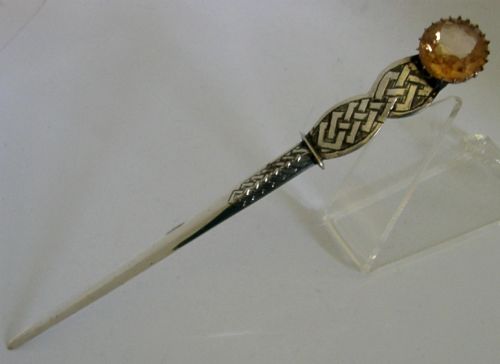
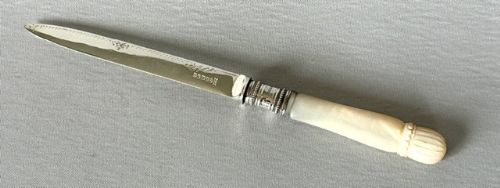
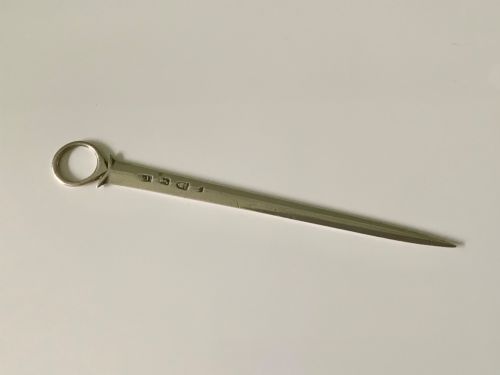
An antique letter knife serves as a desk accessory for opening correspondence, appearing in forms that bridge stationery and small-scale sculpture. The pieces found here span from the Georgian period through the Victorian era and into the early twentieth century, including Arts & Crafts, Art Deco, and trench art examples.
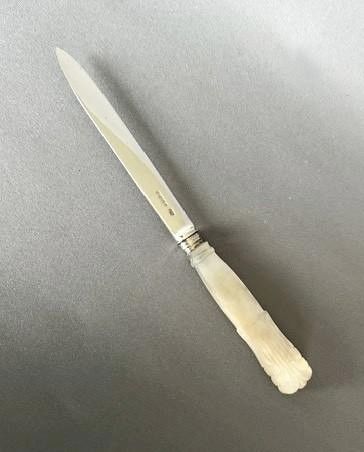
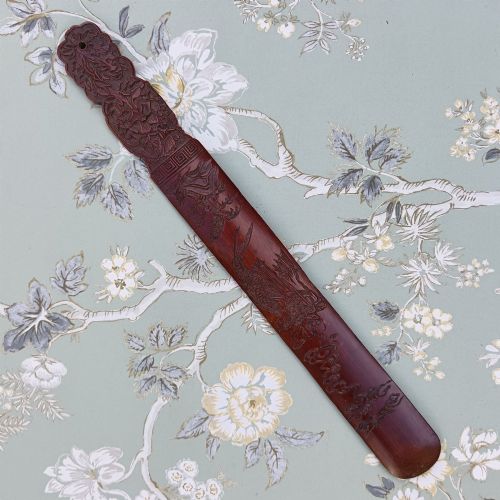
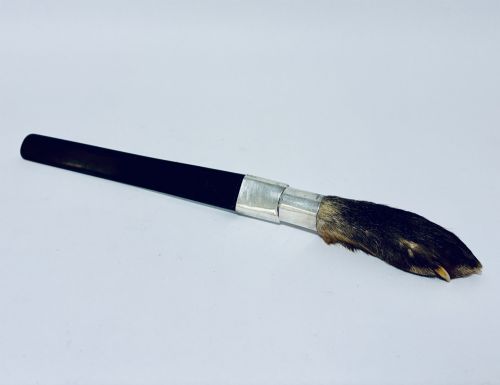
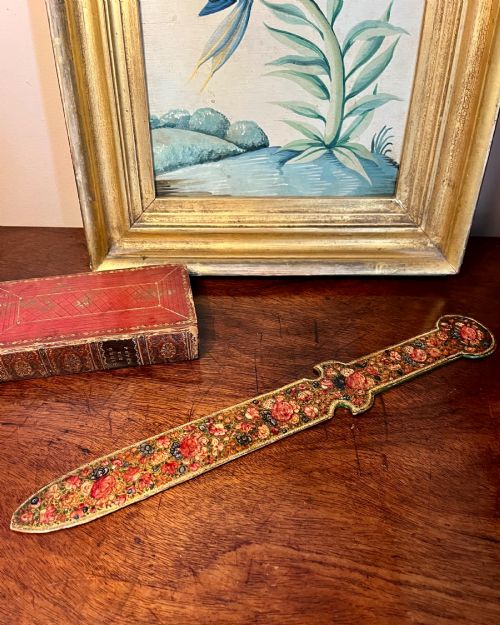
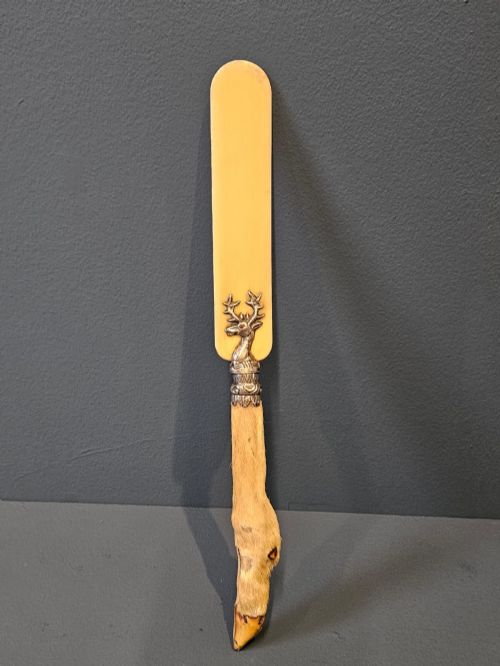
The objects frequently double as page turners, utilising long, flat blades of mother-of-pearl, bone, or wood paired with metal hilts. Makers fashioned these implements from diverse materials, incorporating silver mounts, tortoiseshell, and carved wooden handles shaped as animals or figures.
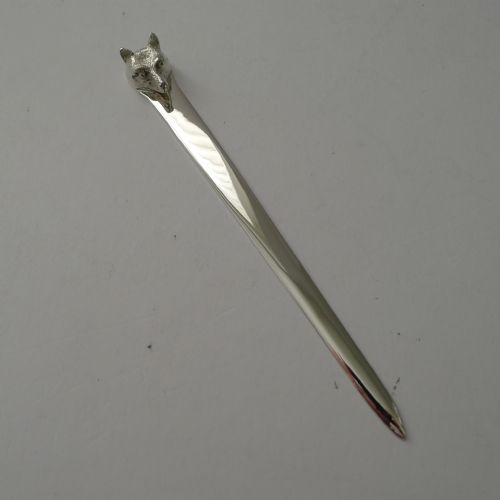
Originating as essential tools for private correspondence in domestic and office settings, these items reflect the distinct design movements of their respective decades. A buyer encounters everything from utilitarian bone blades to novelty silver pieces featuring animal terminals and enamel decoration.
Materials and Construction
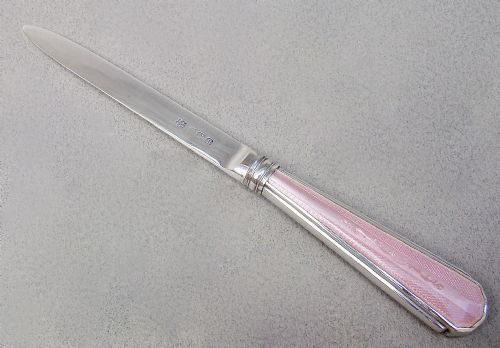
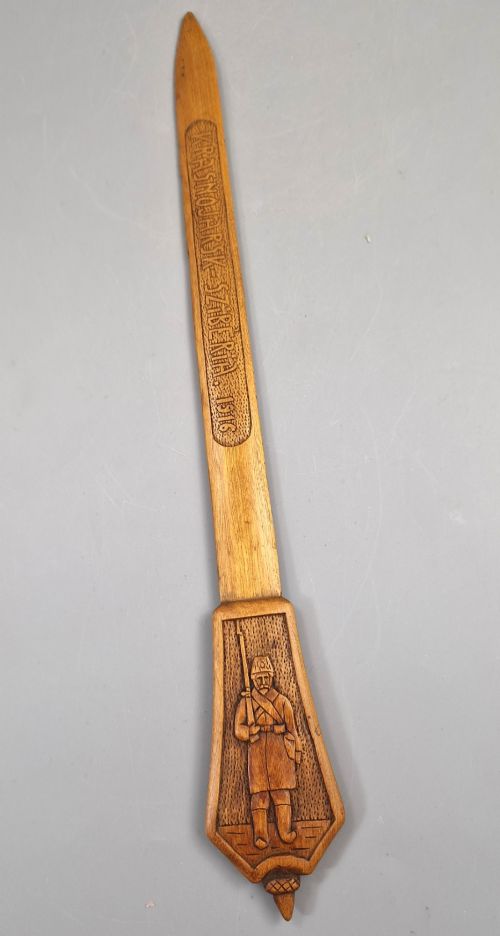
Woodworking techniques appear in carved elements made from mahogany, satinwood, yew, and ebonised timber, sometimes shaped by prisoners of war or skilled artisans. Metalworking methods include casting, guilloche enamelling, and hand-chasing, evident in bronze, pewter, and gilded items.
Makers joined metal terminals to organic or wooden blades using pins and secure silver mounts, creating durable implements designed for daily desk use.
Antique Letter Knife Retail Price Guide 2026
Typical asking prices for letter knife among the pieces listed under this phrase on Sellingantiques today, from the lower quarter to the upper quarter. They describe what is for sale here now, not the wider market.
Listings feature desk accessories spanning the Georgian era, the Victorian period, and the mid-twentieth century.
Judging Quality
The distinction between standard examples and superior pieces rests on the artistry of the handle and the integrity of the materials. Finely cast novelty handles depicting animals or human figures demonstrate a higher level of sculptural skill than plain tapered blades.
The inclusion of clear hallmarks, specialist materials like tortoiseshell or guilloche enamel, and attribution to notable makers elevates an object within its category. Condition relies upon the retention of original surface patination and the secure attachment of blade to handle.
Barker Brothers·Asprey·Moses Brent·A Barrett Piccadilly·Sampson Mordan Co·William Graeme
The Antique Letter Knife Glossary
- Assay mark
- A stamp indicating the purity of precious metal and the office of testing. These marks provide definitive clues to the date and origin of silver items.
- Page turner
- A long, flat implement designed to separate uncut pages in bound books or periodicals. They frequently share form and materials with letter knives.
- Guilloche enamel
- A decorative technique where enamel is applied over engine-turned metalwork. This creates a repeating geometric pattern beneath a translucent coloured surface.
- Trench art
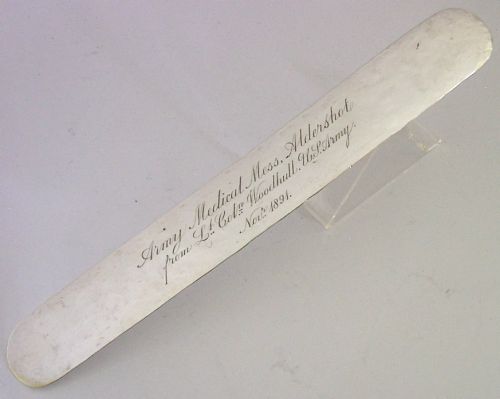
- Objects fashioned by soldiers, prisoners of war, or civilians from military scrap and local materials during wartime. These pieces often bear engraved dates and locations.
- Novelty item
- An object shaped into a humorous or unusual form, such as an animal or human figure. Makers applied this playful design approach to everyday desk tools.
Antique Letter Knife: Frequently Asked Questions
What is an antique letter knife?
An antique letter knife is a handheld implement used historically to open sealed envelopes and cut folded paper. These tools evolved as personal desk accessories reflecting the decorative tastes of the Victorian, Edwardian, and Art Deco periods.
Craftsmen produced them from a wide variety of materials, ranging from sterling silver and bronze to carved bone, wood, and mother-of-pearl.
How were letter openers used?
Users slid the thin blade beneath the folded flap of an envelope to slice the paper open without damaging the contents. They also served on writing desks alongside inkwells and stationery boxes as part of a formal correspondence set.
Many larger versions functioned simultaneously as page turners for reading uncut books and periodicals of the era.
How do I date an antique letter knife?
Silver examples often feature hallmarks stamped directly onto the metal, which indicate the assay office, metal standard, and specific year of production. Stylistic markers, such as geometric enamel work for Art Deco or naturalistic motifs for Arts and Crafts, help narrow down the period.
Organic materials like tortoiseshell and bone also align with specific manufacturing eras before synthetic plastics became common.
How should I display a letter knife?
These pieces fit naturally on top of desks, within shallow display cases, or laid flat beside other vintage stationery items. Their slender profiles make them suitable for tabletop arrangement where the handle design remains visible.
Keeping them away from direct sunlight and extreme humidity helps preserve organic materials like tortoiseshell, bone, and mother-of-pearl.