




Antique Leather Bucket
An antique leather bucket brings robust utility and heraldic display into a room, forged for service and aged into rich patination.
Antique Leather Bucket
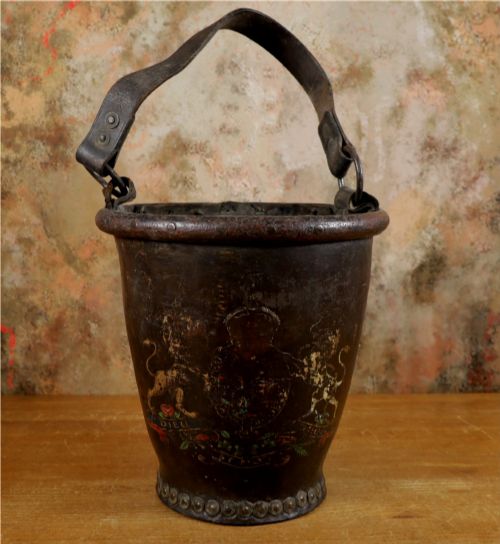
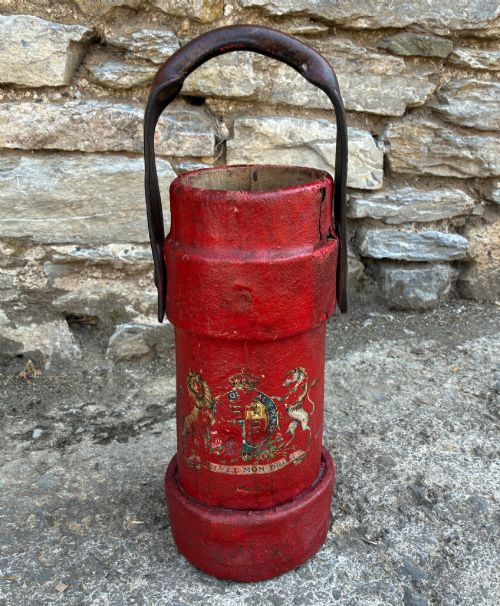
The antique leather bucket category spans utilitarian fire buckets, cordite carriers, hat boxes, and umbrella stands formed from tough, treated hide. You will most frequently encounter Georgian and nineteenth-century fire buckets bearing painted coats of arms or armorial crests.
Makers adapted these sturdy vessels for domestic use as waste paper baskets and stick stands once leather fire-fighting equipment was superseded by modern systems. The survival rate relies entirely on the heavy animal hide and the structural reinforcement applied by makers.
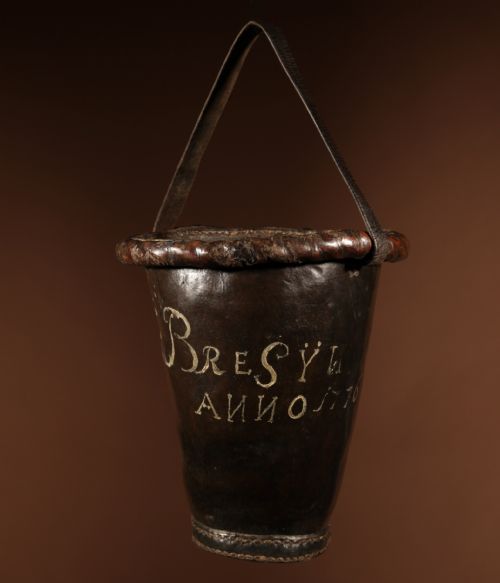
Surviving examples range from eighteenth-century Dutch and English vessels to military pieces from the First World War era. Each object carries the specific marks of its original deployment, whether assigned to a naval vessel or an English country house hearth.
Materials and construction methods
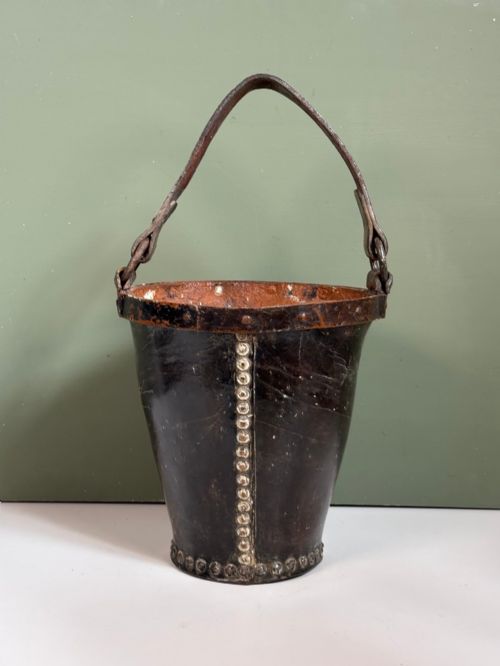
Craftsmen utilised thick hide, often boiled or treated to achieve rigidity, shaped around cylindrical forms to create the deep body of each vessel. This leather skin was stitched or riveted at the seams to withstand heavy physical strain.
Makers reinforced the rims and joints using brass, copper, and iron studs, rivets, and metal bands to secure the structure against moisture and weight. Pigment and paint were applied to the exterior surface to display royal coats of arms, civic crests, or decorative motifs.
Antique Leather Bucket Retail Price Guide 2026
Typical asking prices for leather bucket among the pieces listed under this phrase on Sellingantiques today, from the lower quarter to the upper quarter. They describe what is for sale here now, not the wider market.
Some travel-loving Victorians disguised their inkwells inside miniature leather top hat boxes, blending formal millinery with desk accessories.
Assessing quality and preservation
Quality rests in the crispness of the hand-painted armorial work and the integrity of the original leather skin rather than mere age. Pieces featuring intact coats of arms, lion and unicorn motifs, or documented makers' marks command greater attention.
The condition of the metal fastenings, including copper rivets and brass studs, dictates the structural grade of the piece. Supple leather retaining its original pigment sits at the upper end of the range, distinct from dry or heavily cracked hides.
Hepburn and Gale·Merryweather·JW Allen
The Antique Leather Bucket Glossary
- Boiled leather
- Hide treated in hot water or wax to harden it into a rigid, durable shape suitable for carrying liquids or heavy items. This process gave early fire buckets their structural strength.
- Armorial crest
- A design derived from heraldry painted onto the exterior of fire buckets to denote ownership by a regiment, noble household, or civic body. These heraldic devices often include royal symbols like the lion and unicorn.
- Cordite bucket
- A cylindrical leather carrier originally designed to transport explosive cordite charges safely aboard naval ships or military sites. Later examples often function as umbrella stands or stick holders in domestic settings.
- Copper rivet
- A metal fastener driven through overlapping sections of hide and peened down to secure the vertical seam of a bucket. These copper elements prevent the leather from tearing under load.
Antique Leather Bucket: Frequently Asked Questions
What were antique leather buckets used for?
These vessels were originally manufactured as fire buckets for dousing flames in large buildings, country houses, and aboard ships before the advent of modern mains plumbing.
Over time, many were redeployed as domestic waste paper baskets, umbrella stands, or decorative receptacles once their active fire-fighting days ended.
How do I date an antique leather bucket?
Dating relies on examining the construction style, metal fixings, and any painted armorials, with eighteenth-century pieces often showing hand-stitched seams and early civic crests.
Nineteenth-century and military examples from the First World War period introduce standardised brass studs, copper rivets, and alternative uses like cordite carriers.
Can I use a leather fire bucket for water?
Historical leather buckets were treated to hold water temporarily for emergency fire-fighting, but age makes the dried hide and stitched seams porous.
Today it is best to treat them as dry decorative objects, umbrella stands, or waste paper baskets rather than exposing them to standing water.
Why do some buckets have coats of arms?
Fire buckets displayed the coat of arms or crest of the parish, noble family, or regiment responsible for maintaining local fire-fighting equipment.
This heraldic painting identified the property during emergencies and demonstrated the civic pride or status of the institution owning them.