
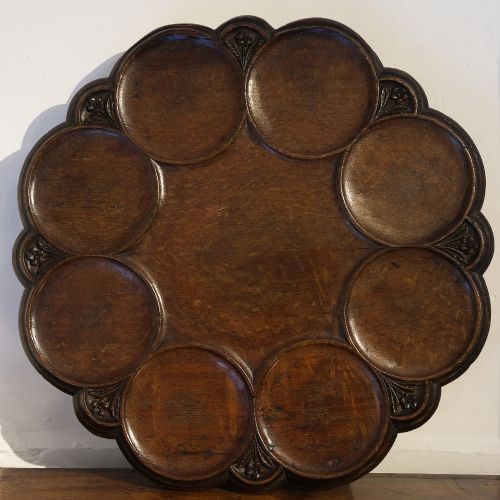


Antique Lazy Susan Table
An antique lazy susan table brings sociable dining home, offering a revolving centrepiece built to pass dishes effortlessly across the board.
Antique Lazy Susan Table
An antique lazy susan table encompasses revolving dining tables, table-top stands, dumb waiters, and serving trays designed to turn smoothly. Buyers searching this phrase look for functional rotating surfaces that assist with dining and serving.
The versions most frequently met on this page span the Georgian, Victorian, and Edwardian periods, taking the form of table-top stands or two-tier revolving constructions. These pieces provide practical rotation for sharing food without reaching across the table.
Originating primarily from English workshops, these items integrate seamlessly into period and contemporary dining rooms alike. Their revolving mechanisms range from simple wooden pivots to more elaborate tiered furniture designed for hosting.
How they were made
Makers relied predominantly on solid timbers such as mahogany and oak, often enriching surfaces with satinwood inlay or cross banding. These durable woods provided the structural strength required for a constantly turning load.
Details incorporate brass fittings, glass inserts, porcelain components, and silver plate to elevate the functional design. Joinery techniques from the eighteenth and nineteenth centuries ensured the revolving mechanism endured daily use.
Some Victorian dining companions were known as party turntables, ensuring gossip flowed just as easily as the port.
What varies in quality
The sophistication of the timber selection dictates the visual appeal, moving from plain oak through to figured mahogany and refined satinwood inlay. Superior examples display thoughtful grain matching and careful proportion across the revolving tiers.
The smoothness and stability of the rotation mechanism separate standard production from finer craftsmanship. A well-constructed pivot allows the tray to turn evenly without wobbling or sticking, reflecting the maker's original precision.
The Antique Lazy Susan Table Glossary
- Lazy Susan
- A revolving tray or tabletop stand placed in the centre of a dining table to assist with passing food. It allows diners to access shared dishes simply by spinning the surface.
- Dumb Waiter
- A tiered piece of freestanding furniture or a revolving stand designed to hold food and utensils near the dining table. This form reduces the need for constant service from staff during a meal.
- Cross Banded
- A method of applying veneer borders where the grain runs perpendicular to the main body of the wood. This decorative technique frames the circular top of a table or serving tray.
- Satinwood Inlay
- A contrasting, pale exotic wood inserted into the primary timber surface to create decorative patterns. It adds a luminous border or motif to mahogany furniture.
- George III
- The period of British design spanning the reign of George III, renowned for balanced proportions and fine mahogany craftsmanship. Pieces from this era often feature understated elegance.
Antique Lazy Susan Table: Frequently Asked Questions
How were dumb waiters used?
Dumb waiters held extra plates, cutlery, and serving dishes close to the dining table. They allowed diners to help themselves without relying on servants.
Tiered revolving versions functioned similarly to modern serving trays, keeping food accessible during long meals.
How do I date a revolving tray?
Dating relies on identifying the primary timber, construction methods, and decorative styles like satinwood inlay or Georgian proportions. Examining the central pivot mechanism also offers clues to the era of manufacture.
Victorian and Edwardian examples often feature heavier turnery, while eighteenth-century pieces lean towards restrained classicism.
Can I use an antique turntable daily?
These revolving stands were built for active dining and handle regular use well when treated with care. Placing hot dishes directly on unprotected wood should be avoided to preserve the finish.
Routine dusting and occasional wax maintenance keep the timber and the turning mechanism in good working order.