



Antique Lattice Chair
An antique lattice chair brings architectural openwork and geometric restraint to any room, offering both sturdy comfort and enduring visual lightness.
Antique Lattice Chair
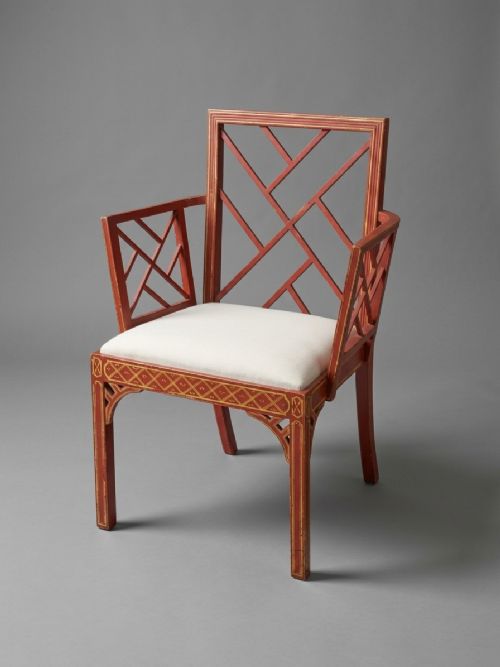
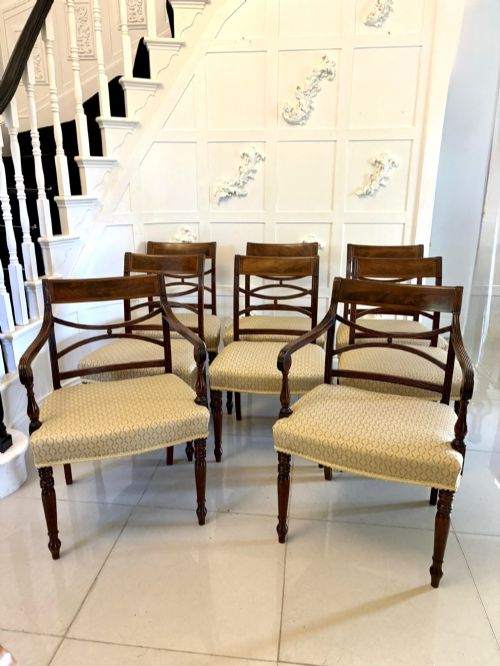
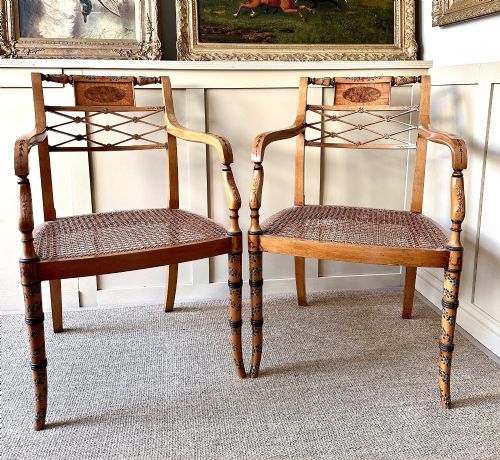
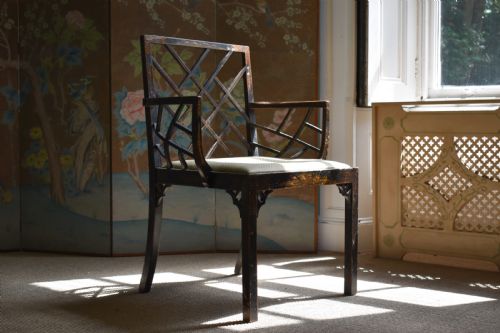
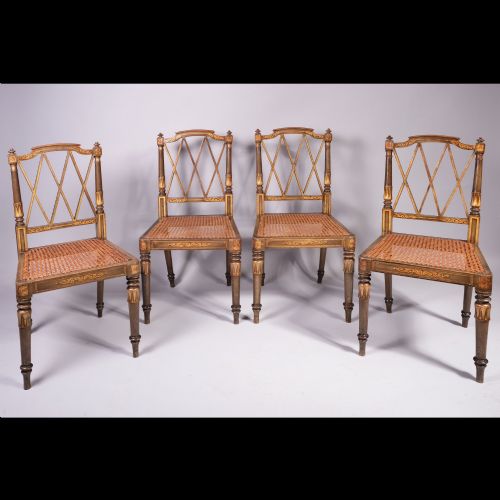
The antique lattice chair encompasses seating built with open reticulated splats, intersecting wooden bars, or woven panels. These pieces emerge across Georgian, Regency, Edwardian, and nineteenth-century periods, spanning formal dining sets, library carvers, and garden seating.
Makers and workshops utilised specific regional idioms, from the distinctive Chinese Chippendale pagoda and Cockpen patterns to British Arts and Crafts and French aesthetic movements. Buyers encounter everything from single hall chairs to large dining sets numbering up to fourteen pieces.
How they were made
Timber selection dictates the construction, with solid mahogany, oak, walnut, elm, and ebonised wood forming the primary structural frames. Joinery relies on traditional mortise and tenon joints to withstand the stress placed on open-backed geometric frameworks.
Surface treatments vary widely, incorporating hand-applied paint, lacquer, gold leaf, and polished wax over exposed grain. Details such as carved fretwork, cane inserts, textile upholstery, and fabric padding complete the construction of the seats.
Antique Lattice Chair Retail Price Guide 2026
Typical asking prices for lattice chair among the pieces listed under this phrase on Sellingantiques today, from the lower quarter to the upper quarter. They describe what is for sale here now, not the wider market.
Materials documented across the inventory include mahogany, oak, walnut, elm, bamboo, cane, wrought iron, fabric, and gold leaf.
What varies in quality
Quality rests on the crispness of the pierced fretwork and the precision of the intersecting lattice joints. Sharp, deep carving and clean geometric lines distinguish superior workshop production from simpler commercial output.
The structural integrity of the frame and the retention of original surface finishes determine the standing of each piece. Matching sets maintain higher desirability when timber patination and joinery remain uniform across every chair.
Collier and Plucknett·Thomas Chippendale·Brights of Nettlebed
The Antique Lattice Chair Glossary
- Cockpen
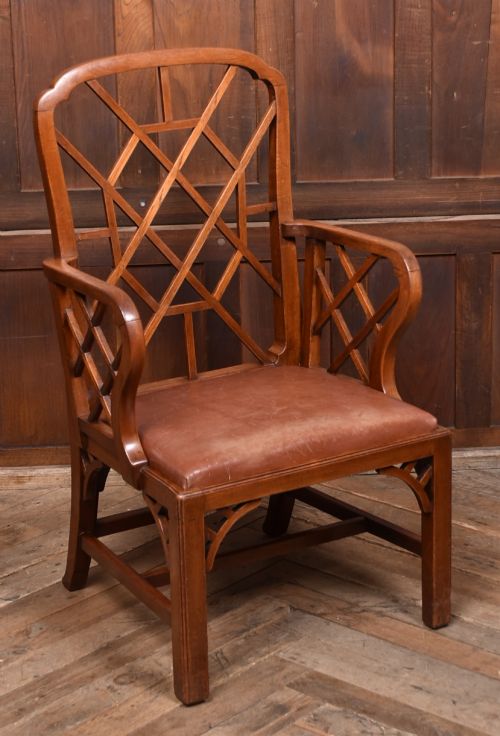
- A lattice-back chair design featuring a grid of intersecting wooden bars, inspired by Chinese joinery and popular in eighteenth and nineteenth-century British seating.
- Chippendale Revival
- A late nineteenth and early twentieth-century movement that recreated the elaborate carved mahogany styles associated with Thomas Chippendale.
- Ebonised Wood
- Timber treated with a chemical stain or dark pigment to imitate expensive ebony, frequently utilised in nineteenth-century aesthetic movement furniture.
- Carver
- An armchair designed with armrests, traditionally placed at the head of a dining table alongside matching side chairs.
- Reticulation
- An open network of interlaced material forming a lattice pattern, characteristic of decorative chair backs and splats.
Antique Lattice Chair: Frequently Asked Questions
How do I identify a Chinese Chippendale lattice chair?
Look for pierced wooden splats forming geometric grid patterns, often accompanied by square section legs and pagoda-style crest rails. These elements reflect eighteenth-century British interpretations of Chinese export furniture.
Examine the timber quality and the sharpness of the fretwork, as later revival periods also produced similar geometric motifs with distinct manufacturing marks.
Are lattice back chairs comfortable for daily dining?
Most antique dining chairs feature contoured wooden rails or upholstered drop-in pads designed to support the lower back during extended seating. The open geometry provides surprising rigidity while maintaining a light profile.
Seat height and depth vary between Georgian proportions and later nineteenth-century variations, so checking individual dimensions ensures proper alignment with modern tables.
How should I care for painted or ebonised lattice chairs?
Maintain painted and ebonised surfaces by dusting gently with a dry, soft cloth to prevent abrasive particles from scratching the finish. Avoid commercial chemical polishes that can degrade historic binders.
Keep the timber away from direct heat sources and fluctuating humidity to prevent the intricate lattice joints from drying out and loosening over time.
What is the difference between a side chair and a carver?
A side chair lacks armrests and sits compactly along the sides of a dining table. A carver includes structural arms, making it wider and typically positioned at the table ends.
In many antique sets, matching carvers and side chairs share the same lattice-back design language while serving distinct functional roles in the room.