


Antique Lancashire Furniture
These pieces of antique lancashire furniture span oak, mahogany, and elm, offering regional craftsmanship from the seventeenth century onwards.
Antique Lancashire Furniture
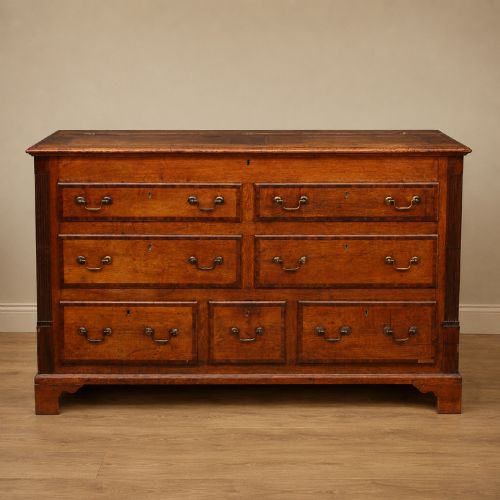
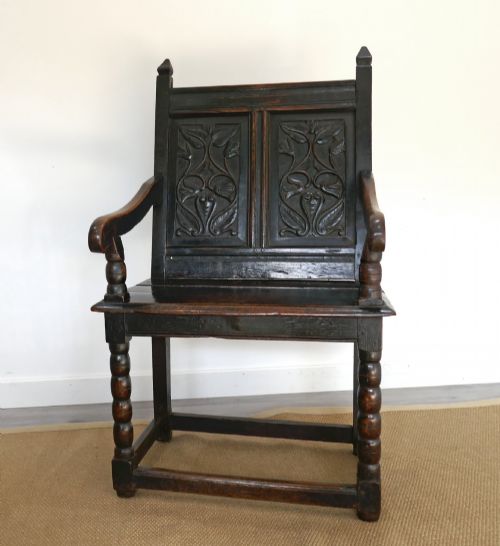
When you search for antique lancashire furniture, you enter a robust regional tradition spanning seventeenth-century country workshops through to Georgian townhouses. These pieces include mule chests, buffet cupboards, bedside commodes, sideboards, and sturdy seating such as wainscot chairs and spindleback armchairs.
You are most likely to meet solid oak and elm seating along with substantial oak storage chests bearing crossbanded mahogany details. The forms remain resolutely practical, built to serve domestic storage and seating needs across generations of English country life.
The regional distinctiveness lies in the heavy framing, local timber choices, and traditional spindle or rush seat constructions. They bridge the gap between vernacular country craftsmanship and prevailing Georgian or Regency design tastes.
How They Were Made
Local joiners and cabinetmakers relied primarily on native timbers such as oak, elm, and mahogany, often pairing structural oak frames with decorative mahogany crossbanding. Rush seating provides the resilient foundation for vernacular chairs.
Construction techniques involve traditional joinery, turning for spindleback components, and brass hardware for functional elements like handles and hinges. Flame mahogany veneer adds a refined surface layer to later Georgian pieces.
Several chairs arrive with harlequin sets of ancestors who clearly survived generations of hearty Lancashire suppers.
What Varies in Quality
Quality rests in the integrity of the native timbers and the crispness of the turned woodwork rather than surface polish alone. Early seventeenth-century joinery exhibits dense grain and robust pegged joints that differ markedly from later nineteenth-century interpretations.
The sophistication of secondary woods and decorative additions, such as mahogany crossbanding on an oak carcass, elevates certain mule chests and sideboards above plain vernacular counterparts. Proportion and original surface patination determine the visual strength of each piece.
The Antique Lancashire Furniture Glossary
- Mule chest
- A storage chest featuring one or more drawers beneath the main lift-top compartment. This form developed significantly during the Georgian period.
- Wainscot chair
- An early wooden armchair constructed with panelled backboards and solid seat frames. These pieces date back to the seventeenth century.
- Spindleback
- A chair back constructed from slender turned wooden spindles. These components are typical of regional English country seating.
- Crossbanding
- A decorative border of veneer laid with the grain running perpendicular to the main surface. This technique appears on Georgian pieces.
- Rush seat
- A seating surface woven from dried marsh rushes. This traditional method supports the vernacular style of country chairs.
Antique Lancashire Furniture: Frequently Asked Questions
How do I identify seventeenth century oak?
Seventeenth-century oak displays deep colour patination, visible medullary rays, and heavy pegged structural joints.
These pieces reflect vernacular English joinery traditions long before industrial manufacturing standardisation.
Are spindleback chairs comfortable?
Spindleback chairs offer supportive upright seating shaped by traditional turned wooden components and woven rush seats.
They function well as dining or occasional chairs within traditional and contemporary interiors alike.
What wood was used in lancashire furniture?
Local makers utilised native timbers including solid oak and elm for structural durability and daily utility.
Later pieces incorporated mahogany and flame mahogany veneer to reflect broader Georgian and Regency stylistic shifts.
Where were these pieces made?
Regional workshops across Lancashire and Cheshire produced these robust items for local domestic use.
The vernacular designs often shared stylistic traits with neighbouring county furniture traditions.