





Antique Kitchen Settle
An antique kitchen settle brings practical rustic charm and centuries of domestic history straight into a modern home.
Antique Kitchen Settle
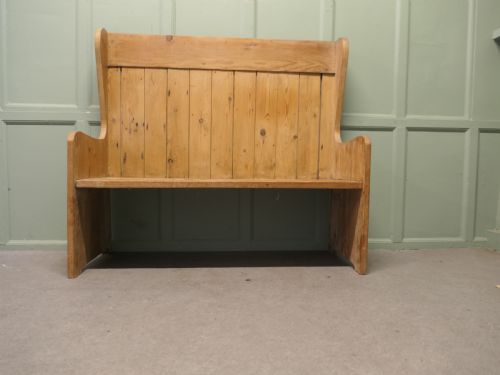
An antique kitchen settle is a traditional high-backed wooden bench originally designed to keep household occupants warm and sheltered from draughts in farmhouses and cottages. The listings here predominantly feature nineteenth-century and Victorian examples originating from various European regions.
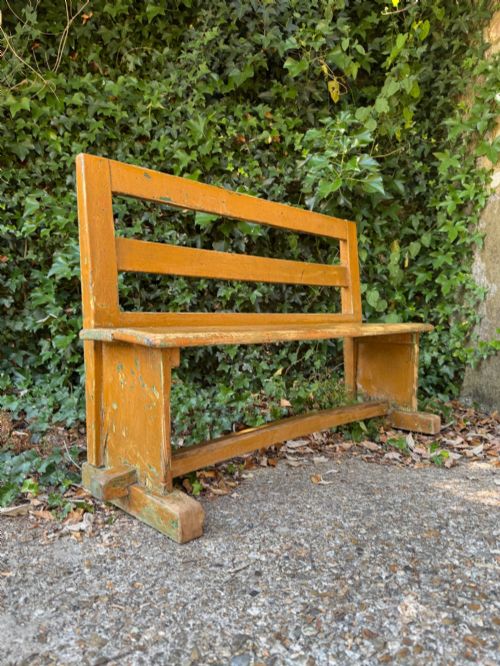
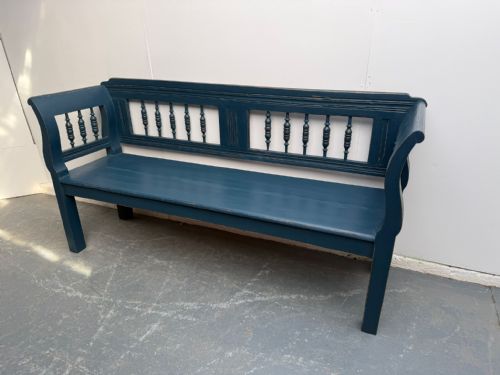
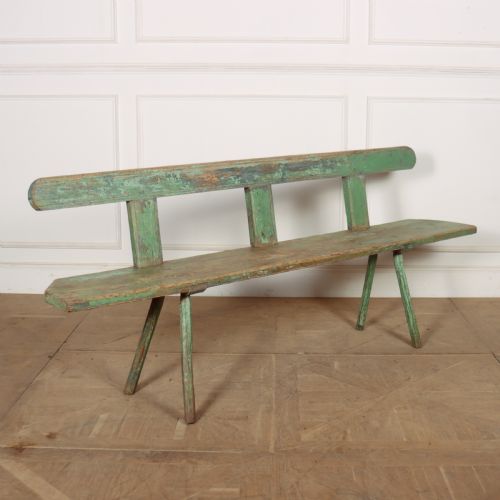
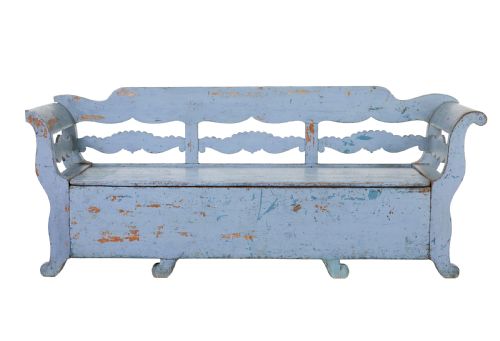
The forms span rustic country benches, tavern benches, and long dining benches built for communal seating. Most pieces are constructed from pine, often retaining original paintwork in blue or other folk art finishes, alongside regional timbers like ash and elm.
Buyers encounter forms ranging from simple two-seater fireside benches to large three-seater Hungarian and Swedish country benches. These seating pieces reflect the utilitarian needs of rural households combined with distinctive regional decorative traditions.
How these pieces were made
Makers utilised solid timbers such as pine, ash, and elm, selected for local availability and structural durability in busy rural kitchens. Carpenters joined these heavy woods using traditional pegged and framed joints to withstand daily domestic use.
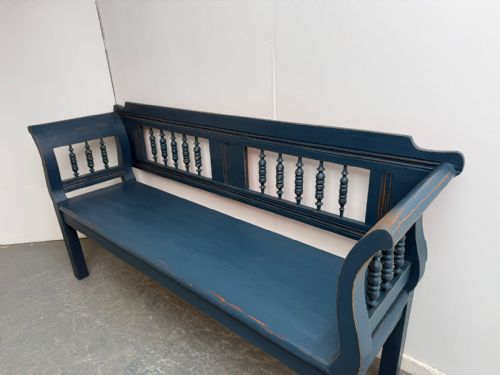
Many of these country benches feature applied layers of paint, including original blue schemes and folk art motifs typical of Hungarian, Swedish, and Austrian workshops. Surfaces display the tool marks and weathering of nineteenth-century craftsmanship without industrial smoothing.
Antique Kitchen Settle Retail Price Guide 2026
Typical asking prices for kitchen settle among the pieces listed under this phrase on Sellingantiques today, from the lower quarter to the upper quarter. They describe what is for sale here now, not the wider market.
Listings feature nineteenth-century pine, ash, and elm furniture spanning rustic, folk art, and country styles from Britain, Hungary, Sweden, Austria, and France.
What varies in quality
The distinction between ordinary utility items and superior examples lies in the survival of original painted finishes and untouched regional surfaces. Pieces retaining their authentic nineteenth-century colour display a depth of character that stripped or heavily restored timber lacks.
Proportional harmony and structural integrity separate standard workshop output from finer folk art pieces. Well-balanced proportions in long dining benches and high-back settles indicate careful regional carpentry rather than hurried rural construction.
The Antique Kitchen Settle Glossary
- Settle
- A wooden bench with a high back and solid arms, traditionally placed near a hearth to block cold draughts. These pieces often incorporate enclosed storage beneath the seat.
- Folk art
- Decorative painting and carving traditions created by rural artisans rather than urban guilds. This style defines the colourful surface treatments seen on many continental European country benches.
- Tavarn bench
- A long, robust seating form constructed for public houses and inns. These utilitarian benches prioritised heavy timber frames and stability over domestic ornamentation.
- Pine
- A softwood widely utilised across nineteenth-century European furniture making. It accepts paint readily and forms the primary material for the country benches listed here.
Antique Kitchen Settle: Frequently Asked Questions
Where should I place an antique kitchen settle?
These benches suit large hallways, boot rooms, or dining tables where their high backs create a strong architectural focal point. They also function well against long living room walls.
Ensure adequate clearance for their substantial wooden frames and high backs before positioning them in smaller domestic spaces.
How do I care for painted pine furniture?
Protect original painted surfaces from direct sunlight and excessive moisture to prevent flaking or fading. Dust gently with a dry microfibre cloth rather than using chemical polishes.
Maintaining stable indoor humidity levels prevents the nineteenth-century timber from warping or splitting over time.
Are these benches comfortable for daily dining?
Many nineteenth-century country benches feature upright wooden backs and solid seats designed for utility rather than lounging. Adding loose seat pads or cushions improves comfort during long meals.
Check the seat height and depth relative to your dining table to ensure an ergonomic seating posture.
How do I identify a regional style?
Regional styles appear through distinct construction methods, timber choices, and characteristic folk art paint applications. Hungarian and Swedish pieces often display specific blue pigments and decorative brushwork.
Comparing the joinery details and wood species such as ash and elm helps trace a piece to its European country of origin.