




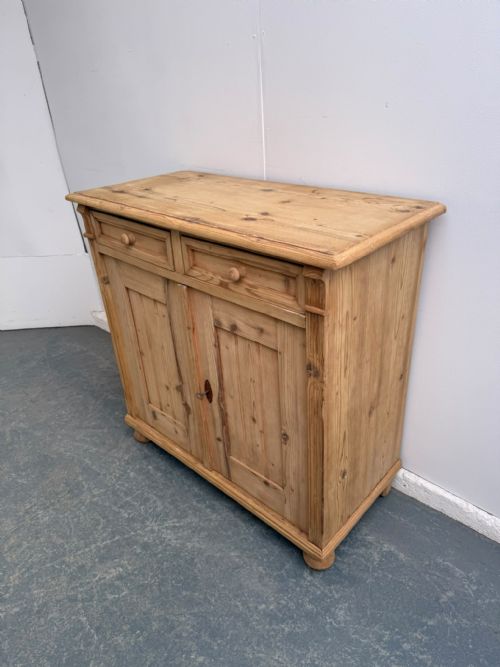
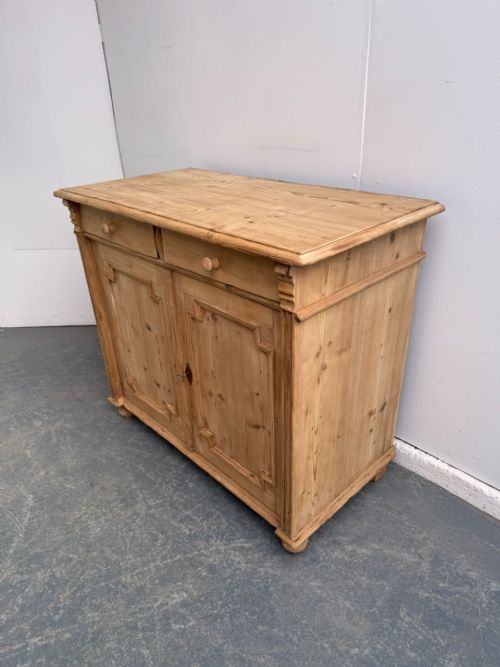
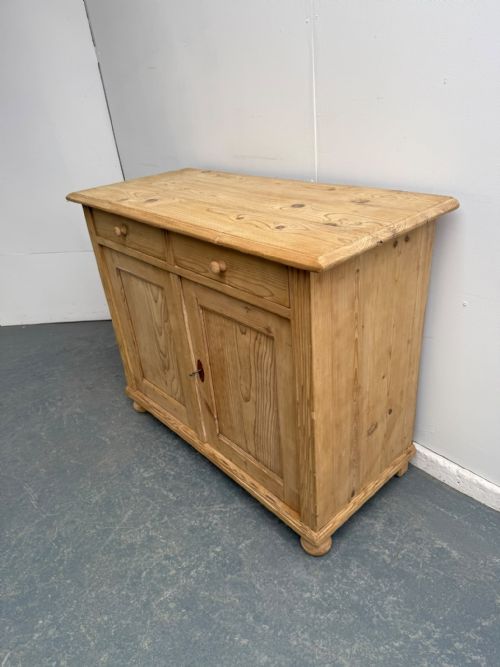

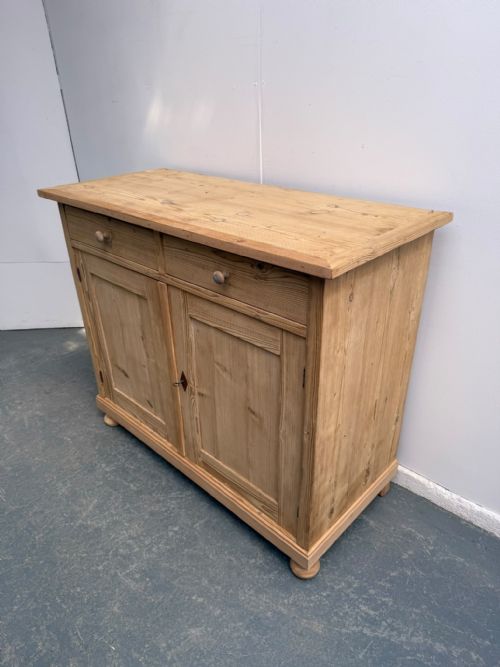
Antique Kitchen Credenza
An antique kitchen credenza brings honest utility to a room, offering sturdy timber surfaces and deep storage shaped by generations of practical domestic use.
Antique Kitchen Credenza
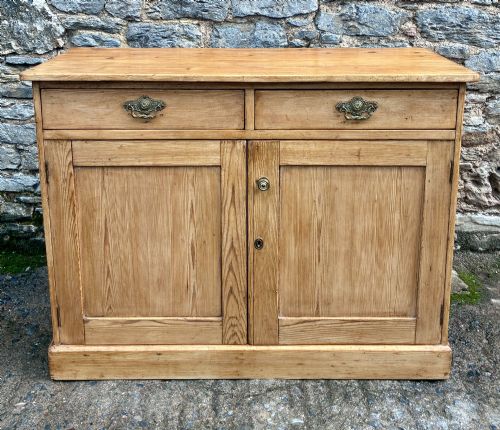
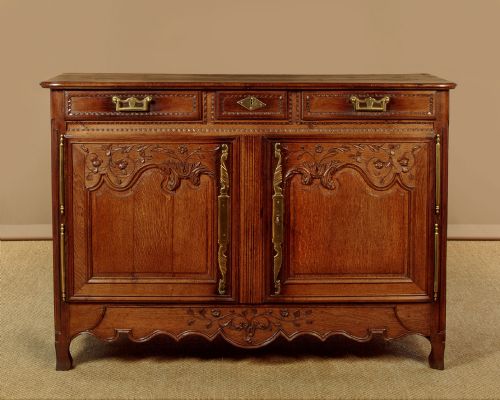
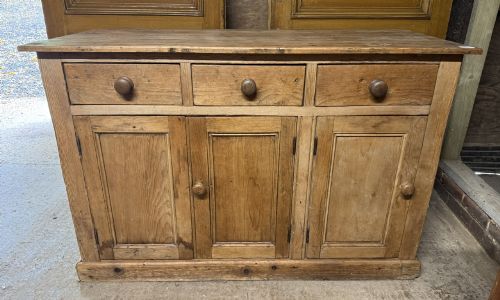
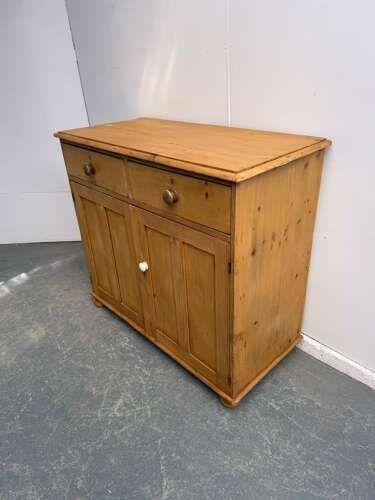
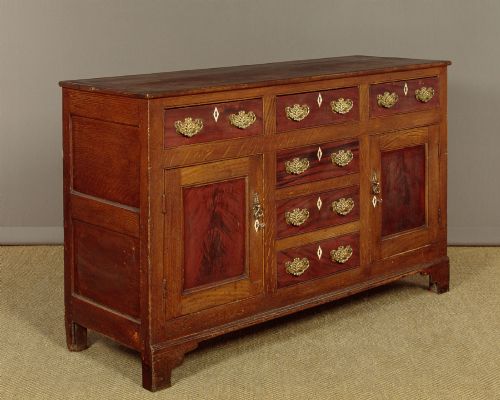
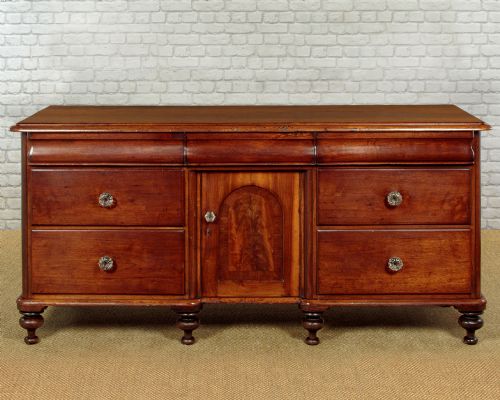
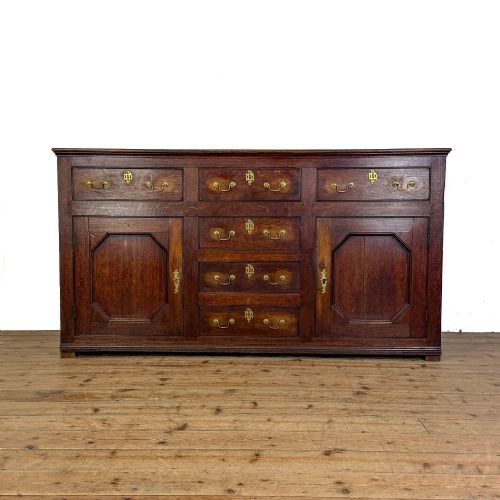
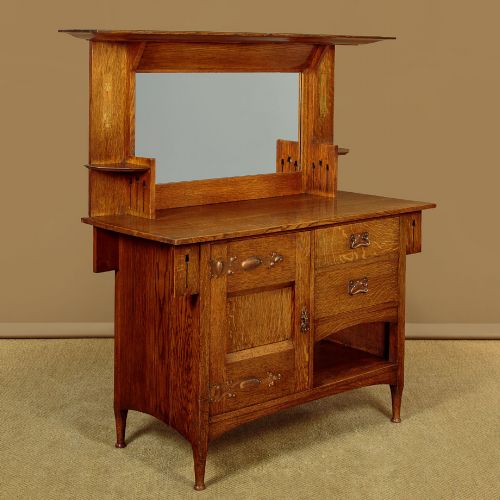
When buyers search for an antique kitchen credenza, they encounter substantial low storage pieces, most frequently appearing on this page as pine or oak dresser bases, cupboards, and low sideboards.
The pieces span the eighteenth, nineteenth, and early twentieth centuries, drawing heavily from English country, Georgian, and Victorian traditions.
Domestic service and rural utility dictated the forms, resulting in heavy timber frames designed to hold heavy provisions, crockery, and linens.
How they were made
Constructed primarily from solid regional timbers such as pine, oak, ash, and walnut, these items relied on durable joinery to withstand daily kitchen wear.
Surfaces often show original paint, wax finishes, or bare scrubbed wood, while hardware incorporates cast brass and iron hinges, handles, and escutcheons.
Cabinet makers built these units with pegged mortise and tenon joints, heavy panelled doors, and deep drawer boxes assembled with hand-cut dovetails.
Antique Kitchen Credenza Retail Price Guide 2026
Typical asking prices for kitchen credenza among the pieces listed under this phrase on Sellingantiques today, from the lower quarter to the upper quarter. They describe what is for sale here now, not the wider market.
Certain nineteenth-century pieces conceal bread slides designed for resting dough, carrying the quiet ghost of Victorian baking straight into modern kitchens.
What varies in quality
The integrity of the timber and the preservation of original surfaces separate standard utility pieces from finer examples.
Proportion and scale dictate the visual weight of the item, where well-balanced drawer arrangements and untouched patinas distinguish superior provincial work.
The Antique Kitchen Credenza Glossary
- Dresser base
- The lower section of a traditional kitchen dresser, functioning as a standalone sideboard or low cabinet with drawers and cupboards.
- Potboard
- An open slatted lower shelf built into a dresser base, traditionally used for storing pots, pans, and heavy earthenware.
- Bread slide
- A pull-out wooden tray integrated into the cabinetry, historically used for cooling bread or preparing dough.
- Chiffonier
- A low sideboard or cabinet with enclosed cupboards beneath, popular during the nineteenth century for dining and living spaces.
- Sacristy cabinet
- A low buffet or cupboard originating from ecclesiastical settings, utilised domestically for storing household linens and dry goods.
Antique Kitchen Credenza: Frequently Asked Questions
How were these cabinets used?
These units served as the hardworking hubs of historic kitchens, providing sturdy surfaces for food preparation and deep drawers or cupboards for heavy cookware and provisions.
Over time, many transitioned into dining rooms and hallways to store linens, silver, and dry goods while offering a surface for display.
How do I care for wax finishes?
Maintain waxed timber surfaces by applying a traditional beeswax paste sparingly and buffing with a soft cloth to nourish the wood and protect the grain.
Avoid placing these items near direct heat sources or in damp environments, as fluctuations in temperature cause solid timber to warp or split.
What is the difference between oak and pine pieces?
Oak pieces generally hail from earlier Georgian periods or formal country houses, offering denser grain, deeper natural colour, and greater structural weight.
Pine items are more commonly associated with Victorian country homes and farmhouses, frequently discovered with original painted finishes or scrubbed top boards.
Can I use a dresser base as a sideboard?
Dresser bases function exceptionally well as modern sideboards in dining rooms or living spaces due to their low profile, deep drawers, and generous top surfaces.
Their substantial proportions provide practical storage for modern tableware while introducing authentic period character to contemporary interiors.