


Antique Kingwood Table
An antique kingwood table brings distinctive violet-brown grain and gilt mounts into a room, offering both a functional surface and historical French elegance.
Antique Kingwood Table
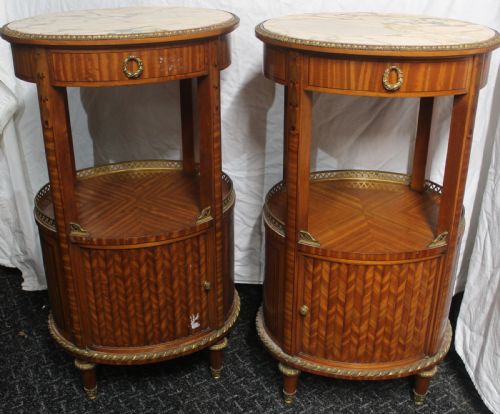
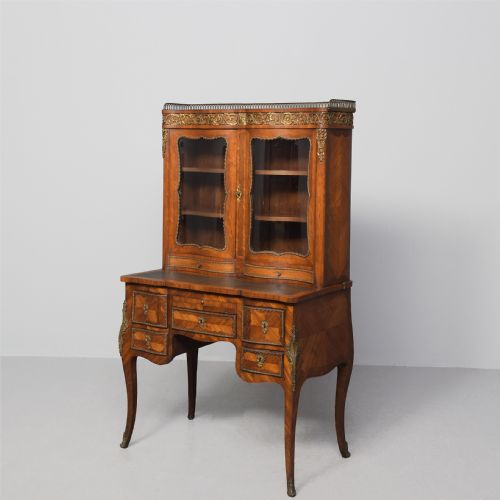
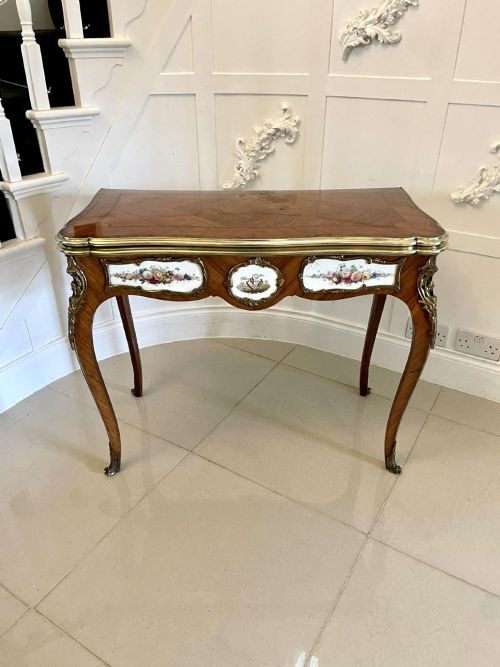
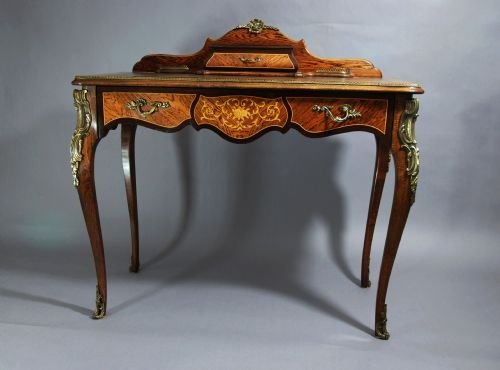
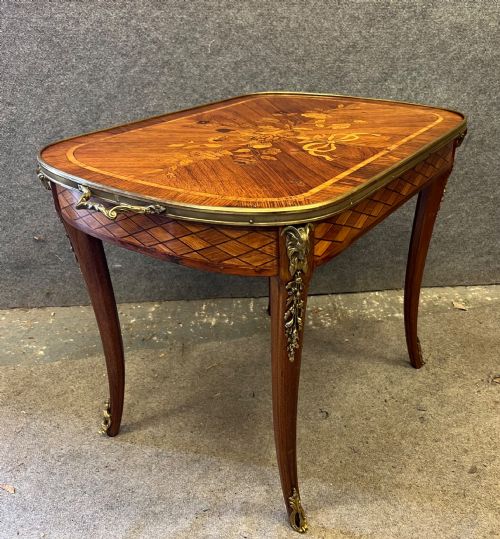
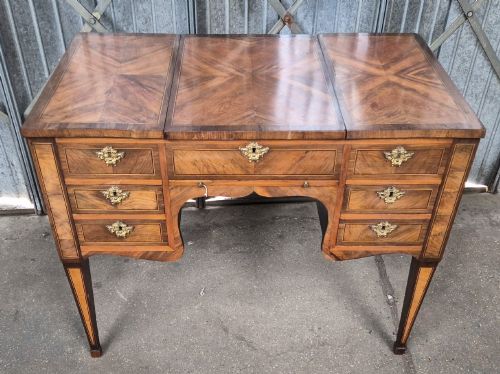
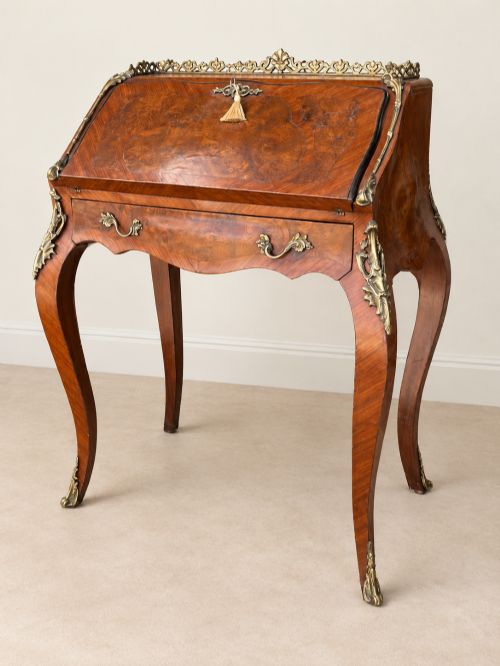
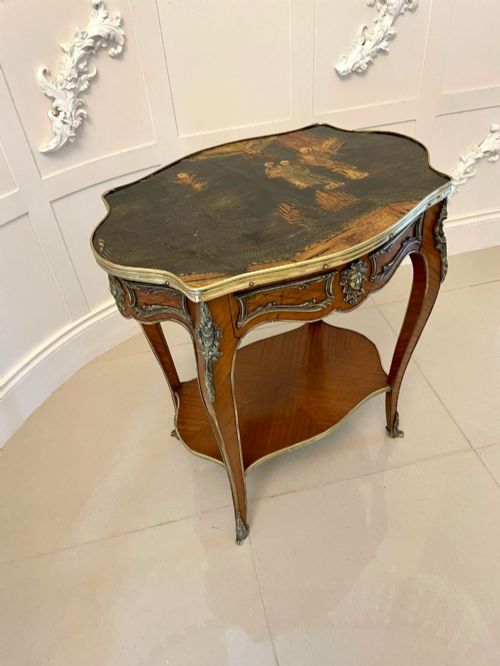
An antique kingwood table spans utilitarian writing desks, decorative centre tables, and smaller occasional pieces designed for domestic utility. Buyers encounter freestanding centre tables, card tables, and bedside cabinets frequently within nineteenth-century French revival styles.
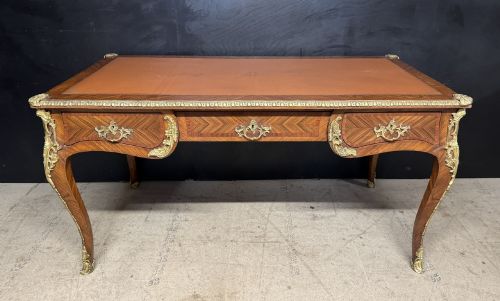
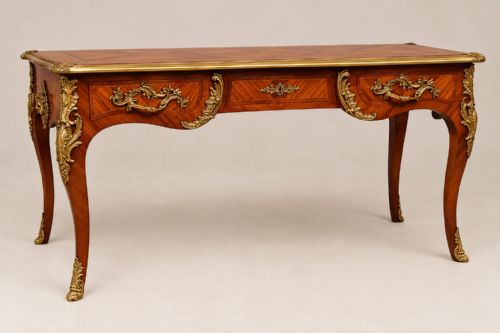
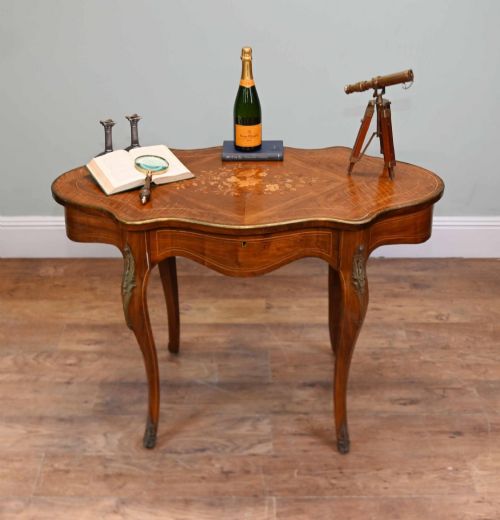
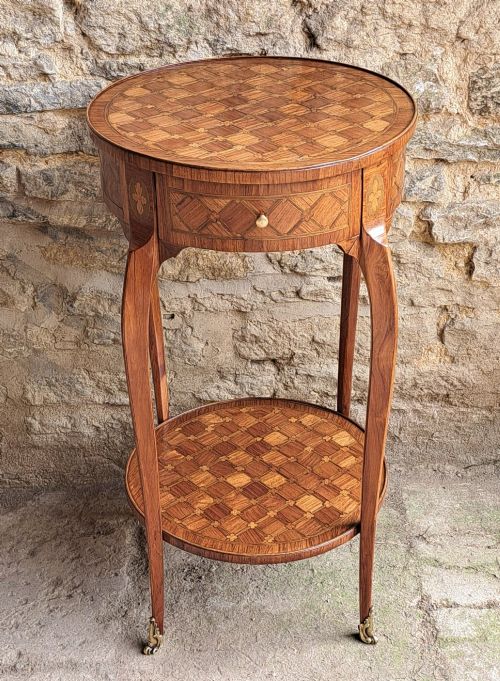
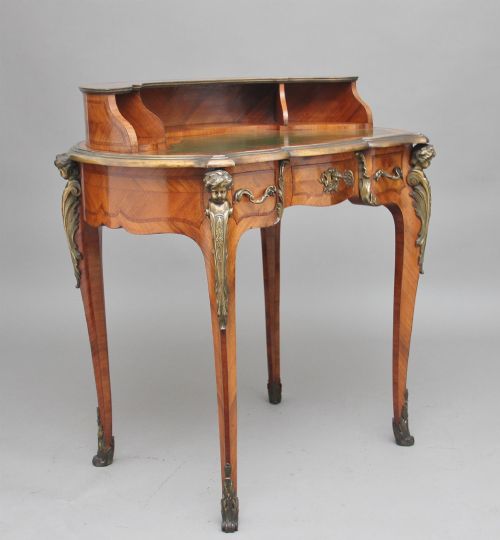
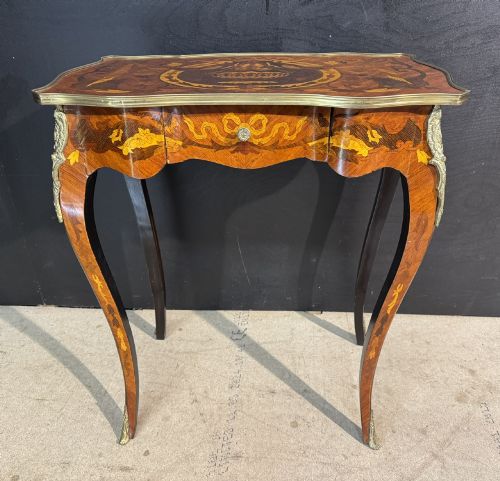
The physical form often follows Louis XV and Louis XVI aesthetic traditions, incorporating serpentine lines, cabriole legs, and parquetry or marquetry patterns. Many examples function as writing desks or bureau plats, equipped with leather inserts and fitted drawers.
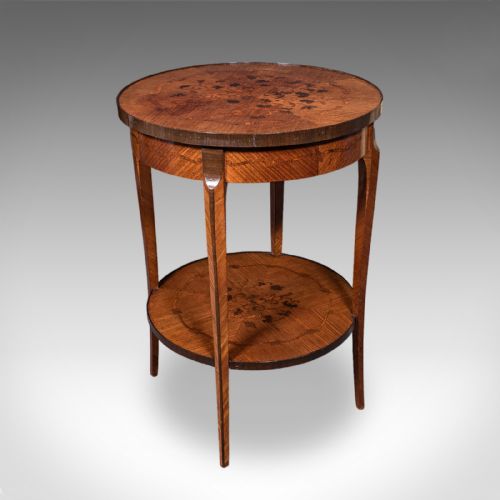
Makers utilised dense tropical timbers to create surfaces that served as focal points in nineteenth-century drawing rooms and libraries. Smaller variations, such as two-tier étagères and bedside cabinets, demonstrate the versatility of the form across the Edwardian era and into the nineteen-thirties.
Materials and construction methods
Craftsmen applied thin veneers of kingwood over secondary woods like oak or pine, arranging the distinct violet and dark brown grain to form geometric parquetry or floral marquetry designs. Crossbanding often framed these panels, highlighting the natural variance of the timber.
Ormolu and gilt bronze mounts were cast, chased, and fixed to corners, legs, and aprons to protect edges and accentuate curves. Brass inlay and marble tops appear frequently, combining structural weight with decorative metalwork.
Internal framing utilised traditional joinery, while mechanical elements in writing desks and occasional tables relied on hand-fitted brass hinges, pivots, and sliding compartments.
Antique Kingwood Table Retail Price Guide 2026
Typical asking prices for kingwood table among the pieces listed under this phrase on Sellingantiques today, from the lower quarter to the upper quarter. They describe what is for sale here now, not the wider market.
Some nineteenth-century tables hide sophisticated mechanisms beneath their marquetry tops, designed to spring open at the touch of a secret button.
Assessing quality in construction and design
The precision of the marquetry and parquetry determines the visual standard of the surface, with superior pieces displaying seamless joints and intricate floral or geometric patterning without visible gaps. The selection of the kingwood veneer itself dictates depth of colour and contrast.
Mounts cast in ormolu or gilt bronze show varying degrees of hand-chasing; sharper detail in the metalwork separates workshop productions from mass items. The weight and movement of integrated hardware, such as drawers and drop-front mechanisms, reflect the initial cost of manufacture.
Structural integrity relies on the retention of original veneers and mounts, alongside stable secondary woods that resist warping over time.
Edward Holmes Baldock·Francois Linke·Edwards and Roberts·Joseph-Emmanuel Zwiener·Paul Sormani·CH Jeanselme and Co·Durand·Soubrier
The Antique Kingwood Table Glossary
- Kingwood
- A dense, heavy timber featuring violet-brown heartwood with dark stripes, used extensively for fine veneer work. It belongs to the Dalbergia genus and originates from Brazil.
- Ormolu
- Gilt bronze applied to furniture mounts, cast and hand-chased to produce decorative highlights. The technique involves coating copper alloy with a mercury-gold amalgam and heating it.
- Marquetry
- The art of applying pieces of veneer to a structure to form decorative patterns and pictures. Craftsmen cut various woods together to ensure tight joints.
- Parquetry
- Geometric mosaic woodwork used for patterned surfaces on tabletops and floors. It relies on repeating shapes like squares, triangles, and lozenges.
- Bureau Plat
- A freestanding double-sided writing desk featuring a flat top, often inset with leather. It typically stands on cabriole or tapered legs with metal mounts.
Antique Kingwood Table: Frequently Asked Questions
How do I care for a kingwood surface?
Keep the timber away from direct sunlight and excessive heat sources to prevent the veneer from drying and lifting. Regular dusting with a dry, soft cloth maintains the finish without moisture damage.
Apply high-quality beeswax sparingly when the wood appears dry, buffing gently along the grain. Avoid using modern silicone sprays or household cleaners that can degrade the polish.
Where were these tables placed historically?
These tables served primarily in formal drawing rooms, boudoirs, and libraries of grand residences. Centre tables stood freestanding in room interiors, while writing desks occupied window alcoves for optimal natural light.
Smaller pieces like bedside cabinets and occasional tables functioned as bedside storage or display surfaces for decorative objects and lamps.
How can I distinguish a revival piece from an original?
Examine the construction of the secondary woods inside drawers and beneath tabletops, as nineteenth-century workshops used different planing and sawing methods than later makers. Tool marks and handmade screw types offer clues to the manufacturing decade.
Check the uniformity of the ormolu mounts and the wear patterns on the feet and handles to confirm age-consistent handling.
What is the difference between a bureau plat and an occasional table?
A bureau plat functions as a dedicated writing desk, featuring a wide writing surface, often lined with leather, and integrated drawers within the apron. It is built for sustained administrative work.
An occasional table serves a general purpose, offering a smaller surface area designed for holding lamps, books, or decorative items rather than writing.