


Antique Key Cabinet
An antique key cabinet organises security with purpose, offering fitted hooks or compartments within solid timber frames.
Antique Key Cabinet
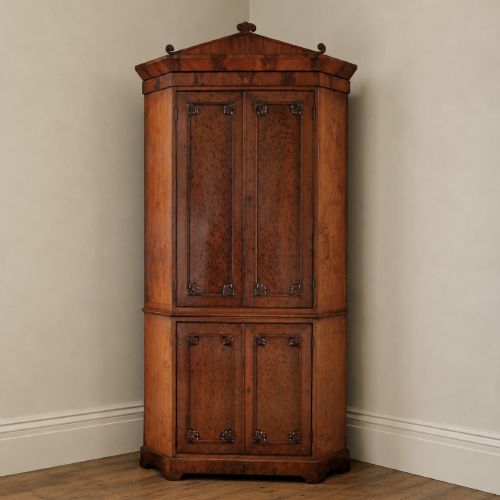
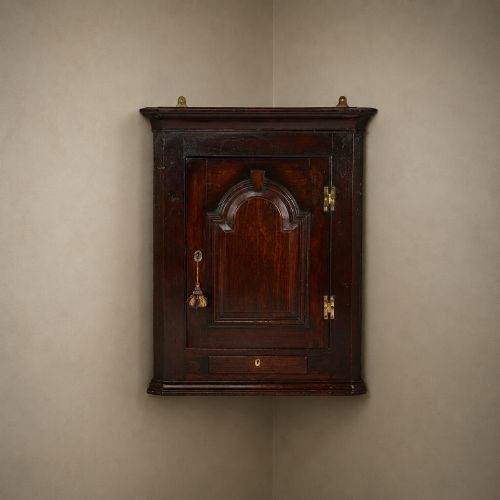
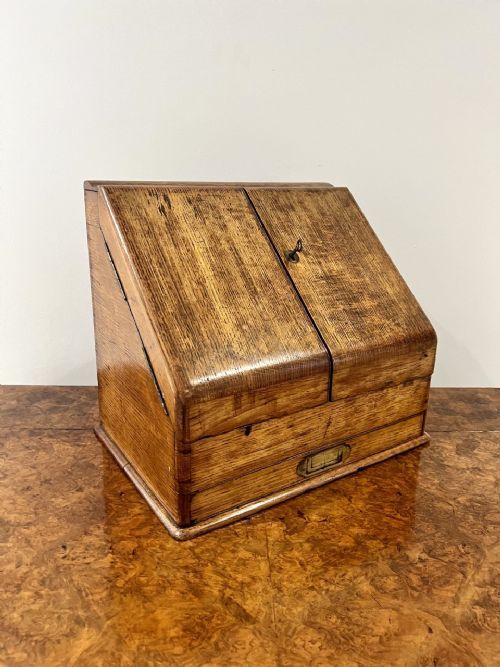
An antique key cabinet serves the practical purpose of organising domestic or institutional security, appearing in various forms across the Georgian, Victorian, and Edwardian eras. Buyers searching for an antique key cabinet encounter wall-hanging cupboards, tabletop boxes, and larger hall furniture designed specifically to hold brass-fitted locks and keys.
The pieces on this page span the nineteenth and early twentieth centuries, drawing on styles such as Arts and Crafts, Aesthetic Movement, and Art Nouveau. Formats range from dedicated wall boxes to multi-purpose hallway pieces that combine key storage with shaving mirrors or stationery compartments.
Construction and Materials
Cabinet makers utilised dense hardwoods including mahogany, plum pudding mahogany, oak, elm, and teak to construct durable outer casings and internal partitions. These timbers frequently feature brass mounts, iron hardware, glass panels, and boxwood stringing or marquetry inlay.
Joinery methods reflect the period of origin, from Georgian hanging cupboards with fitted drawers to Edwardian wall units utilising descending drawers and secure locking mechanisms operated by original keys.
Materials across the listings include mahogany, plum pudding mahogany, oak, elm, teak, brass, cast iron, glass, and boxwood.
Evaluating Quality
Quality rests upon the selection of timber figures, such as plum pudding mahogany or figured oak, and the precision of the internal fittings. Superior examples retain their original brass hardware, working locks, and fitted interior hooks without modern alterations.
The integration of decorative styles, whether through Arts and Crafts simplicity, Aesthetic Movement detailing, or Art Nouveau carved motifs, distinguishes standard utility pieces from finer decorative works.
Walker and Hall·Milners Safe·George Price·Standish
The Antique Key Cabinet Glossary
- Tantalus
- A locking drink cabinet featuring a frame that restrains decanters to prevent unauthorized access while displaying the contents through glass or wood. These units typically incorporate secure locks operated by a key.
- Marquetry
- The art of applying small pieces of veneer to a structure to form decorative patterns or pictures. This technique is often found on Edwardian and Victorian storage boxes.
- Aesthetic Movement
- A late nineteenth-century design style emphasising visual beauty over narrative or moral function. Pieces from this period often display refined lines and artistic brass mounts.
- Arts and Crafts
- A design movement valuing traditional craftsmanship and simple forms over mass production. Cabinets in this style feature honest timber construction and exposed metalwork.
Antique Key Cabinet: Frequently Asked Questions
What is an antique key cabinet?
An antique key cabinet is a small wall-hanging or tabletop storage unit designed to hold and organise a collection of door, drawer, or furniture keys. These pieces usually feature internal hooks and secure locking doors.
They were commonly placed in large hallways, estate offices, or reception rooms to manage household access during the Georgian, Victorian, and Edwardian periods.
How do I date an antique key cabinet?
Dating relies on identifying the timber species, construction techniques, and decorative style visible in the piece. Georgian examples often show simple mahogany hanging frames, while Victorian and Edwardian versions introduce oak, brass mounts, and specialised interior layouts.
Hardware details, such as cast iron hinges, brass hooks, and the design of the lock mechanism, provide further chronological clues.
Where should I hang a key cabinet?
These cabinets suit entrance halls, boot rooms, or studies where keys are naturally gathered and sorted. Wall-hanging models require secure fixings into wall studs or masonry to support the weight of the timber and metal contents.
Placing them away from direct heat sources prevents the timber panels and internal woodwork from drying out or splitting.
Did all key cabinets come with locks?
Most purpose-built key cabinets and wall cupboards incorporated functional locks to restrict access to the contents. Many surviving pieces retain their original working keys and brass escutcheons.
Open key racks and multi-section hallway tidies without doors also exist, serving quick day-to-day access rather than secure storage.