



Antique Kashmiri Lamp
An antique kashmiri lamp brings painted lacquer and carved walnut into a room, offering warm illumination through distinct regional craftsmanship.
Antique Kashmiri Lamp
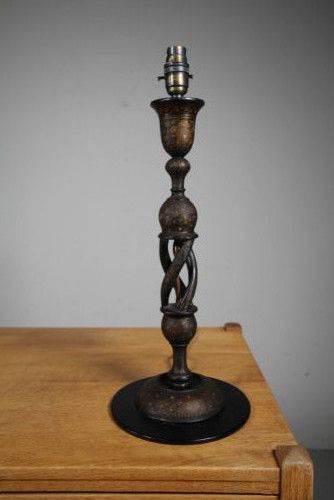
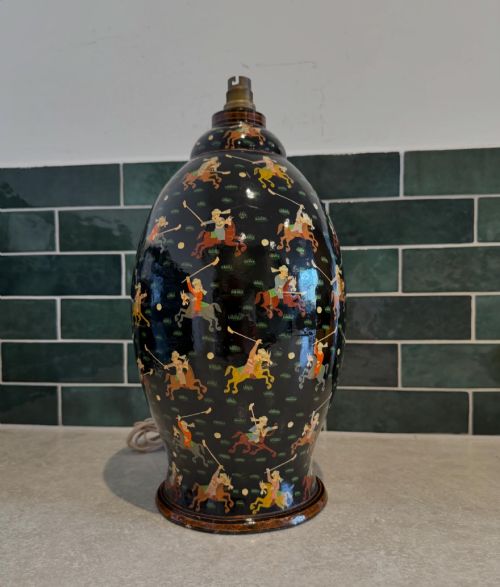
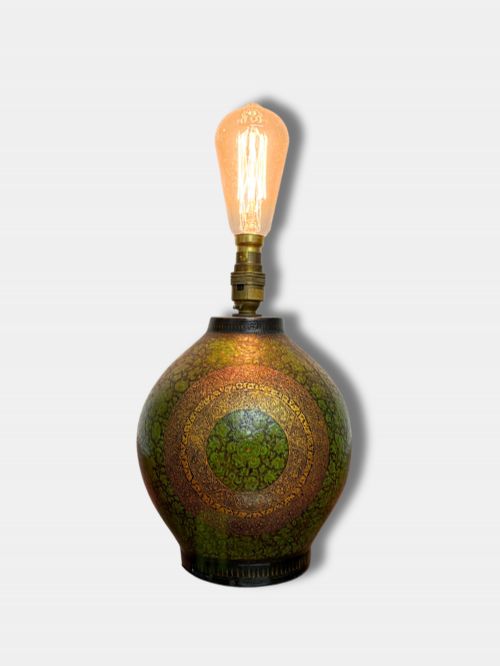
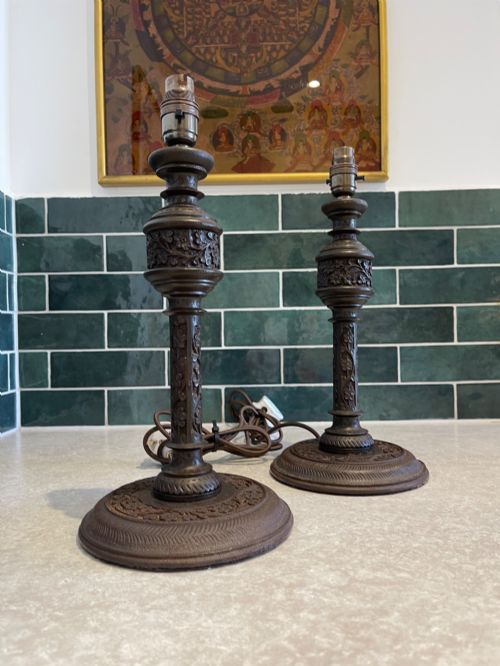
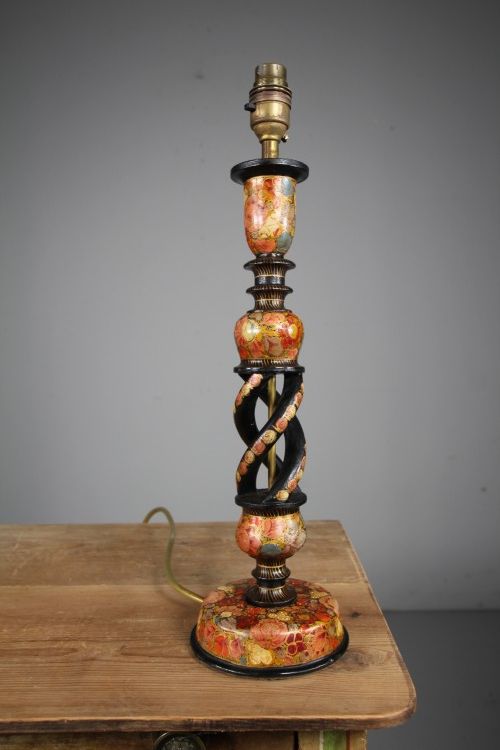
An antique kashmiri lamp is a table lamp originating from the Kashmir region, appearing in forms such as tall twist designs and hand-painted bodies. These objects date across the nineteenth century and the early decades of the twentieth century, including pieces from the 1900s, 1910s, 1920s and 1930s.
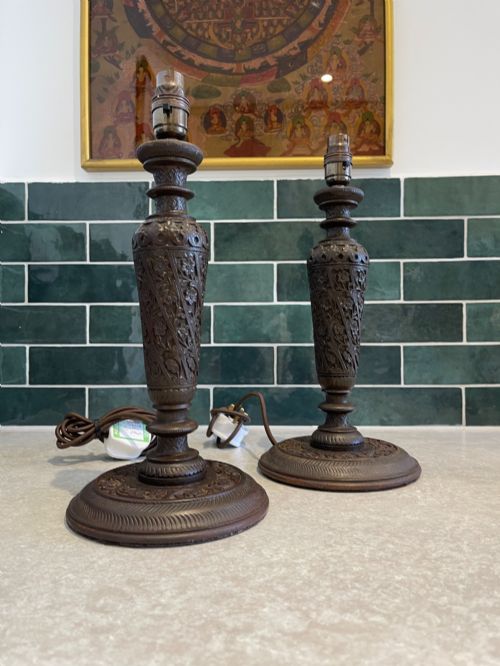
Most items function as table lamps designed to sit on surfaces, occasionally found as pairs or in monumental sizes. The wiring on these antique kashmiri lamp examples has often been updated for modern use while retaining the historical body.
How they were made
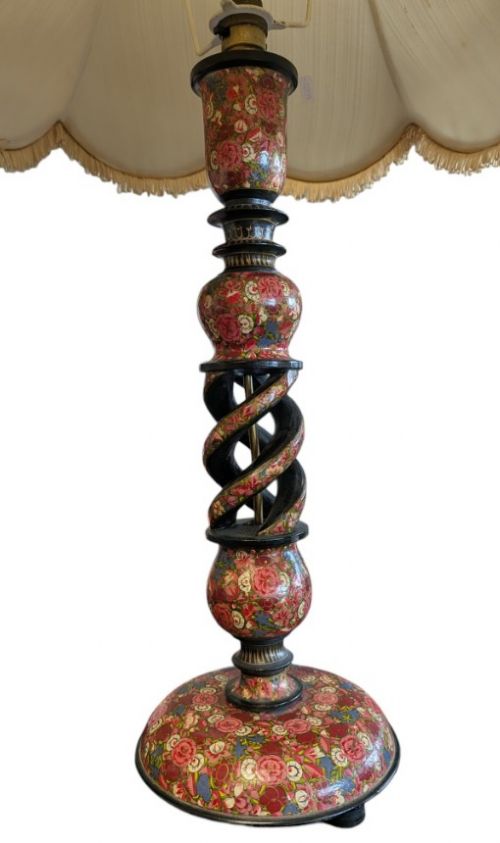
Makers utilised carved wood and walnut to construct the sturdy bodies of these table lamps, frequently employing a twist formation for height and visual texture. This carpentry provides a solid foundation for the decorative finishes applied over the surface.
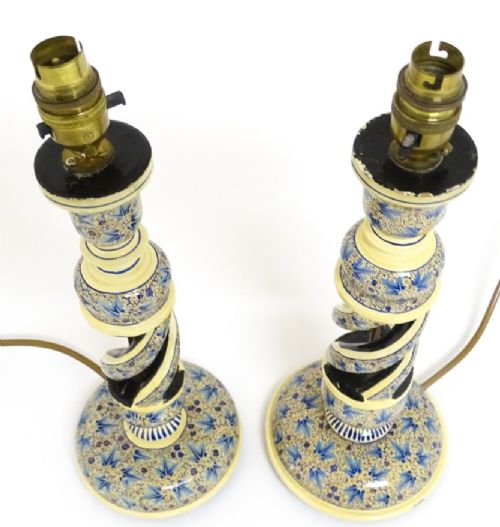
Papier-mache and lacquer formed the base for intricate hand-painted designs, layered with gilt gold and green pigments. Artisans applied these decorative coatings by hand, creating the characteristic patterned surface seen on Kashmiri table lamps.
Antique Kashmiri Lamp Retail Price Guide 2026
Typical asking prices for kashmiri lamp among the pieces listed under this phrase on Sellingantiques today, from the lower quarter to the upper quarter. They describe what is for sale here now, not the wider market.
Table lamp forms on this page include towering twist columns and hand-painted pairs from the early twentieth century.
What varies in quality
The refinement of the hand-painted decoration determines the visual appeal of an antique kashmiri lamp, with crisper brushwork and well-preserved gilt gold separating superior examples from simpler ones. The depth and execution of the carved wood or twist form also dictate the overall standard of the object.
Condition plays a central part in quality, particularly the preservation of the delicate lacquer and papier-mache surfaces against chipping or fading. Pieces that maintain their original painted scheme without heavy restoration represent the higher end of the range.
The Antique Kashmiri Lamp Glossary
- Papier-mache
- A composite material made of paper pulp reinforced with glue, moulded and painted to form decorative lamp bodies. This technique allows for smooth, curved surfaces that take colourful lacquer well.
- Lacquer
- A clear or coloured varnish applied in multiple coats to wooden or papier-mache objects to create a hard, durable finish. It protects the hand-painted artwork underneath while adding a subtle sheen.
- Anglo-Indian
- A style describing decorative arts produced in India during the British period, blending local craftsmanship with British aesthetic tastes. It frequently appears in lighting and furniture from the nineteenth and early twentieth centuries.
- Twist
- A sculptural carved wooden form where the column spirals upward, adding movement and height to a table lamp. This shaping requires skilled carpentry to maintain symmetry along the length of the shaft.
- Gilt gold
- A thin layer of gold applied to the surface of wood or lacquer to highlight specific decorative details. It catches the light and contrasts with green or dark background pigments.
Antique Kashmiri Lamp: Frequently Asked Questions
How do I style a Kashmiri lamp?
Place the lamp on a side table or sideboard where the hand-painted details and gilt gold can be appreciated up close. Pair it with a simple fabric shade that does not compete with the patterned base.
Ensure the proportions suit the surface, as some examples are exceptionally tall or bulky. They work well in studies or living rooms alongside dark wood furniture.
How do I date a Kashmiri lamp?
Dating relies on stylistic markers, material choices, and construction methods associated with the nineteenth century and the early decades of the twentieth century. Details such as the style of hand-painted lacquer and the turning of the wood provide clues to the era of production.
Comparative analysis with dated pieces from the 1900s through the 1930s helps establish a reliable timeline for each item.
What maintenance do they need?
Dust the papier-mache and wooden surfaces gently with a soft, dry cloth to protect the delicate lacquer and painted decoration. Avoid using liquid cleaners or harsh chemicals that could damage the antique finish.
Keep the lamp away from direct sunlight and excessive moisture to prevent the paint and gilt gold from fading or cracking over time.