




Antique Jewelry Vitrine
An antique jewellery vitrine lets you display small treasures under glass, combining timber frames with velvet linings to protect precious things.
Antique Jewelry Vitrine
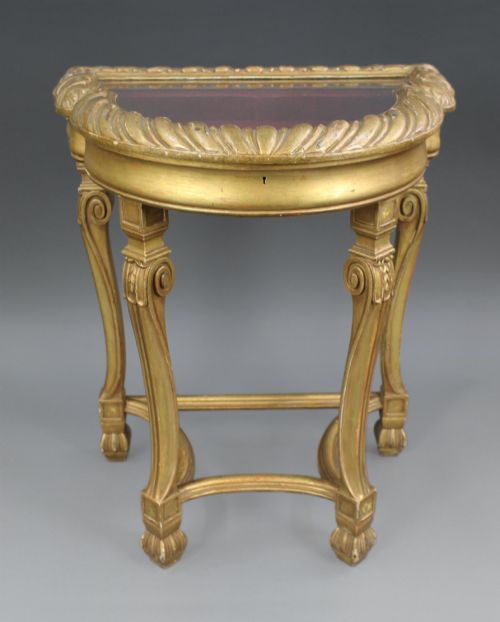
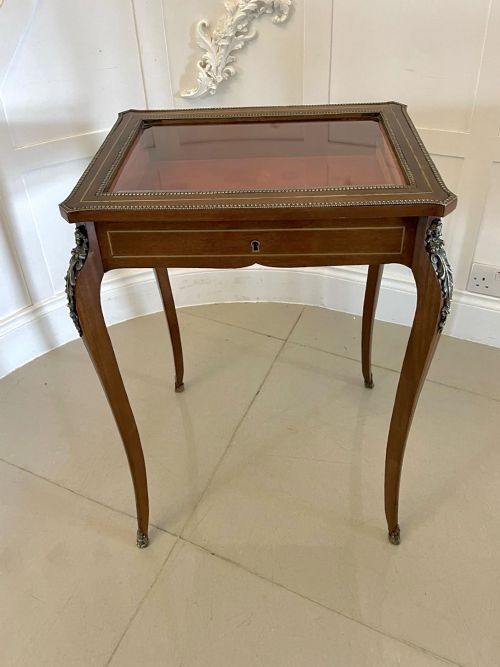
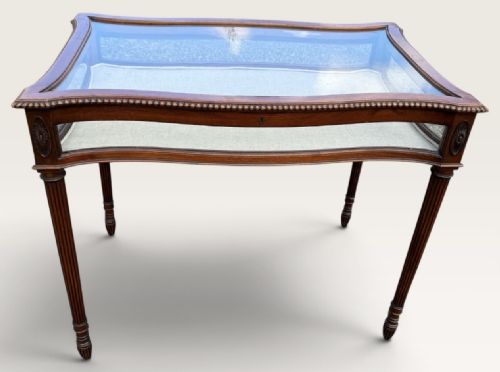
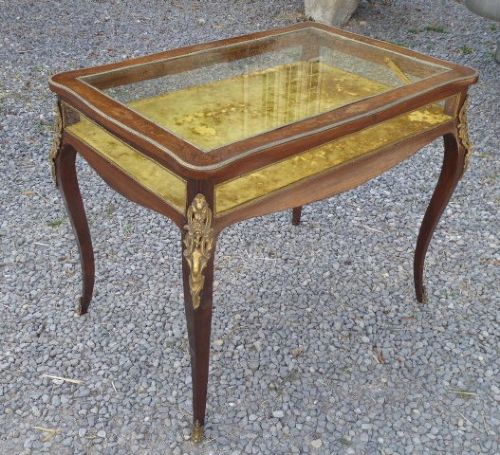
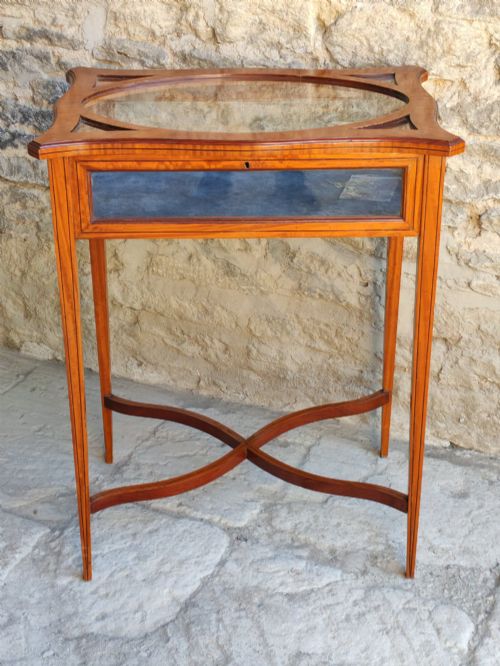
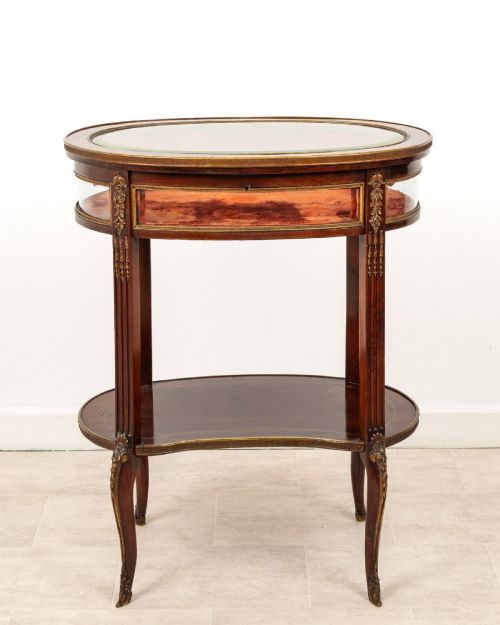
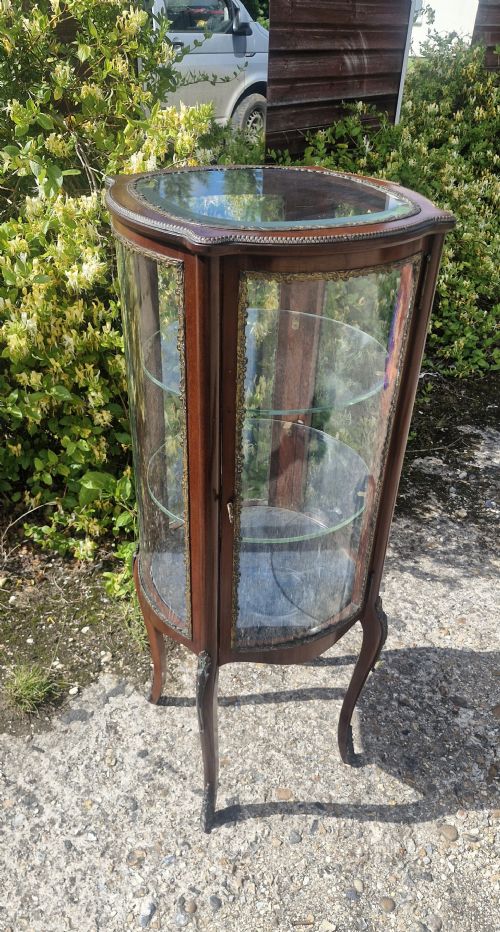
An antique jewellery vitrine is primarily built as a glass-topped display table or cabinet designed to showcase small personal items. You will frequently find Edwardian and Victorian examples on this page, spanning the nineteenth and early twentieth centuries in mahogany, satinwood, and kingwood.
The forms vary from serpentine and kidney shapes to octagonal and oval tables, alongside upright display cabinets and countertop counters. These pieces originated in French workshops and English parlours alike, serving both domestic display and shop counter functions.
Materials and construction methods
Cabinet makers utilised dense hardwoods like mahogany and rosewood as structural frames, often embellished with satinwood inlay or marquetry. Glass tops and glazed panels provide the viewing window into the lined interior.
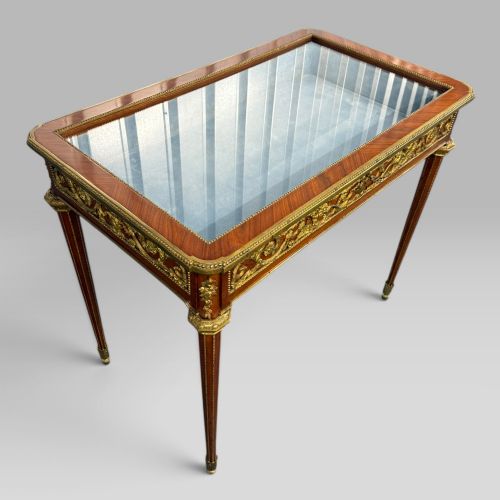
Metal mounts in brass, ormolu, and gilt-bronze accent the corners, legs, and hinges, while fabric linings such as velvet cushion the displayed objects. Joinery reflects the period standards, from Edwardian satinwood crossbanding to mid-nineteenth-century French bronze work.
Antique Jewelry Vitrine Retail Price Guide 2026
Typical asking prices for jewelry vitrine among the pieces listed under this phrase on Sellingantiques today, from the lower quarter to the upper quarter. They describe what is for sale here now, not the wider market.
Listings feature mahogany, satinwood, and kingwood timbers paired with glass, brass, and velvet across Edwardian, Victorian, and nineteenth-century periods.
Factors determining the grade of a piece
The refinement of the timber and the crispness of the gilt-bronze or ormolu mounts separate standard production items from exceptional commissions. Finely executed marquetry, satinwood crossbanding, and complex curved glass shapes indicate superior workshop output.
Structural integrity, the quality of the glass, and the preservation of the original velvet or fabric lining dictate the desirability of the piece. Subtle details in the brass inlay and the weight of the mahogany frame point to the skill of the maker.
The Antique Jewelry Vitrine Glossary
- Bijouterie table
- A specialised display table with a glass top and glazed sides designed specifically for holding small valuable trinkets and jewellery.
- Ormolu
- Gilded bronze mounts applied to furniture for decorative effect, frequently seen on nineteenth-century French pieces.
- Marquetry
- Decorative woodwork where pieces of veneer are fitted into a ground to form floral or geometric patterns.
- Crossbanding
- A strip of veneer running border-style along the edge of a tabletop, often seen in contrasting timbers like satinwood on mahogany.
- Vitrine
- A glass-fronted cabinet or case used for displaying fine objects or collections.
Antique Jewelry Vitrine: Frequently Asked Questions
What fits inside an antique jewellery vitrine?
These glass-topped tables and cabinets are designed for small precious items such as rings, brooches, pocket watches, and medals. The shallow interior protects delicate pieces while keeping them visible from above.
Larger cabinets and countertop cases accommodate more substantial collections of curiosities, porcelain, or silver trinkets. The velvet or fabric lining cushions each item against movement.
How do I date a vitrine?
Dating relies on timber choices, leg styles, and metal mounts, moving from heavier nineteenth-century rosewood and ormolu toward lighter Edwardian satinwood and mahogany inlays. Examining the glass and construction joints helps narrow the decade.
Early pieces often feature heavy brass or gilt-bronze mounts and French styling, whereas Edwardian iterations tend toward delicate stringing and inlaid mahogany.
Were these used in shops or homes?
Many examples served in domestic drawing rooms and parlours where hosts displayed personal collections to guests. Other forms functioned as countertop display cases in commercial jewellers and boutiques.
Shop display counters feature sturdier proportions and sometimes bear later sign-written details from commercial use, while domestic bijouterie tables focus on decorative timbers and fine joinery.
How do I care for the fabric lining?
The velvet or fabric inside requires gentle maintenance using a soft brush or low-suction vacuum attachment to remove dust. Keeping the vitrine away from direct sunlight prevents the textile colours from fading.
Wooden frames benefit from occasional polishing with appropriate wax, while glass panels need standard glass cleaner applied carefully to avoid staining the surrounding fabric.