

Antique Italian Wall Lighting
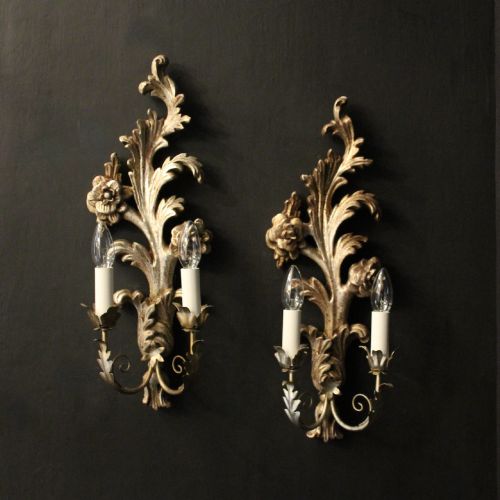
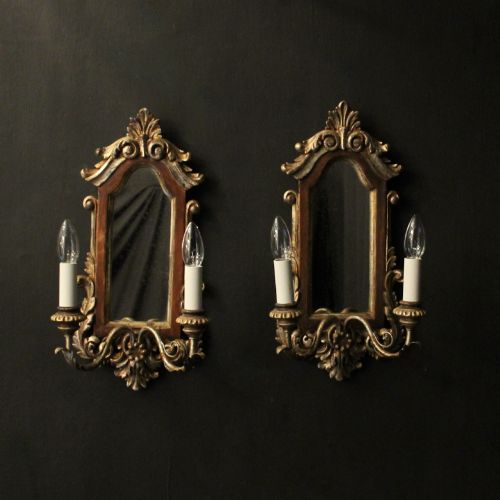
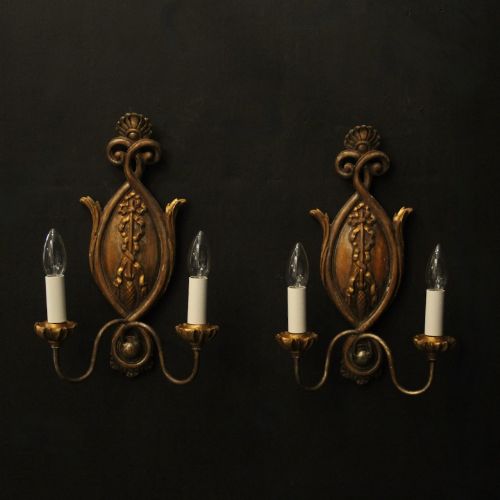
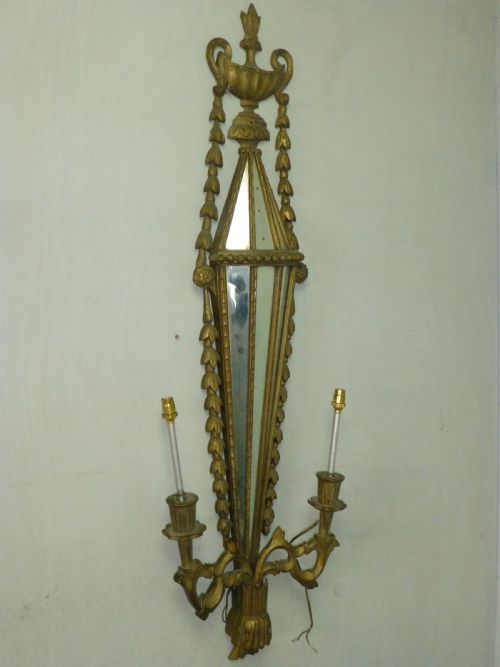
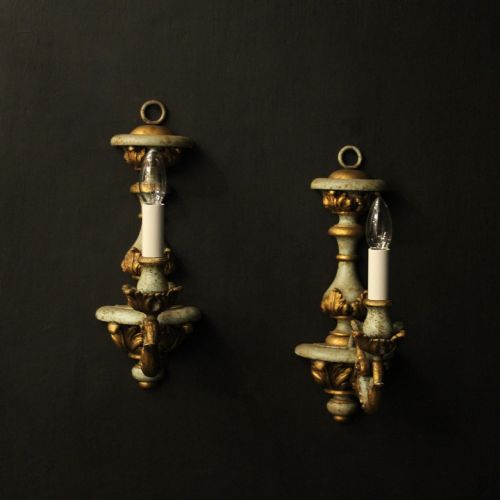
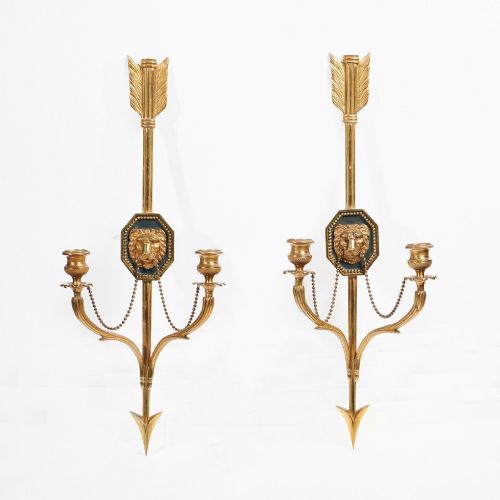
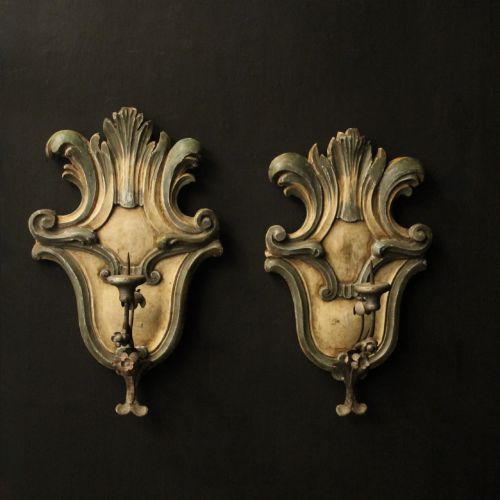
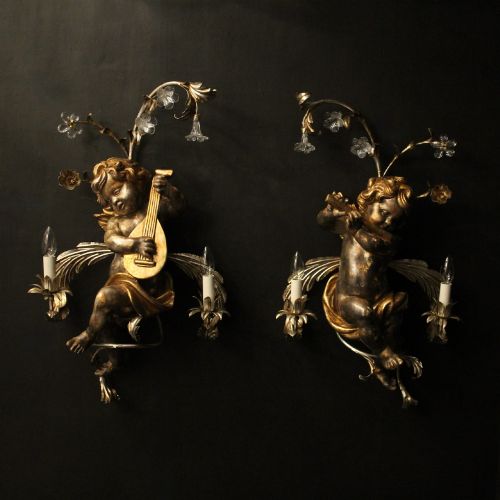
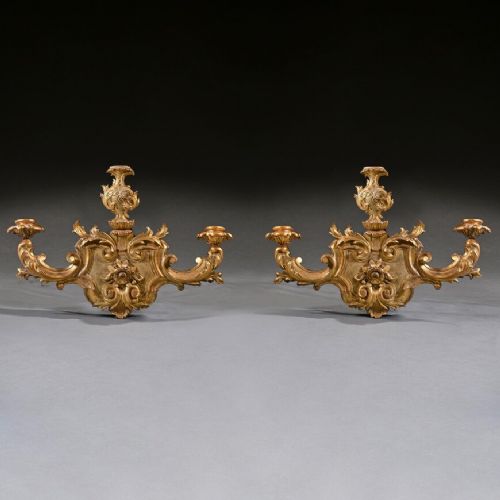
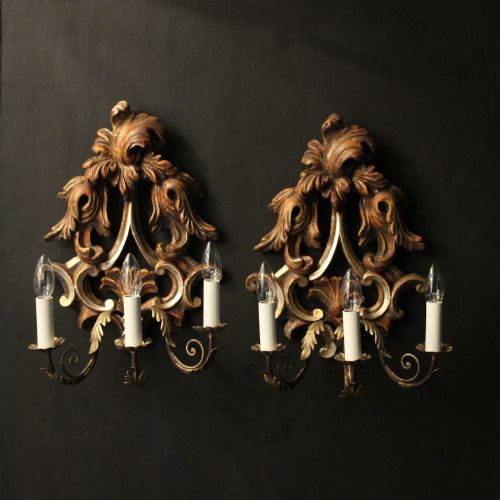
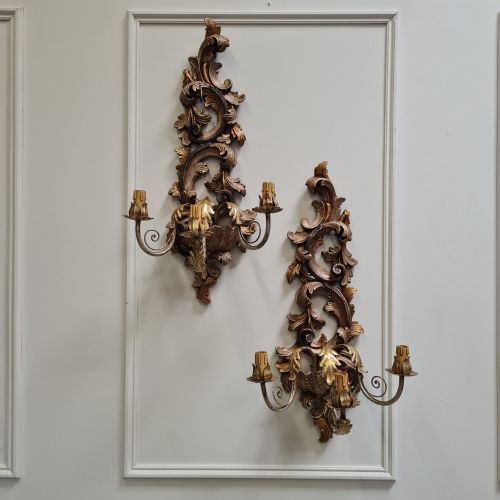
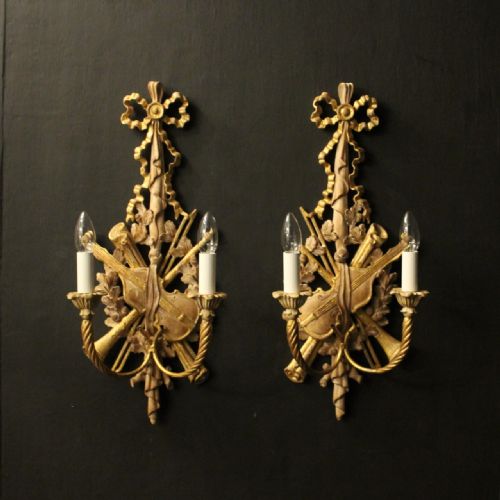
These antique italian wall lighting pieces bring carved wood, giltwood, and ormolu into a room to catch the evening light.
Antique Italian Wall Lighting
When you examine antique italian wall lighting, you encounter wall lights, sconces, girandoles, and hanging lanterns originating from periods spanning the seventeenth century to the early twentieth century. The selection leans heavily towards twentieth-century pieces, specifically from the 1920s and 1930s, alongside nineteenth-century and eighteenth-century examples.
The regional styles appearing on this page draw predominantly on Florentine and Venetian traditions, including Florentine Rococo, Italian Baroque, and Neoclassical designs. You will frequently find matching pairs of twin-arm or triple-arm giltwood fixtures designed to mount symmetrically beside mirrors or doorways.
Materials and Technique
Makers shaped these fixtures from wood, metal, and glass, applying carved wood foundations finished with gesso, gold leaf, silver leaf, or polychrome paint. Ormolu, toleware, and brass also appear across the metal components of the sconces.
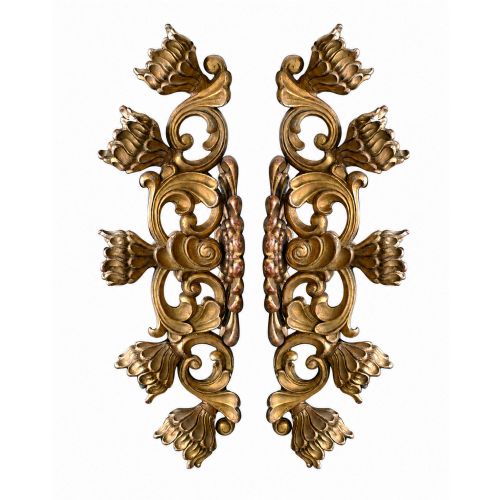
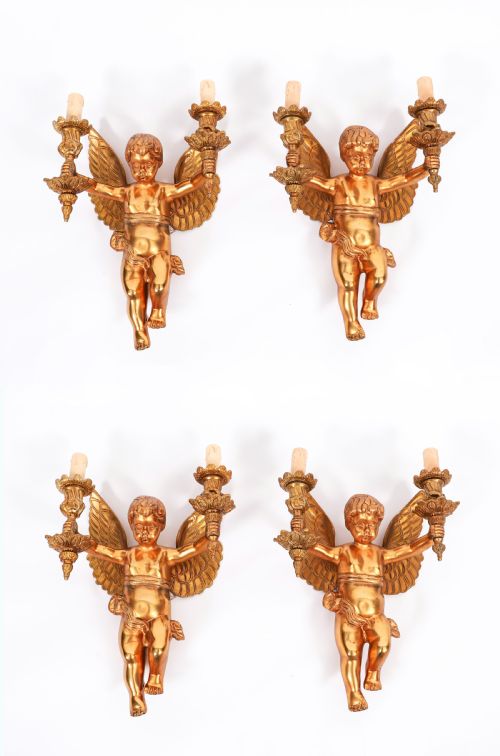
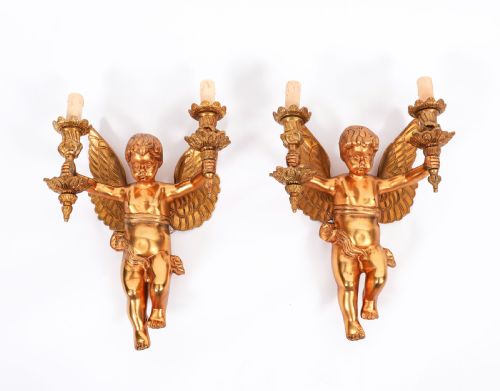
Techniques relied heavily on manual labour, employing hand-carving for wooden acanthus leaves and cherubs, alongside metal casting for ormolu branches and candle holders.
Materials recur across multiple decades, pairing carved wood and gesso with Murano glass, ormolu, and silver leaf.
Design and Execution
The distinction between tiers of quality rests in the depth of the carving and the application of the surface finishes. Finely chased ormolu and intricate hand-carved giltwood with layered gold leaf represent superior craftsmanship compared to simpler wooden turnings and plain painted surfaces.
Compositions featuring integrated Murano glass elements or complex sculptural figures such as cherubs demand greater skill from the artisan, elevating the visual weight and presence of the fixture on the wall.
The Antique Italian Wall Lighting Glossary
- Giltwood
- Wood that has been coated with gold leaf or a gold-coloured finish. This technique provides the reflective surface characteristic of many Florentine pieces.
- Girandole
- A branched wall light or sconce, often incorporating a mirror backplate. The reflective glass serves to multiply the light cast into the room.
- Ormolu
- Gilded bronze or similar metal applied to decorative hardware and mounts. It offers a bright metallic contrast to carved wooden backplates.
- Polychrome
- Decorated in multiple colours. This finish appears on wooden wall lights alongside gilding to add visual depth to floral and figural motifs.
- Toleware
- Painted sheet metal used in decorative objects and light fittings. It allows for shaped metal components finished with applied colours.
Antique Italian Wall Lighting: Frequently Asked Questions
How do I mount antique wall lights safely?
Wall lights require secure attachment to studs or solid masonry due to the weight of carved wood, gesso, and metal arms. Professional installation ensures the bracket supports the fixture without damaging the plaster.
Wiring must be assessed to meet current standards while preserving the original backplate and candle arms where possible.
How do I clean giltwood and ormolu wall lights?
Dusting requires a soft, dry brush to remove particles from delicate carved details without disturbing the gold leaf or gesso layers. Moisture and chemical cleaners can strip surface finishes entirely.
Metal components like ormolu benefit from gentle wiping with a dry cloth to maintain their sheen without abrasive polishing.
How can I tell a Florentine piece from other styles?
Florentine pieces typically feature abundant carved leaf motifs, scrolls, and silver or gold gilt finishes designed to catch candlelight. They often present as twin-arm or triple-arm wall lights with a distinct sculptural quality.
By contrast, Neoclassical or Empire style fixtures incorporate stricter symmetry, classical urns, and cast ormolu mounts.