


Antique Italian Appliques
Antique italian appliques bring gilded warmth and carved architectural drama to rooms, illuminating walls with centuries of continental craftsmanship.
Antique Italian Appliques
When searching for antique italian appliques, buyers are looking at wall lights, sconces, and wall brackets designed to mount directly onto surfaces. These fixtures provide functional illumination while serving as sculptural wall decoration.
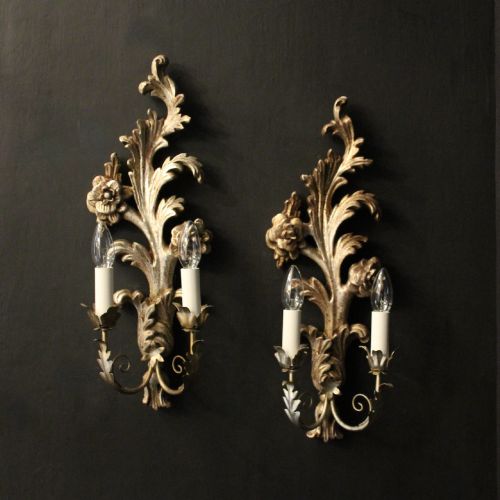
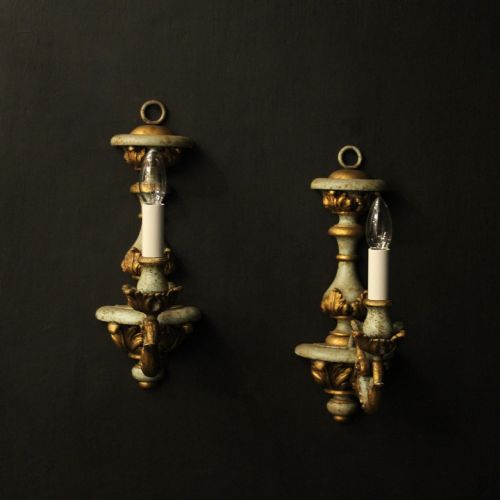
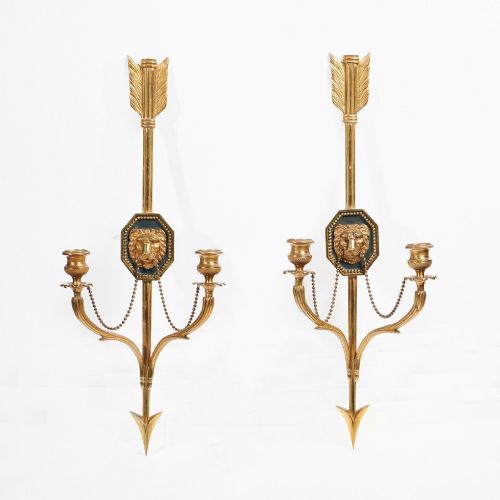
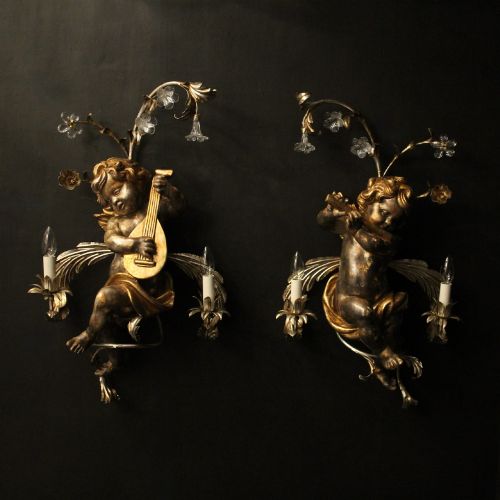
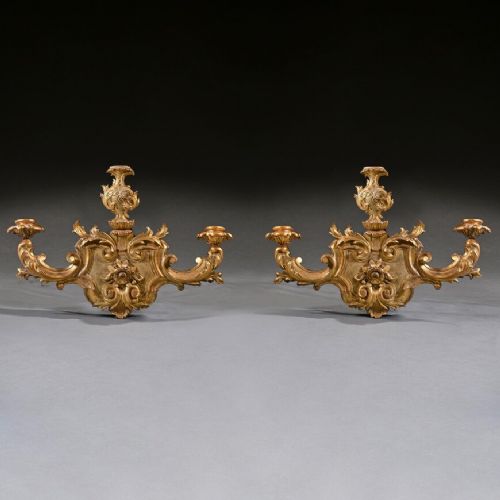
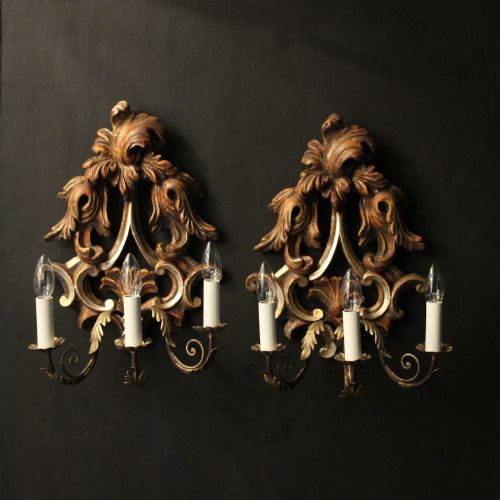
The versions most frequently met on this page are carved giltwood pieces originating from Florentine workshops, often featuring twin or triple arms. Alongside these are polychrome wooden designs, brass Grand Tour pieces, and ormolu mounts influenced by French Empire and Baroque styles.
Originating across centuries spanning from the seventeenth to the twentieth, these pieces demonstrate a persistent Italian mastery of interior lighting. Early examples display deep, hand-carved relief, while later twentieth-century interpretations retain traditional Florentine gilding techniques.
Materials and construction methods
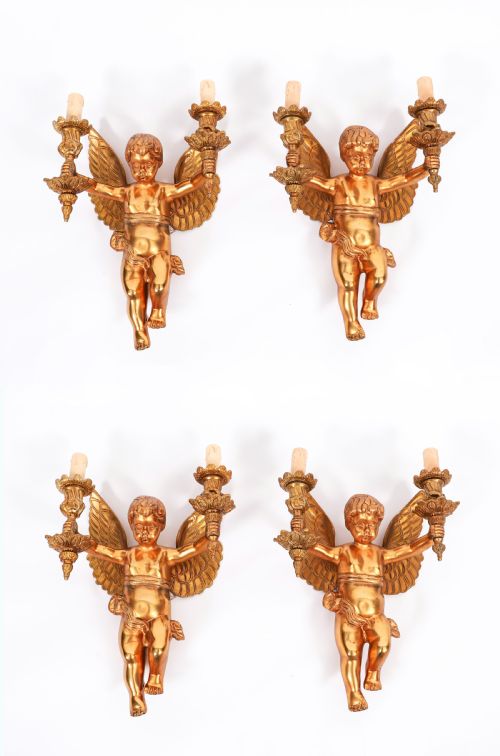
Carved wood forms the structural core for the majority of these pieces, providing a sturdy foundation for intricate ornamentation. Artisans shaped timber using hand tools to create flowing scrolls, cherubs, and architectural brackets before applying surface treatments.
Giltwood and silver leaf application defined the decorative finish, relying on gesso layers applied over wood to receive fine metallic leaf. Polychrome finishes also appear, utilising paint alongside gilding to highlight carved details.
Metal components such as brass, ormolu, and glass elements integrate into specific designs, particularly in wall lights featuring Murano glass or cast bronze arms. These mixed materials require distinct joinery to secure arms and candle sockets safely to the wooden backplates.
Listings span periods from the 17th century through to 1930, demonstrating a strong presence of 1920s and 1930s Florentine giltwood production.
Distinguishing quality in craftsmanship
Depth and precision of hand-carving separate superior examples from simpler production, evident in the crispness of acanthus leaves and the modelling of figures. Top-tier pieces show confident chisel work where every scroll and contour possesses individual definition.
The application and preservation of the gilded surface dictate visual richness, with traditional water gilding over gesso creating a deeper lustre than flat modern metallic paint. The integrity of the original gold or silver leaf, and how it ages over centuries, marks the standard of the object.
Proportion and structural harmony govern the success of the design, ensuring that the extension of the arms balances the weight of the backplate. Higher quality examples maintain a cohesive stylistic vocabulary, whether adhering to Florentine Rococo or Italian Neoclassical canons.
The Antique Italian Appliques Glossary
- Applique
- A wall-mounted light fixture or sconce designed to hold candles or electric lamps. They project from the wall surface to provide ambient room lighting.
- Giltwood
- Timber coated with gold leaf or gold paint applied over a prepared gesso ground. This technique creates a luminous surface that catches candlelight.
- Gesso
- A plaster-like mixture applied to wood surfaces to create a smooth base for gilding and carving details. It allows craftsmen to achieve sharp, intricate relief work.
- Ormolu
- Gilded bronze used for decorative mounts and structural arms on lighting fixtures. The technique involves applying a mercury-gold amalgam to cast bronze.
- Polychrome
- Painted in several colours, often combining pigment with gilded accents. This decoration is typical of wooden Italian wall lights from various periods.
- Sconce
- A wall light fixture fixed to a vertical surface, historically used to hold wax candles or oil lamps. The term is frequently used interchangeably with applique.
Antique Italian Appliques: Frequently Asked Questions
How do I wire antique wall lights?
Most antique appliques originally held candles and have since been adapted for modern electrical wiring by running cords through the backplate or arms. A qualified electrician can integrate them safely into standard household circuits.
Discuss low-heat LED candle tubes with your installer to preserve vintage sockets and internal channels.
What defines the Florentine style?
Florentine appliques typically feature carved wooden scrollwork, leaf motifs, and extensive giltwood surfaces that reflect regional woodworking traditions. They often incorporate twin or triple arms arranged symmetrically.
These pieces range from seventeenth-century Baroque interpretations to twentieth-century revivals sharing the same artisanal vocabulary.
How do I clean gilded wood?
Dust the surface gently with a soft, dry ostrich feather duster or a clean, dry artist's paintbrush. Avoid chemical cleaners, moisture, and abrasive cloths that can strip fragile gold leaf.
Regular, careful dusting prevents grime accumulation without risking the historic patina.
Can I mix different styles on one wall?
Pairing matching pairs is standard practice, but mixing complementary Italian styles such as Neoclassical and Rococo creates a collected, historic interior. Scale and finish consistency help disparate pieces converse harmoniously.
Keep mounting heights uniform when grouping different appliques together in a single room.