

Antique Iron Patio Chairs
These antique iron patio chairs bring enduring weight and intricate form to outdoor spaces, built to withstand the elements while offering timeless garden seating.
Antique Iron Patio Chairs
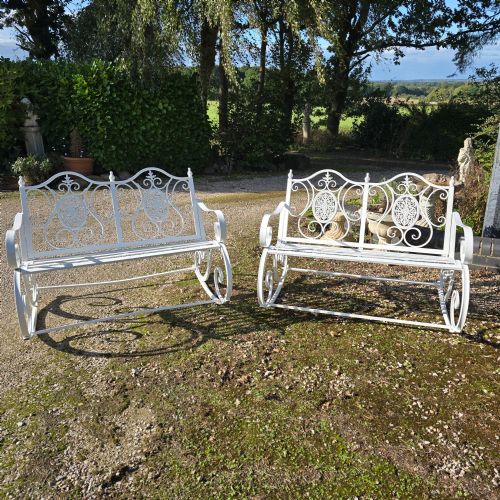
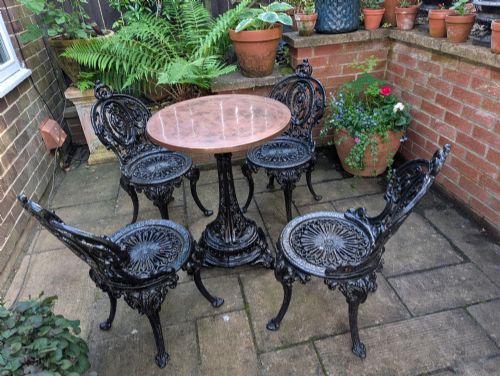
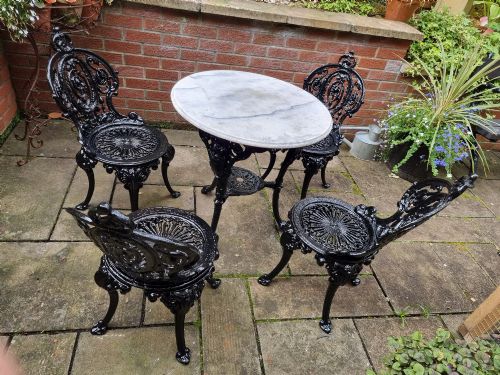
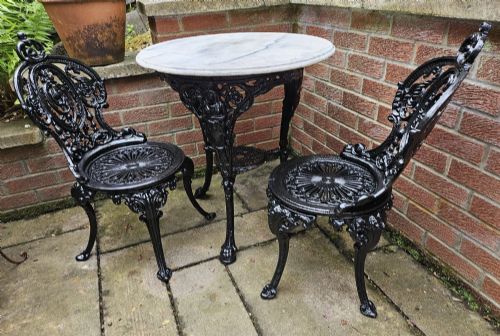
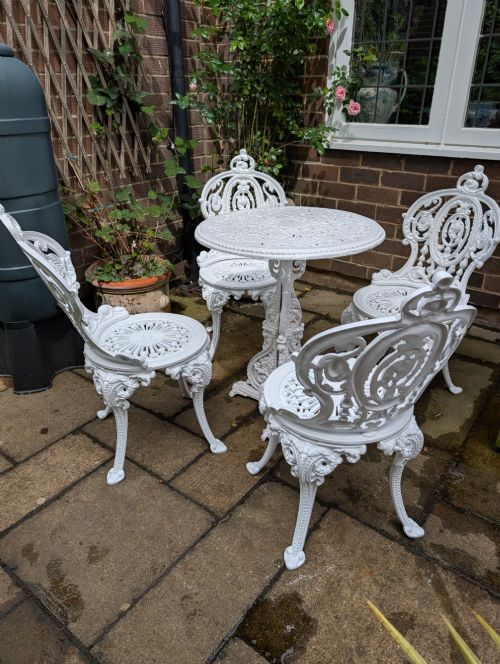
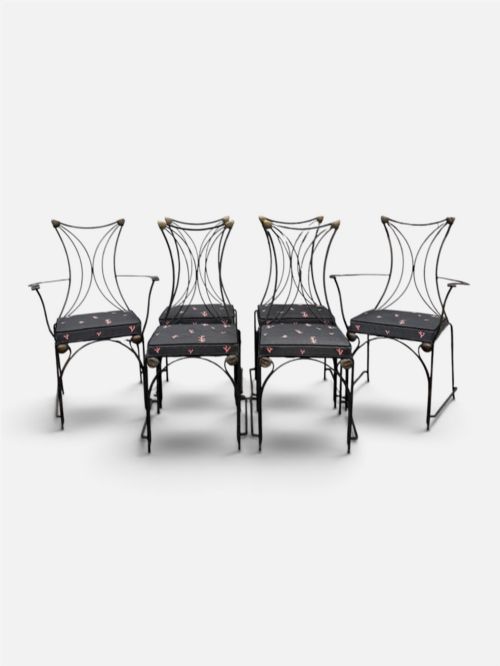
When you search for antique iron patio chairs, you encounter robust outdoor seating designed for terraces, lawns and verandas across various historical periods. The inventory spans sturdy individual armchairs, matching pairs, and complete garden sets accompanied by tables or benches.
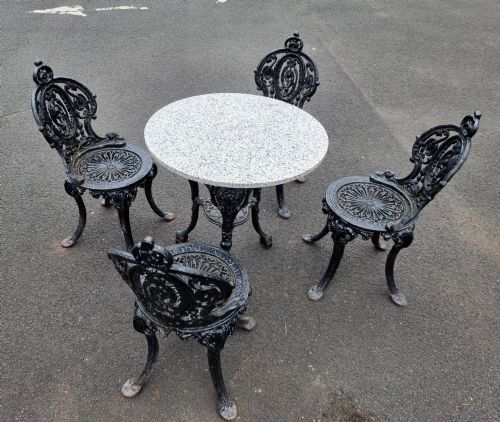
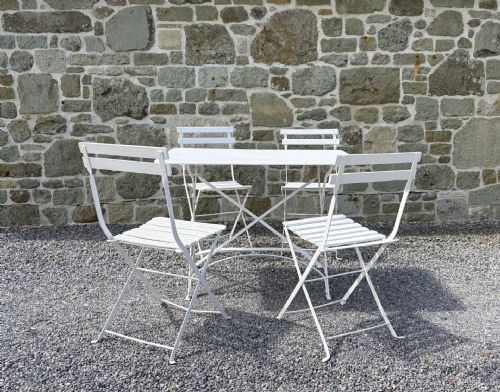
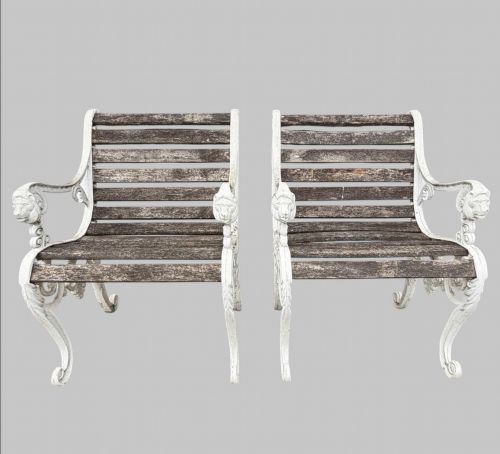
You are most likely to meet mid-nineteenth century Victorian examples or interwar twentieth-century sets originating from France and Britain. These pieces range from utilitarian folding designs to elaborate decorative seating featuring lion masks or gothic motifs.
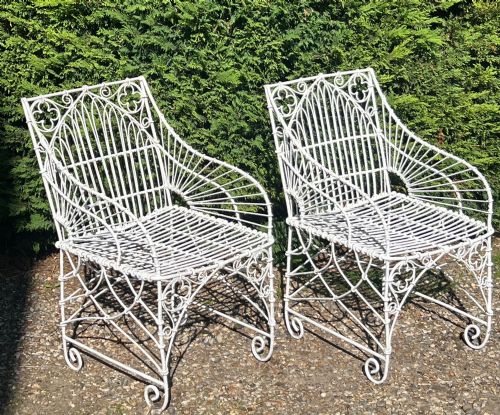
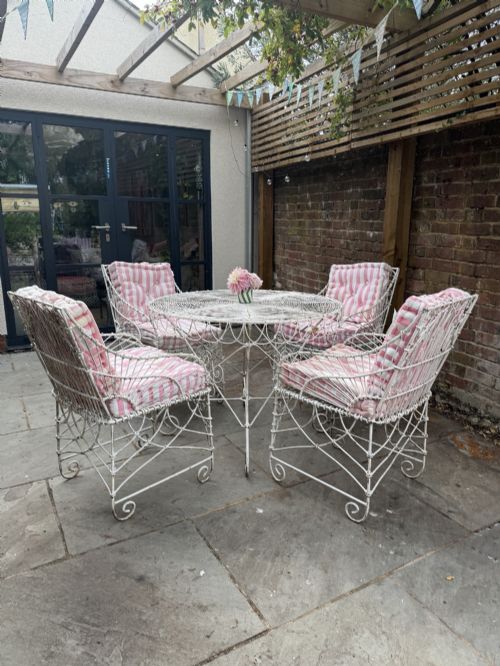
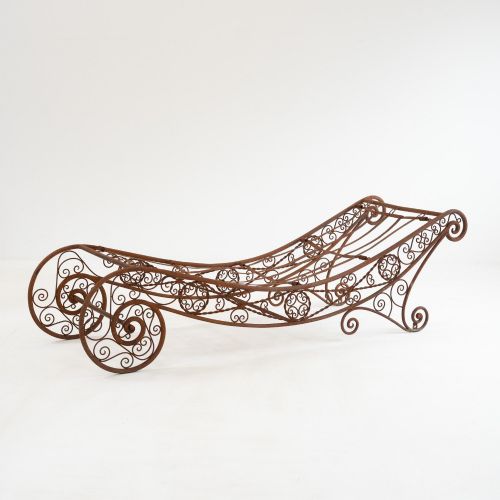
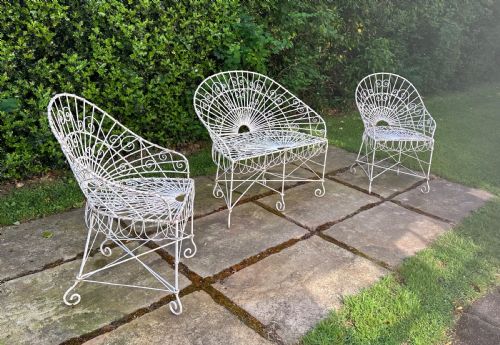
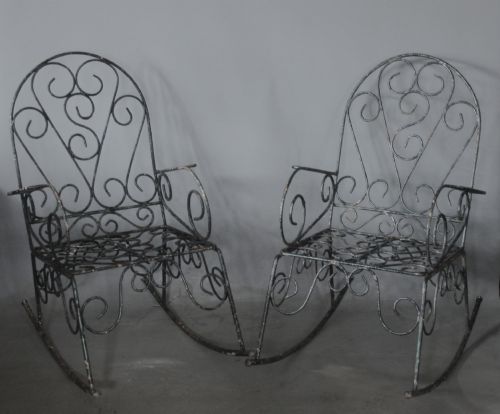
The selection frequently includes specialised forms such as wirework garden chairs, rocking chairs, and daybeds alongside standard dining sets. Each piece reflects the outdoor leisure habits of its era, combining metal framing with openwork patterns suited to garden landscapes.
How they were made
Makers utilised heavy cast iron for ornate structural components and rigid frames, allowing for complex moulded details like pierced backs and sculptural armrests. Wrought iron was shaped by hand for lighter frameworks, folding mechanisms, and curved wirework structures.
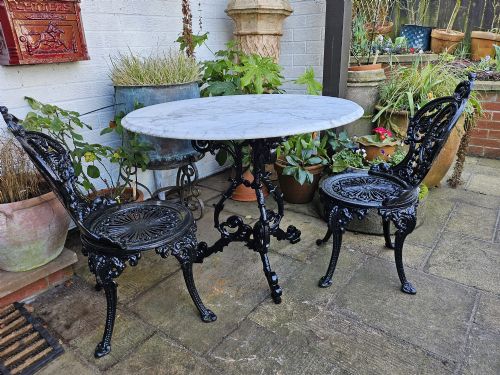
Surface finishes typically relied on layered paint to protect the underlying metal from weathering outdoors over decades of use. Certain specialised dining tables incorporated contrasting inset materials such as marble or granite tops.
Several sets made the long journey from an elite polo club in Calcutta back to European gardens.
What varies in quality
Quality rests in the crispness of the iron casting and the architectural ambition of the design, distinguishing standard utility seating from sculptural workshop output. Finer examples display deeply detailed decorative motifs, balanced proportions, and integrated matching components.
The integrity of the original metalwork and the survival of early surface paint layers dictate the desirability of a set. Pieces that retain their structural soundness without heavy pitting or extensive replacement parts command greater attention from collectors.
Christopher Dresser·Val D'osne
The Antique Iron Patio Chairs Glossary
- Cast iron
- Iron poured into a mould while molten to create rigid, highly detailed decorative components. This technique enabled the production of ornate garden furniture with complex openwork backs.
- Wrought iron
- Iron heated and worked by hand with tools into durable structural shapes. It provides flexibility for curved frames, scrolls, and folding patio furniture.
- Wirework
- Metal strands bent and woven into intricate grid or mesh patterns for garden seating and tables. Popular in the late nineteenth century, it offered a lighter visual presence on lawns.
- Bistro set
- A small outdoor table accompanied by matching chairs designed for compact spaces. These sets originated from French pavement cafes and gardens.
Antique Iron Patio Chairs: Frequently Asked Questions
How do I protect iron patio chairs outside?
Keep the metal sealed with appropriate exterior paint or wax to prevent moisture from causing rust over time. Store them under cover during harsh winter months to preserve the finish.
Regularly check joints and fixings to ensure the heavy metal framework remains stable on uneven ground. Avoid leaving them sitting directly in standing water on damp lawns.
Are these chairs comfortable without cushions?
Many nineteenth-century designs feature contoured iron seats moulded to fit the body, though they are firmer than modern upholstered furniture. Adding loose fabric pads provides extra comfort for prolonged outdoor sitting.
Wirework and folding models flex slightly under weight, offering a different seating experience compared to rigid cast-iron armchairs.
How do I date antique iron chairs?
Examine the manufacturing techniques, bolt types, and decorative styles to determine the era of production. Victorian pieces often display heavier cast decoration and gothic or naturalistic motifs.
Twentieth-century interwar pieces lean towards simpler lines or distinct art deco geometry, while French bistro designs prioritize practical folding frames.
Can iron garden furniture stay out all year?
Iron furniture withstands outdoor conditions well due to its substantial weight and robust construction. However, prolonged exposure to damp winters accelerates surface oxidation and paint degradation.
Moving sets onto paved surfaces rather than soil helps reduce moisture absorption from the ground during colder months.