




Antique Iron Display Stand
These antique iron display stand pieces range from utilitarian shop fittings to decorative plant supports, offering sturdy support for your collections.
Antique Iron Display Stand
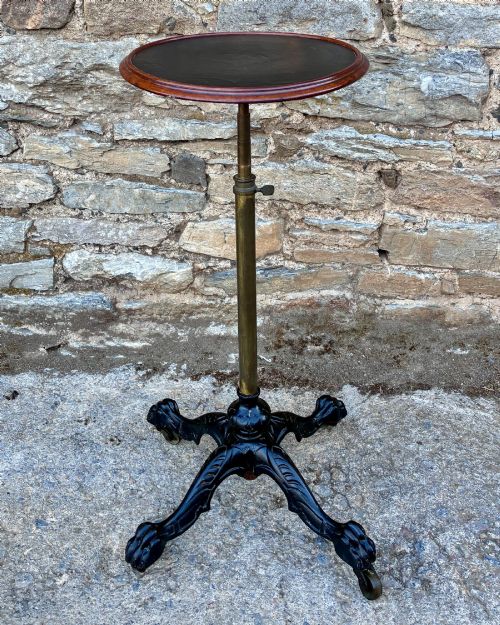
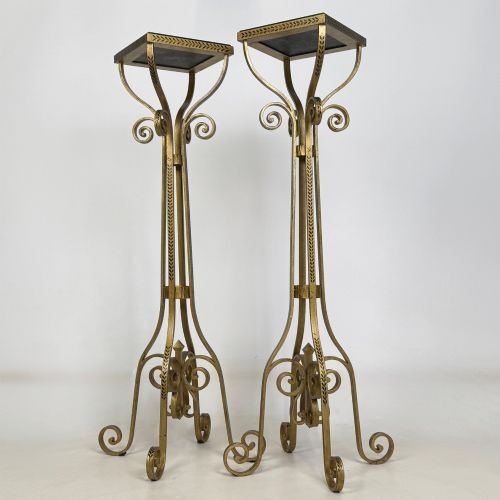
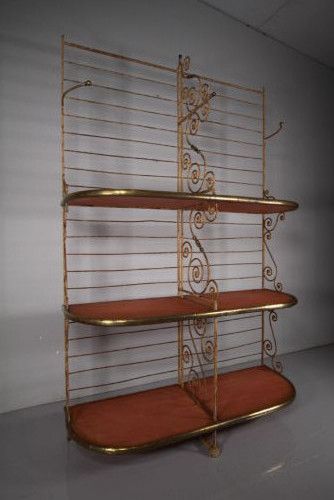
When you search for an antique iron display stand, you encounter utilitarian shop fittings, garden structures, and architectural plant holders spanning multiple centuries. The selection includes bakers racks, tiered plant stands, easel bases, and adjustable display tables from the Victorian period onwards. These items served functional roles in bakeries, draperies, and gardens before transitioning into domestic display pieces.
You are most likely to meet Victorian and nineteenth century pieces on this page, alongside early twentieth century items. Common forms take the shape of three tier plant stands, French patisserie racks, and heavy garden column planters. Occasionally, pieces combine iron with timber, marble tops, or brass scroll bases to create varied display surfaces.
Assessing quality in iron display pieces
Quality in these stands rests upon the refinement of the metalwork and the integrity of the construction. Superior pieces display intricate scroll-work, balanced proportions, and substantial weight, distinguishing them from simpler utilitarian items. The integration of secondary materials, such as marble tops or brass detailing, elevates the execution of the piece.
The distinction between standard workshop production and finer examples lies in the crispness of the casting and the dexterity of the wrought iron manipulation. Original surface patination and stamps from makers or retailers add historical depth, whereas heavy structural alterations diminish the integrity of the object.
Antique Iron Display Stand Retail Price Guide 2026
Typical asking prices for iron display stand among the pieces listed under this phrase on Sellingantiques today, from the lower quarter to the upper quarter. They describe what is for sale here now, not the wider market.
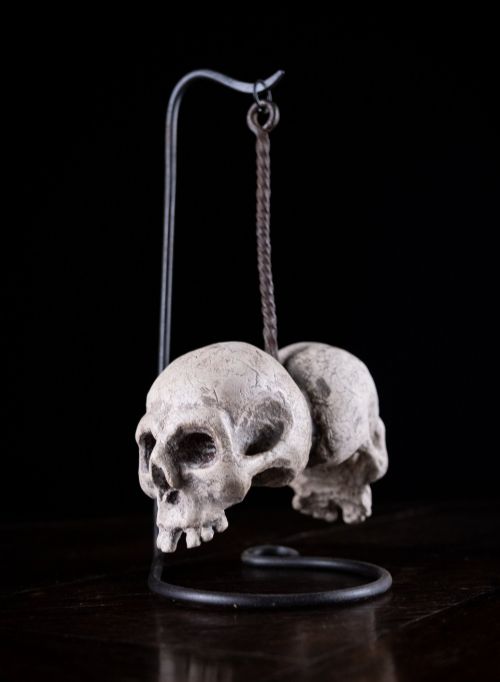
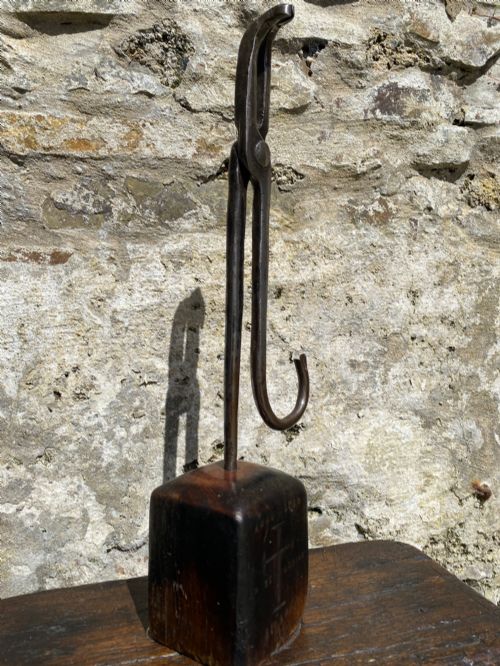
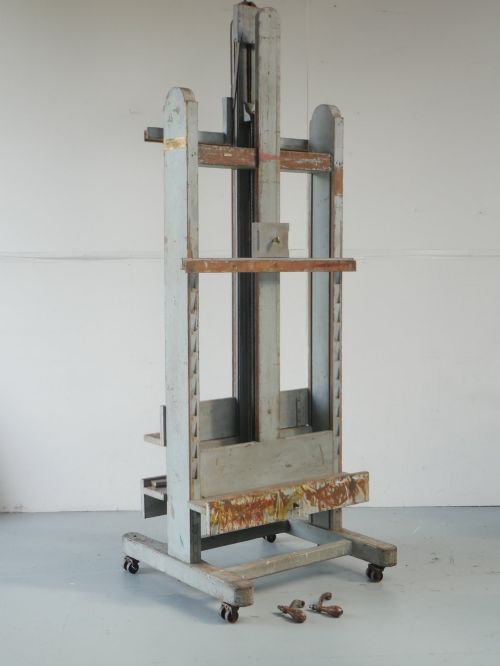
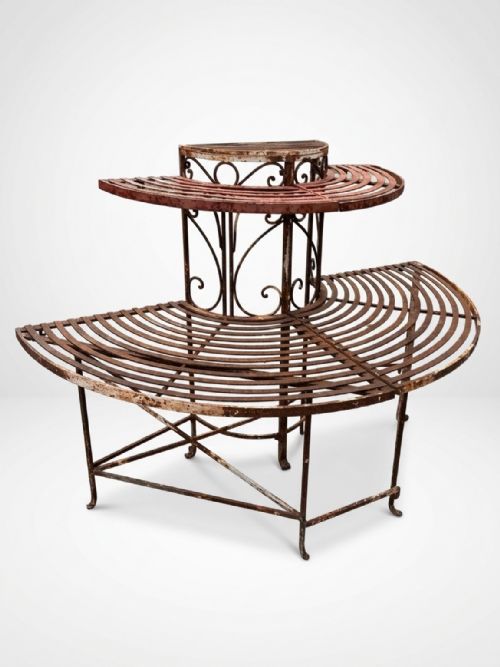
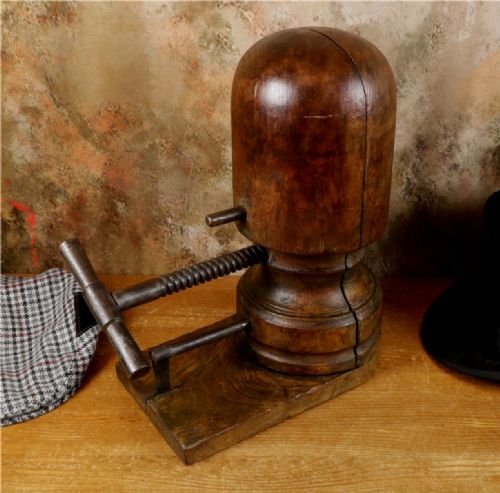
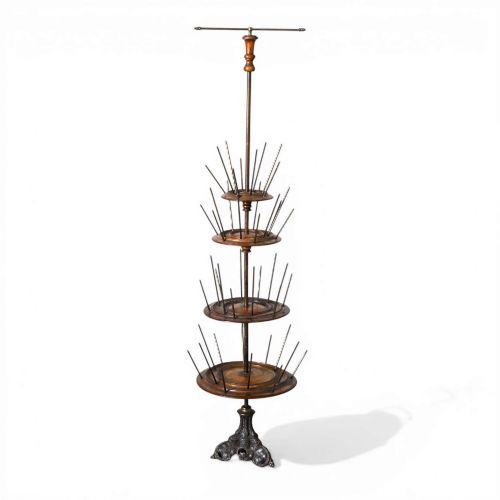
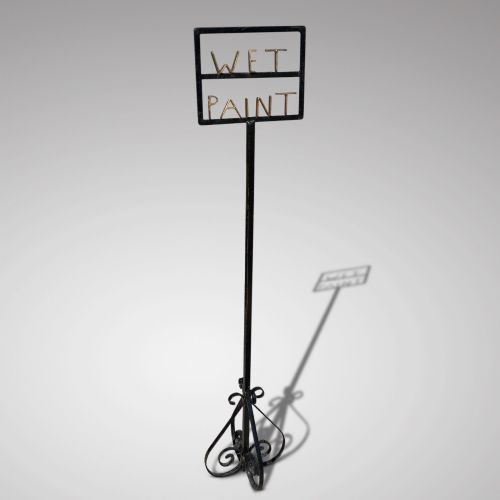
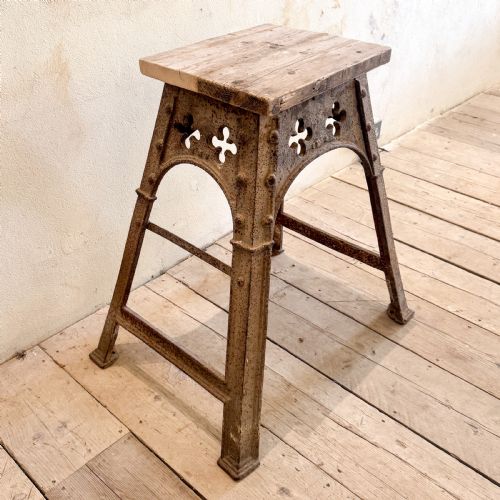
The object types span plant stands, bakers racks, studio easels, shop display stands, and milliner hat sizers.
The Antique Iron Display Stand Glossary
- Cast iron
- A hard, relatively brittle alloy of iron and carbon that can be readily cast in a mould. It provides the heavy, decorative structure found in garden planters and nineteenth century plant stands.
- Wrought iron
- Tough, malleable iron that can be heated and forged into decorative scrolls and structural frames. Makers utilised this material for bakers racks and wirework plant stands.
- Bakers rack
- A multi-tiered metal shelving unit originally used in French and English bakeries for cooling bread and pastries. These now serve as substantial display furniture in domestic settings.
- Jardinere stand
- A decorative pedestal or stand specifically designed to hold a plant container or flower pot. They frequently incorporate cast iron or brass scroll bases.
- Treen
- Small domestic wooden objects made by turning or carving. In the context of display bases, they provide contrasting organic texture against iron frameworks.
Antique Iron Display Stand: Frequently Asked Questions
What is a bakers rack?
A bakers rack is a multi-tiered metal shelving unit traditionally used in commercial kitchens and patisseries for cooling baked goods.
Today, these robust wrought iron and cast iron structures function as display shelving for plants, books, and decorative objects in homes.
How do I date a plant stand?
Dating relies on observing manufacturing techniques, material combinations, and stylistic clues such as Victorian Gothic or Edwardian brass scroll-work.
Cast iron components, rivet patterns, and surface paint layers also offer strong indications of whether a piece originates from the nineteenth or early twentieth century.
Can these stands be used outside?
Many iron display stands, particularly garden column planters and pot stands, were originally built for outdoor or conservatory use.
Weathered cast iron and painted wrought iron naturally withstand exterior environments, though monitoring moisture prevents excessive oxidation.
What is the difference between cast and wrought iron?
Cast iron is poured into moulds to create heavy, rigid forms with detailed decorative motifs like plant stand pedestals.
Wrought iron is worked by hand while heated to form flexible scrolls, slender frames, and utilitarian shop fittings.