




Antique Iridescent Glass
Antique iridescent glass brings together shifting metallic lustres and fluid organic forms that defined the early twentieth century.
Antique Iridescent Glass
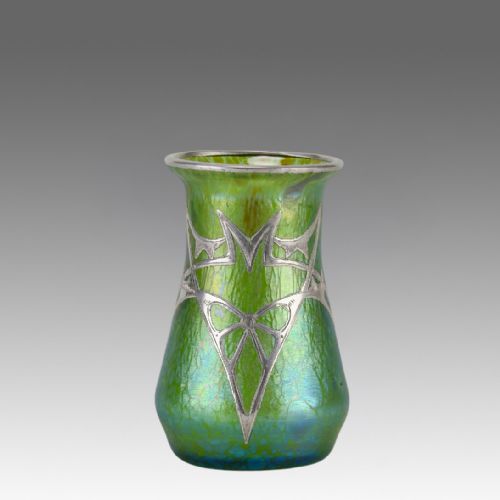
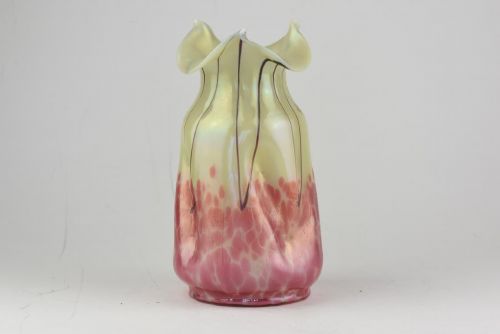
When searching for antique iridescent glass, buyers encounter vessels and decorative objects that display a shimmering, rainbow-like metallic sheen across their surfaces. These pieces draw heavily on organic forms and fluid silhouettes characteristic of the Art Nouveau movement, alongside cleaner lines from later periods.
The selection on this page centres predominantly on vases, alongside functional items such as inkwells, trinket boxes, and epergnes. Pieces originate largely from central European workshops active around nineteen hundred, alongside English, American, and French examples spanning the nineteenth and early twentieth centuries.
Technique and materiality
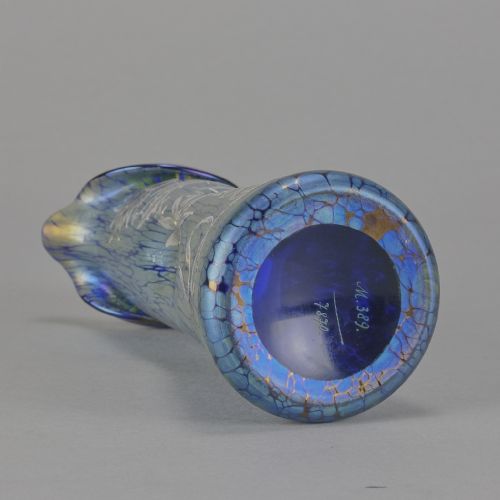
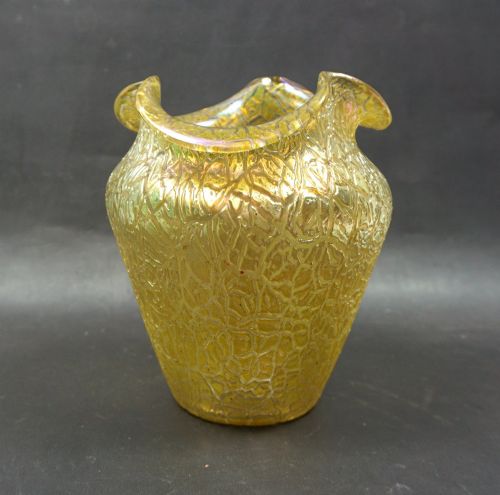
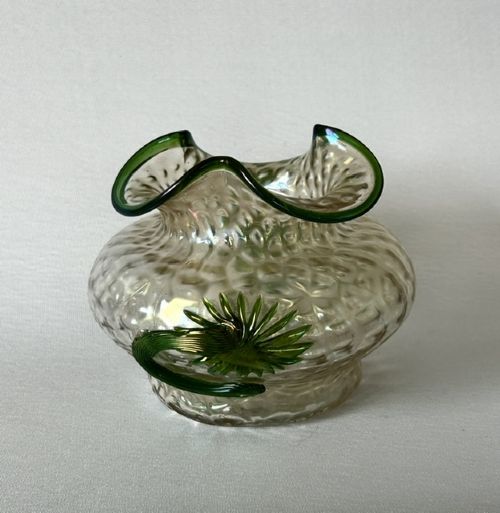
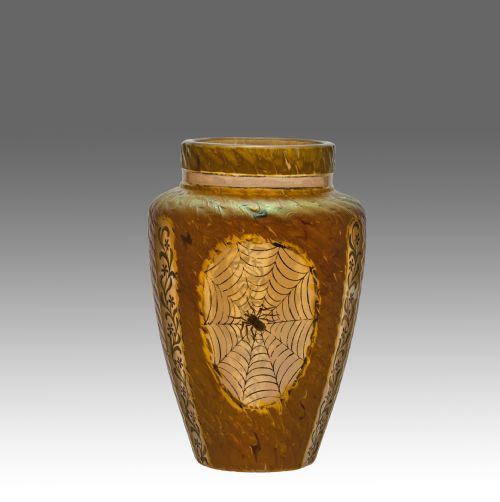
Maker operations relied on hand-blown glass techniques, often incorporating metallic oxides sprayed onto hot glass to produce the characteristic optical shimmer. Workshops frequently applied molten trails, such as snake motifs or organic web patterns, directly onto the vessel body.
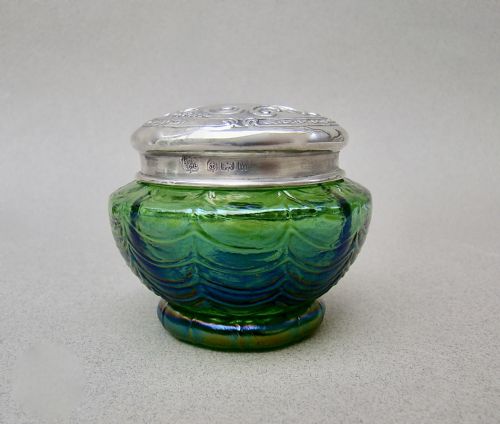
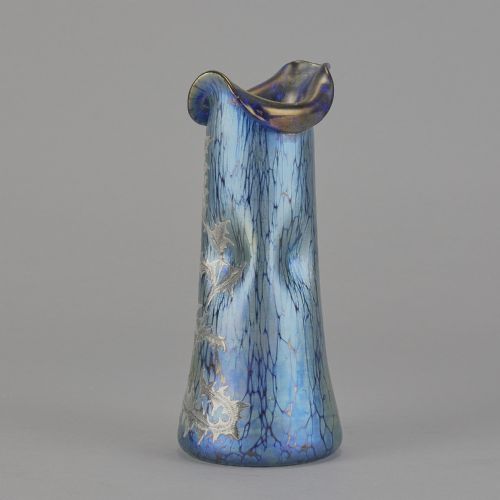
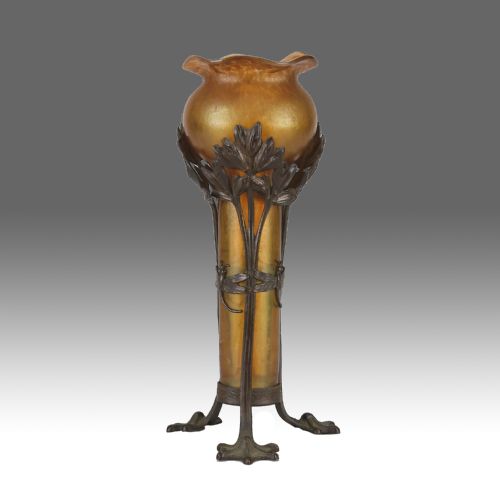
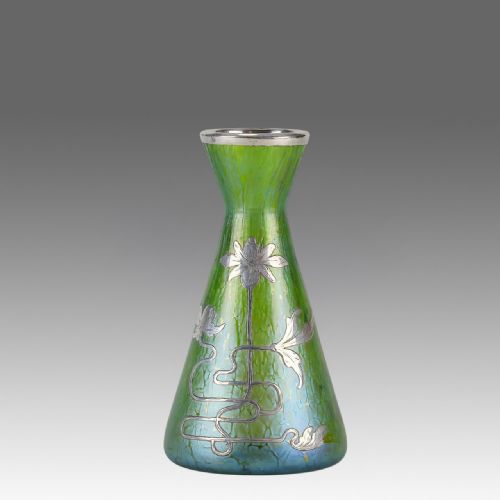
Many items incorporate mixed media, pairing blown glass with sterling silver overlays, brass stands, pewter mounts, or enamel decoration. These mounts were typically cast separately and fitted securely to the glass body to complete the design.
Listings feature items spanning the nineteenth century, nineteen hundred, nineteen ten, nineteen twenty, and nineteen thirty periods.
Judging quality and execution
Quality rests primarily on the depth and complexity of the optical effect within the glass matrix, where stronger chemical reactions produce a richer play of colour. The precision of the applied decoration, such as integrated metal overlays or delicate glass trails, distinguishes finer studio output from standard production.
The integration of metal mounts, whether pewter stands or silver lids, marks another distinction, with custom-fitted hardware indicating higher workshop standards. The integrity of the physical form, from balanced lobed vessels to crisp floriform edges, separates superior examples.
Loetz Witwe·Kralik Glass·Pallme Konig·LC Tiffany·Ferdinand von Poschinger·Fritz Heckert·A. J. Pepper & Co
The Antique Iridescent Glass Glossary
- Papillon
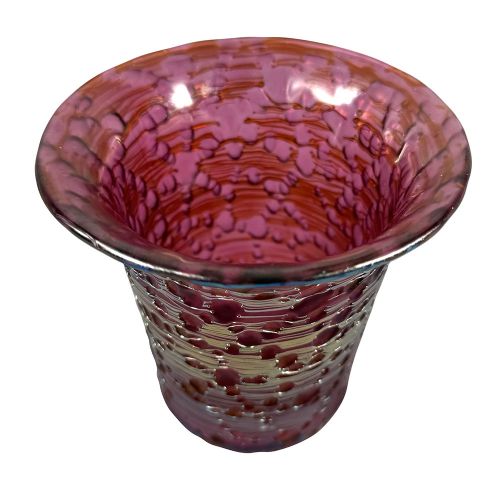
- An iridescent glass décor featuring small, scattered metallic spots resembling butterfly wings. This finish was famously utilised by Austrian glasshouses.
- Favrile
- A type of iridescent art glass developed in America, characterised by internal colouration and a distinct rainbow sheen. The term derives from an old craft word meaning handmade.
- Epergne
- A tabletop centrepiece featuring multiple branching holders or trumpets, frequently rendered in coloured or iridescent glass. These stands served as decorative centerpieces for formal dining.
- Phänomen
- A complex glass surface pattern of combed, feather-like iridescent threads integrated into the hot metal. This technique required considerable skill from the glassblower.
- Silver Overlay
- Metal deposited or mechanically fitted directly onto a glass vessel in decorative patterns. The technique was widely applied to turn simple bottles into luxury items.
Antique Iridescent Glass: Frequently Asked Questions
How do I clean iridescent glass?
Dust surfaces gently with a soft, dry cloth to prevent accumulation without disturbing delicate metallic finishes.
Avoid liquid cleaners and submerging pieces with metal mounts, as moisture can damage applied silver or brass components over time.
What periods do these pieces come from?
The inventory spans the late nineteenth century through to the nineteen twenties and thirties. The majority of items originate from the nineteen hundreds during the height of the Art Nouveau movement.
Earlier Victorian examples and later Edwardian pieces also appear, reflecting changing decorative tastes across those decades.
How were metal mounts attached?
Metal mounts and silver overlays were custom-fitted directly to the cooled glass body using secure mechanical grips or adhesives. Pewter stands and bronze collars were cast specifically to match the contours of individual vases.
This combination of glass and metal required precise coordination between the glasshouse and the metalworker.
Where were these glass pieces made?
Production was centered primarily in Bohemia and Austria, where prominent glassworks perfected chemical treatments for metallic lustres. Significant output also emerged from American studios, English factories, and French workshops.
Regional preferences influenced both the forms produced and the specific chemical recipes used for the iridescence.