


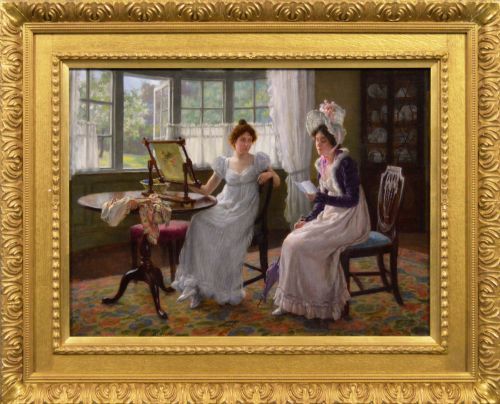

Antique Interior Portrait
An antique interior portrait captures domestic and tavern scenes in oil and watercolour, bringing 19th-century and Edwardian rooms directly into your home.
Antique Interior Portrait
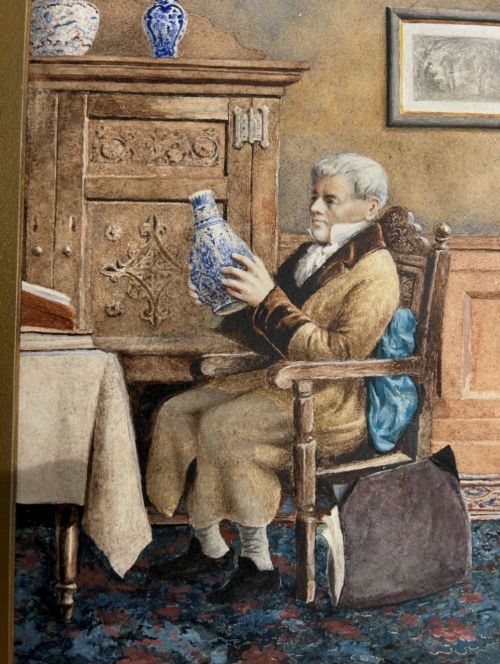
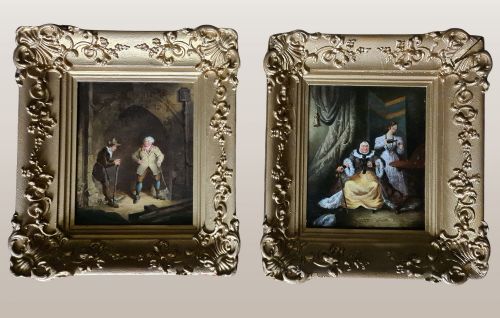
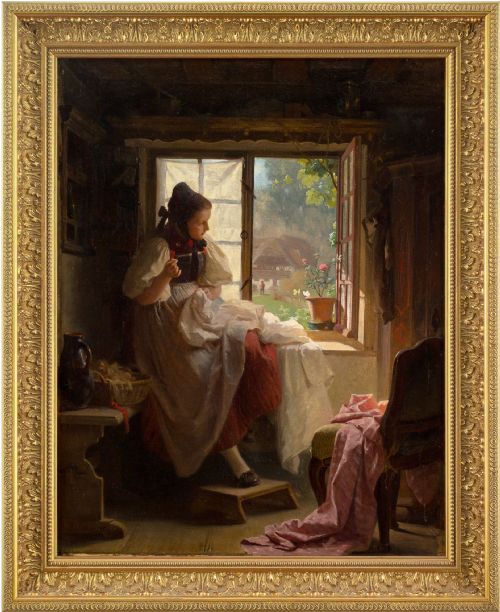
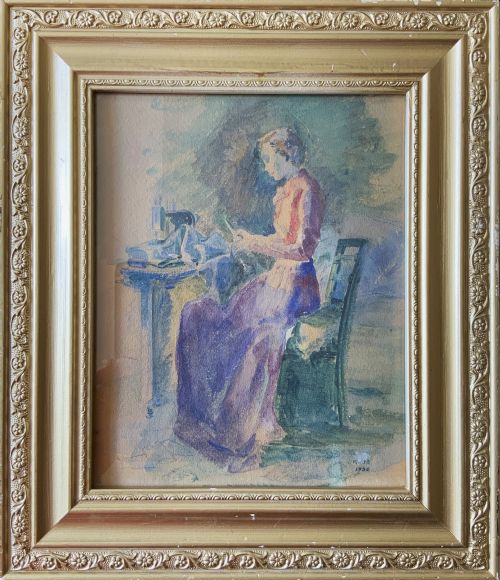
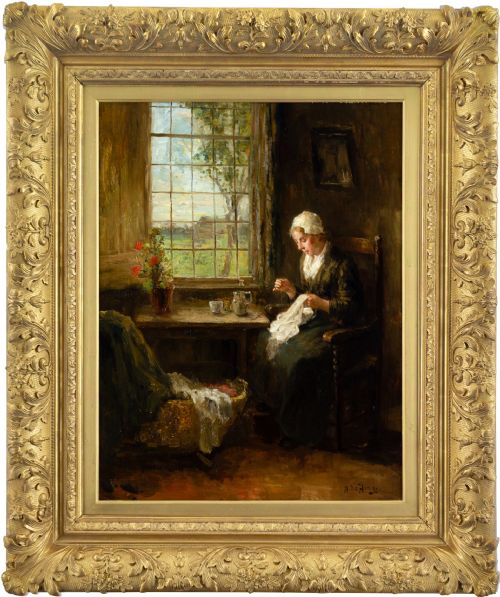
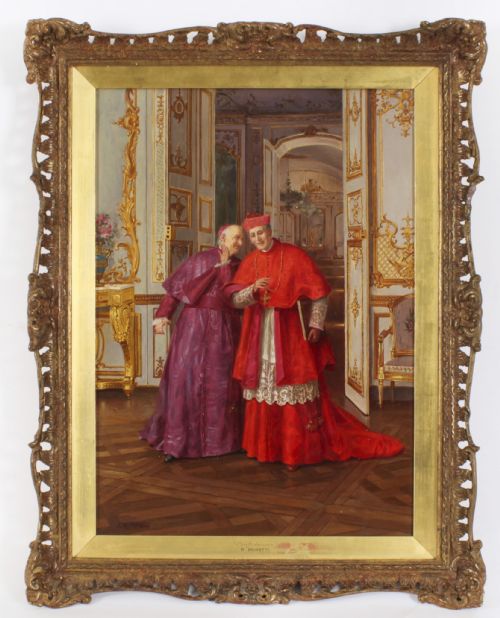
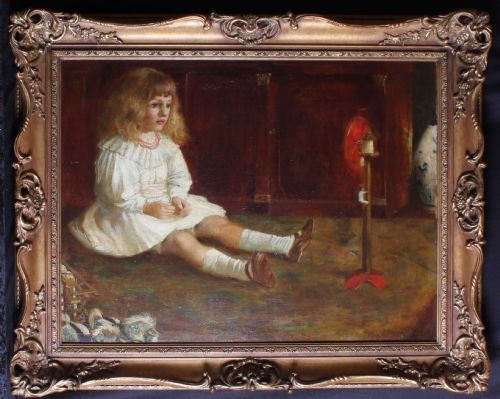
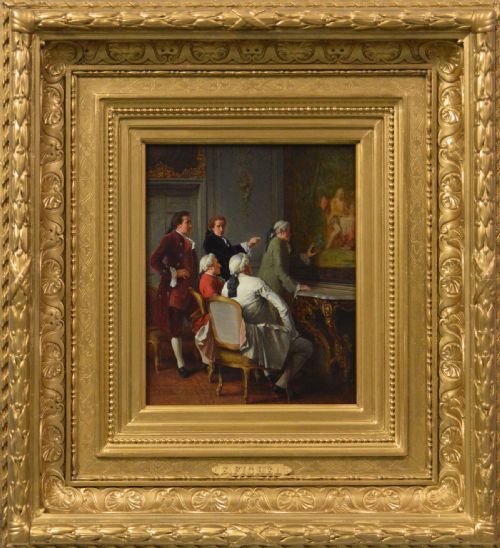
When you search for an antique interior portrait, you are looking at domestic scenes, tavern rooms, and quiet domestic moments rendered in oil paint and watercolour. These works capture figures sewing by windows, gentlemen examining objects, and families gathered in country houses or pastoral cottages.
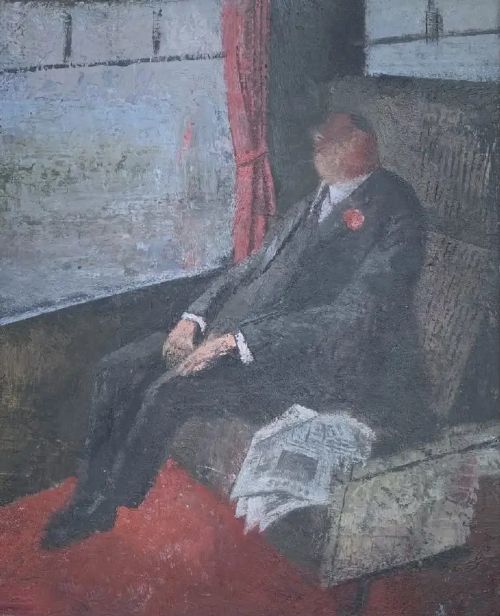
You are most likely to meet 19th-century Victorian oil paintings and watercolours on this page, alongside Edwardian and early 20th-century examples. The subjects range from narrative genre paintings involving multiple figures to solitary portraits set within detailed historical rooms.
How they were made
Artists applied oil paint and watercolour onto canvas, wood panels, and paper supports, often framed in giltwood with gold leaf accents. Canvas and oil board serve as the primary grounds for the larger genre and portrait compositions.
The technique relies on layered oil paint or washes of watercolour to build depth within interior spaces, capturing the play of light through windows and across wooden furniture or stone floors.
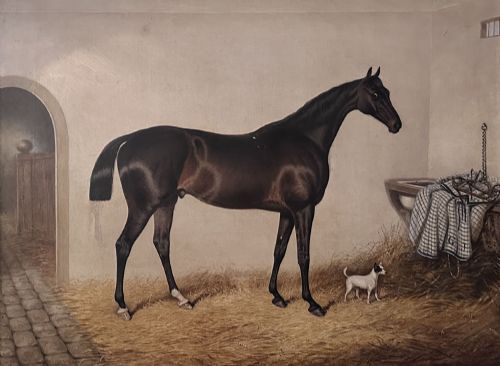
Several interiors quietly star an observant cat, a watchful terrier, or a goldfish keeping company with the human occupants.
What varies in quality
Quality rests in the handling of light, shadow, and architectural perspective within the room, separating academic precision from naive execution. A master hand defines fabric textures, facial expressions, and atmospheric interior gloom with measured brushwork.
The sophistication of the secondary elements - such as still life details, furnishings, and background figures - distinguishes standard decorative works from fine art pieces by recorded Victorian and Dutch School painters.
Max Kaltenmoser·Bernard De Hoog·Renato Moretti·Benjamin Eugene Fichel·Albert Clark·John Watkins Chapman·Charles Haigh Wood·Frank Moss Bennett·Haynes King·James Kyd·Robert Eadie·Hermann Armin Kern·Benjamin Cam Norton·Hans Temple·Roland Batchelor·Leonardo Morello·Charles Bilger Spalding·Georg Wilhelm Feistkorn
The Antique Interior Portrait Glossary
- Genre painting
- A style of painting depicting scenes from ordinary life, typically domestic interiors, tavern gatherings, or street scenes. These works focus on narrative storytelling and human interaction rather than grand historical events.
- Giltwood
- Wood, such as carved framing, treated with a thin layer of gold leaf or gold paint. It provides a reflective, ornate border typical of period frames.
- Oil on canvas
- A medium where pigments suspended in drying oils are applied to stretched fabric. It allows for rich blending of colours and durable preservation.
- Watercolour painting
- A method where transparent pigments mixed with water are applied to paper. It yields luminous washes and delicate detail often seen in smaller interior studies.
- Dutch School
- A historical designation for painters working in the Netherlands, known for meticulous domestic interiors and tavern scenes. Artists in this tradition heavily influenced later genre painting.
Antique Interior Portrait: Frequently Asked Questions
What is an antique interior portrait?
An antique interior portrait is a painting or watercolour depicting people within domestic rooms, cottages, or taverns. These artworks record the daily lives, furnishings, and clothing of past centuries.
The genre spans intimate studies of a single figure by a window to large narrative groups gathered in stately homes or historic palaces.
How were these paintings displayed?
Original period works were typically hung in reception rooms, parlours, or studies within substantial houses. They served both as decorative elements and as displays of cultural taste.
Many retain their original giltwood frames, which were selected to complement the tonal palette of the interior scene.
How do I date an interior portrait?
Dating relies on the clothing of the figures, the style of the furniture depicted, and the artist's recorded working dates. Signatures, inscriptions on the reverse, and the material support also provide key evidence.
Victorian pieces often feature heavy drapery and ornate furnishings, whereas 1920s and 1930s works introduce modernist touches and simpler domestic layouts.
Are all these pieces oil paintings?
No, while oil on canvas and oil on panel dominate the selection, watercolours on paper form a distinct category within the listings. Some pieces also utilise oil on board.
Both mediums were used concurrently by artists recording interior scenes throughout the nineteenth and early twentieth centuries.