


Antique Inlay Chairs
These antique inlay chairs bring together timber and meticulous handwork, offering seats that hold a room with pattern and polish.
Antique Inlay Chairs
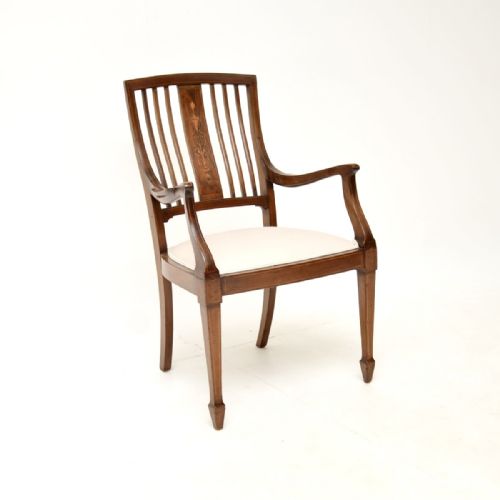
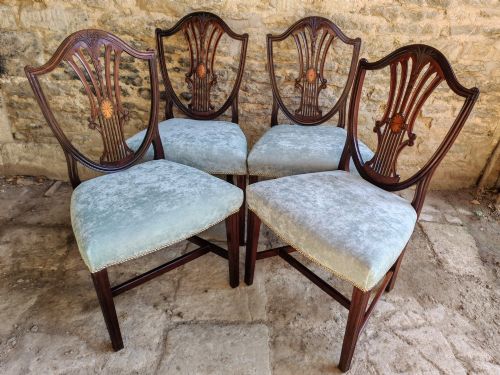
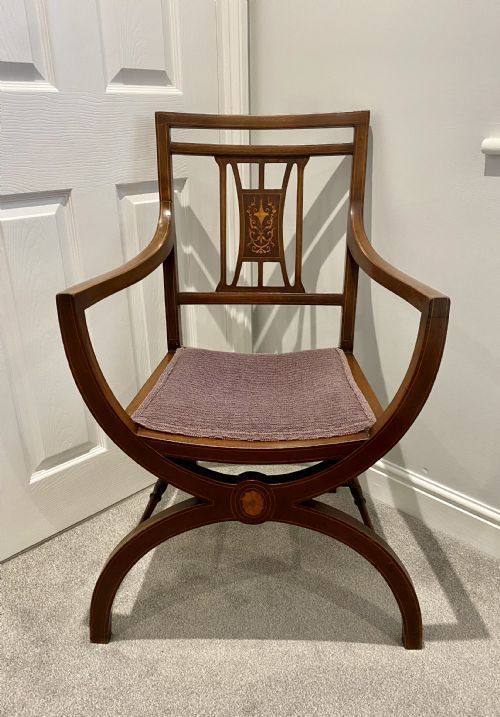
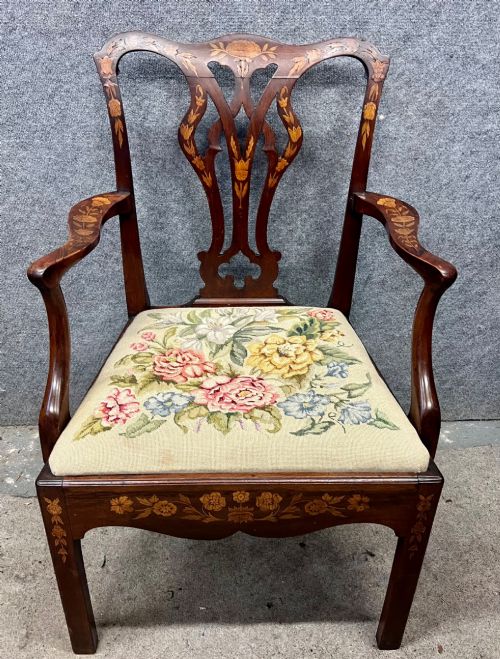
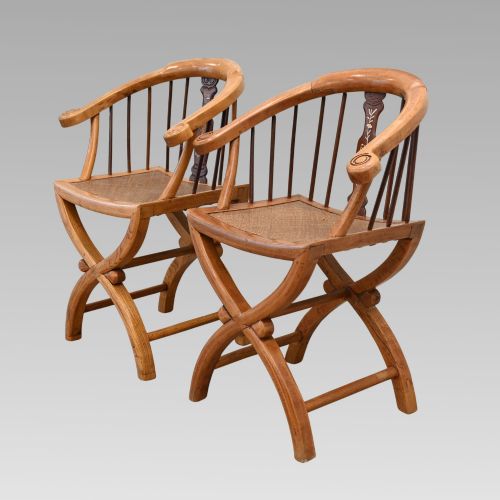
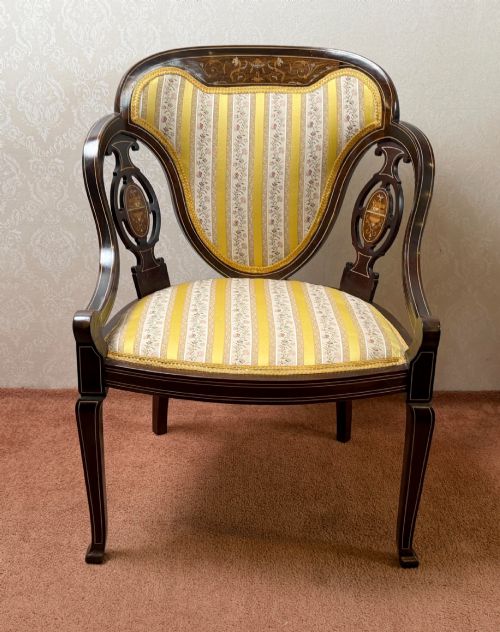
Antique inlay chairs encompass seating forms ranging from formal dining sets and library armchairs to bedroom chairs and music seats. When searching for antique inlay chairs, buyers encounter pieces stretching from the Georgian period through the Victorian and Edwardian eras, alongside distinct regional traditions.
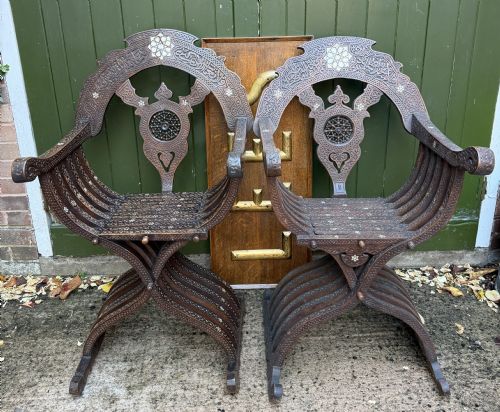
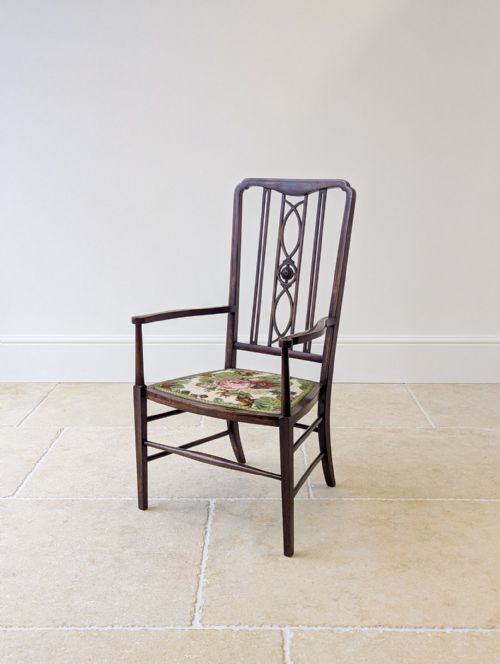
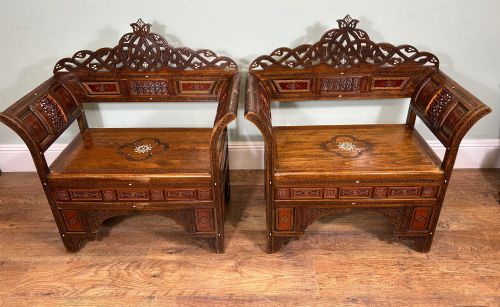
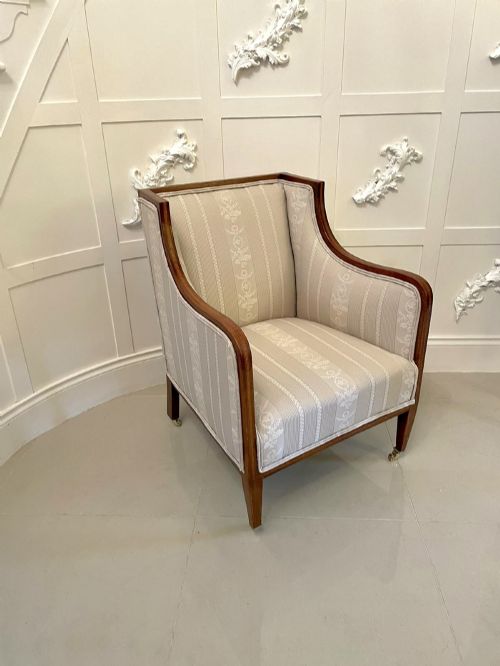
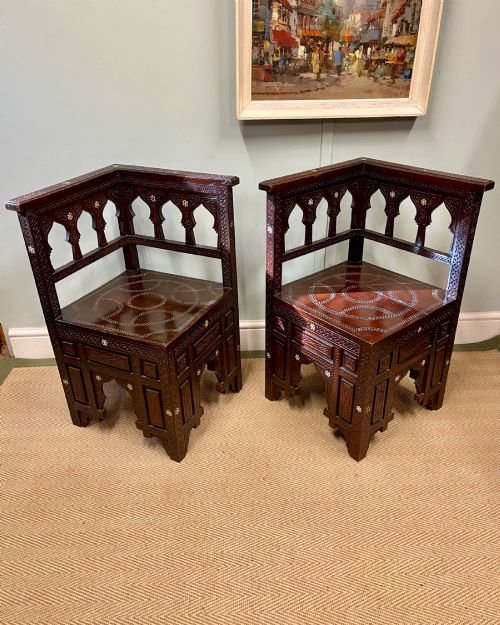
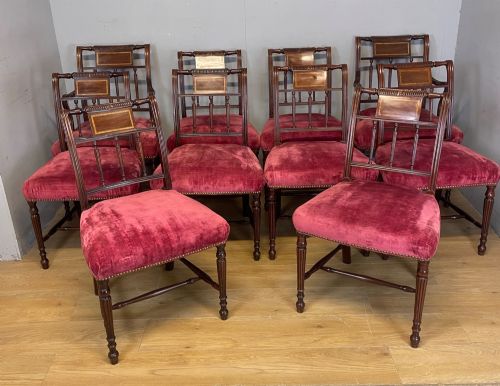
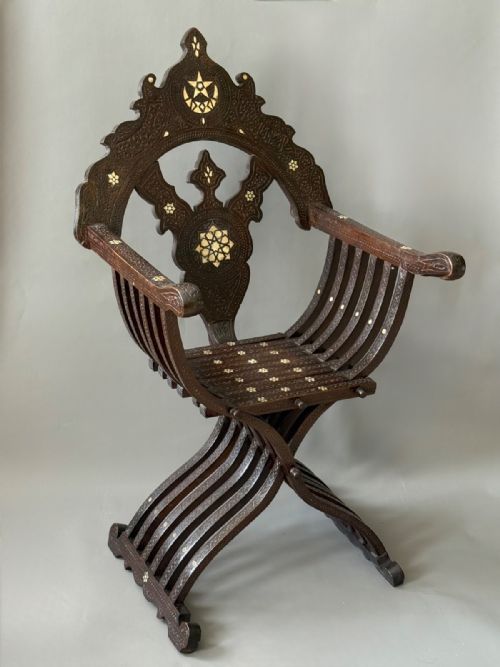
The Edwardian Sheraton Revival examples in mahogany and satinwood dominate the selection, often featuring delicate lines and light wood stringing. Alongside these sit heavier Regency rosewood models with brass inlay, as well as nineteenth-century Syrian and Damascan armchairs utilising mother-of-pearl and bone.
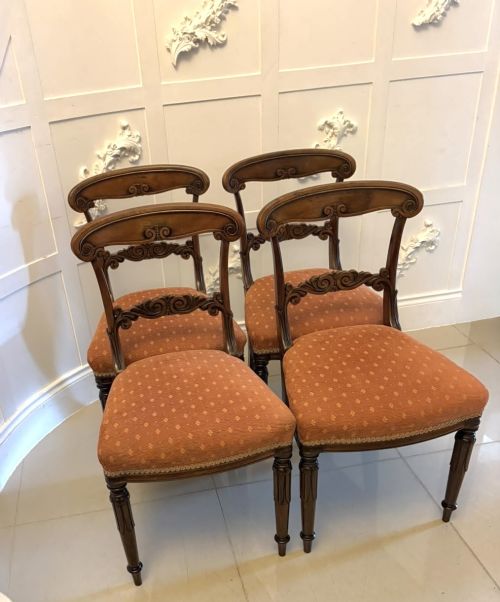
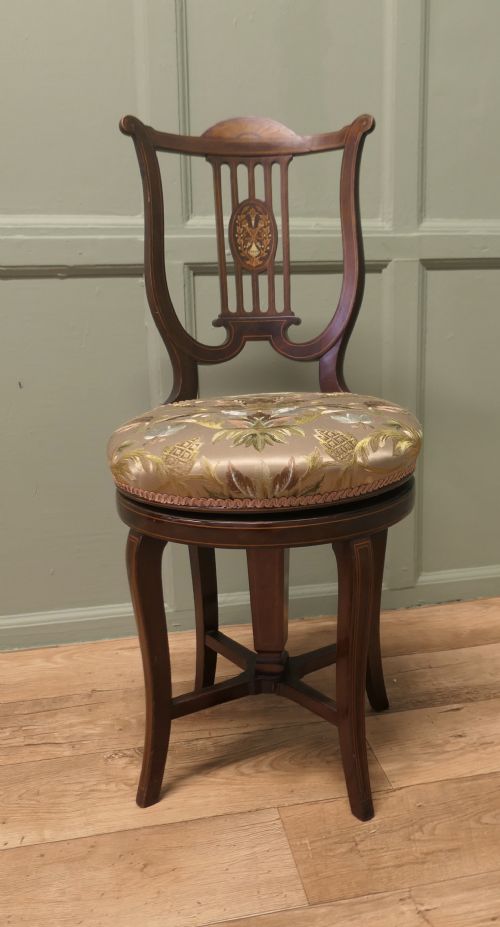
Forms vary from straightforward side chairs and elbow chairs to revolving music stools, corner armchairs, and expansive dining suites. Each variation reflects the prevailing tastes of its decade, from classical revivalism to intricate Middle Eastern geometric patterns.
Materials and construction methods
Makers built these frames predominantly from dense hardwoods such as mahogany, rosewood, walnut, and satinwood, supplying a sturdy foundation for decorative surface work. Timber selection governed the visual weight of the chair, with dark mahogany and rich rosewood providing contrast for lighter decorative elements.
Inlay techniques combined contrasting woods like boxwood, alongside bone, mother-of-pearl, and polished brass to create geometric borders, floral motifs, and figurative scenes. Craftsmen recessed these materials directly into channels carved into the primary timber surface, securing them with animal glue before scraping and polishing the whole flush.
Antique Inlay Chairs Retail Price Guide 2026
Typical asking prices for inlay chairs among the pieces listed under this phrase on Sellingantiques today, from the lower quarter to the upper quarter. They describe what is for sale here now, not the wider market.
Listings feature mahogany, rosewood, walnut, and satinwood alongside decorative insertions of brass, bone, and mother-of-pearl.
Distinctions in craftsmanship and design
Quality rests upon the precision of the inlay work and the integrity of the underlying joinery. Superior examples demonstrate tight joints without visible filler, alongside sharp, clean lines in the embedded brass, bone, or contrasting wood veneers.
Design ambition separates standard commercial production from exhibition pieces. Finer chairs incorporate complex multi-timber marquetry or intricate mother-of-pearl mosaic work, whereas lesser examples rely on simple linear stringing around plain panels.
James Shoolbred & Co.·Cowtan & Sons
The Antique Inlay Chairs Glossary
- Inlay
- The technique of inserting pieces of contrasting material into a recessed wooden base to form a decorative design. This differs from veneer by cutting directly into the solid structure or thick primary ground.
- Stringing
- A thin, narrow strip of contrasting wood or light-coloured timber embedded in a linear channel to outline panels or legs. It defines the edge work on many Edwardian pieces.
- Marquetry
- Formed pieces of veneer assembled into pictorial or decorative patterns before being glued to the furniture surface. It allows for elaborate floral or architectural compositions across chair backs.
- Sheraton Revival
- A late nineteenth and early twentieth-century style drawing inspiration from the lighter neoclassical designs of the eighteenth century. These items frequently utilise satinwood, painted details, and delicate inlay.
- Parquetry
- Geometric mosaic woodwork formed of small wooden tiles arranged in repetitive patterns. It appears frequently on Levantine and Middle Eastern seating.
Antique Inlay Chairs: Frequently Asked Questions
How do I date an inlaid chair?
Dating relies on combining the timber species, the framing style, and the specific technique used for the inlay work. Earlier nineteenth-century examples often feature heavy brass or rosewood, while Edwardian pieces lean towards light mahogany and satinwood stringing.
Examining the construction methods underneath the seat and checking for hand-cut joinery helps confirm the period against known stylistic phases.
Are inlaid chairs suitable for daily use?
Most antique chairs handle normal seating provided the underlying frame joints remain tight and secure. Heavier library chairs and dining seats are built robustly for regular occupation.
Delicate salon chairs or pieces with extensive mother-of-pearl mosaic benefit from more careful placement where they experience less physical stress.
What is the difference between inlay and marquetry?
Inlay involves recessing separate materials like brass, bone, or contrasting wood into a solid channel carved into the wood. The surrounding timber remains the primary visible surface.
Marquetry assembles a complete picture or pattern from various veneers on a backing sheet before applying the whole composition as a surface layer.
How should I clean the inlay work?
Maintenance requires gentle dusting with a soft, dry cloth to prevent grit from lodging around the edges of the inlaid materials. Avoiding excess moisture protects the old animal glues holding the brass, bone, or wood pieces in place.
Applying a microcrystalline wax periodically helps nourish the surrounding timber without clouding the delicate contrasting details.