

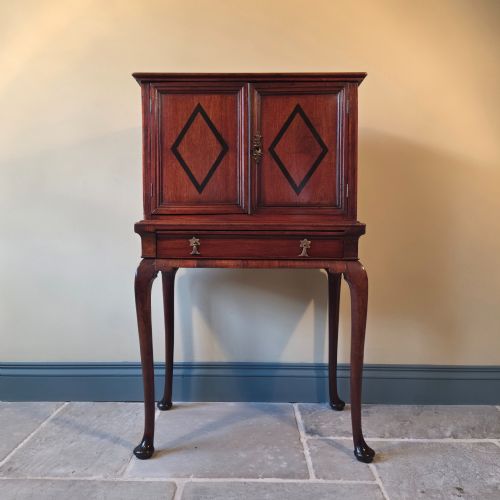


Antique Inlaid Spice Cabinet
An antique inlaid spice cabinet is a compact wooden container holding small internal drawers, prized for intricate marquetry and historic domestic utility.
Antique Inlaid Spice Cabinet
When buyers search for an antique inlaid spice cabinet, they encounter a variety of small storage forms including miniature chests of drawers, wall cupboards, cabinets on stands, and table cabinets. These pieces range from the eighteenth century through the nineteenth century, encompassing Georgian, Regency, Queen Anne, Continental Baroque, and Arts and Crafts styles.
The versions most commonly met on this page span oak, mahogany, walnut, and burr walnut construction, frequently enhanced with wood inlay, brass hardware, ebony, abalone, and bone. Forms include hanging corner cupboards and tabletop compartments designed for domestic use.
Originating from British provincial workshops and continental centres, these small cabinets reflect domestic storage needs across the eighteenth and nineteenth centuries. Their varied forms illustrate the shifting decorative preferences of different periods without straying from utilitarian origins.
How they were made
Cabinetmakers utilised solid timbers such as oak, mahogany, walnut, and fruitwood to construct the primary carcasses of these small containers. These woods were selected for structural stability and finished with careful joinery suited to miniature proportions.
Decorative surfaces relied on wood inlay, brass escutcheons, and occasional embellishments of ebony, abalone, and bone, particularly evident in Syrian and Moorish revival pieces. Carving and contrasting veneer work defined the aesthetic of eighteenth and nineteenth-century examples.
Antique Inlaid Spice Cabinet Retail Price Guide 2026
Typical asking prices for inlaid spice cabinet among the pieces listed under this phrase on Sellingantiques today, from the lower quarter to the upper quarter. They describe what is for sale here now, not the wider market.
Object types include wall cabinets, miniature chests of drawers, and tabletop cabinets spanning Georgian to Arts and Crafts styles.
What varies in quality
The standard of a piece rests upon the precision of its joinery and the integration of its inlay work. Finer examples display meticulous attention to timber selection, particularly in burr walnut and mahogany grain matching.
Proportion and the restraint of decorative embellishment separate exceptional cabinetwork from simpler provincial output. Original brass hardware and well-fitted internal drawers indicate higher workshop standards.
The Antique Inlaid Spice Cabinet Glossary
- Inlay
- A technique where contrasting materials are inserted into recesses in the wood surface to form decorative patterns. This method defines the primary ornamentation of these cabinets.
- Burr walnut
- A prized wood veneer showing intricate, swirling grain patterns caused by tree growths. Cabinetmakers utilised this timber on prominent exterior surfaces.
- Miniature chest of drawers
- A small-scale chest duplicating the form of full-sized furniture for tabletop use. These objects served specialised storage functions in domestic interiors.
- Escutcheon
- A protective plate surrounding a keyhole, frequently cast in brass. These fittings provide both functional reinforcement and decorative accent on cabinet doors.
Antique Inlaid Spice Cabinet: Frequently Asked Questions
How were these small cabinets used?
Historically, they served to store valuable provisions, dried herbs, or small personal items within the home. Their compact size allowed placement on tables, desks, or hanging upon walls.
Over time, their decorative qualities superseded their original utilitarian function, making them prized display objects.
How do I date an antique cabinet?
Dating relies upon examining construction methods, timber choices, and prevailing stylistic influences such as Georgian, Regency, or Arts and Crafts. Hardware types and joinery techniques offer further chronological clues.
Comparing carcass construction helps distinguish eighteenth-century provincial work from later nineteenth-century production.
What woods were commonly used?
Makers utilised native and exotic timbers including oak, mahogany, walnut, fruitwood, and ebony. These were often combined with contrasting inlay materials.
Burr walnut and figured mahogany were favoured for superior decorative surfaces.