




19th Century Syrian Furniture
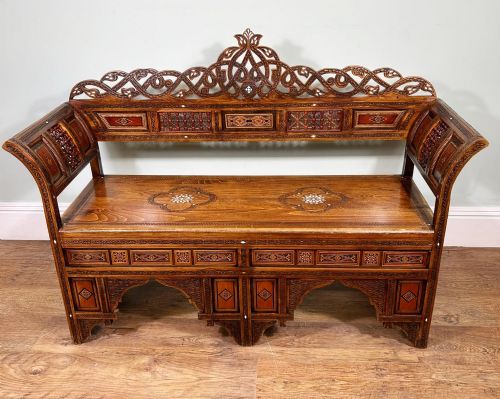
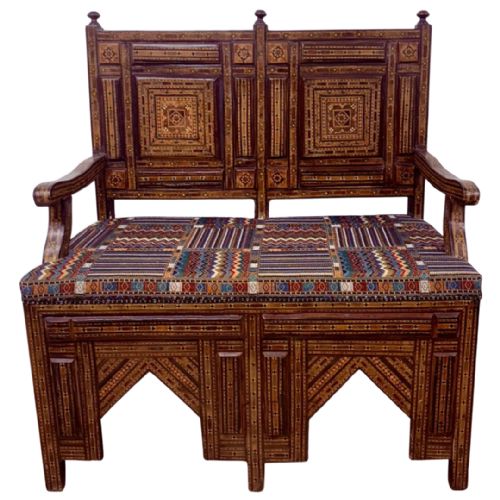
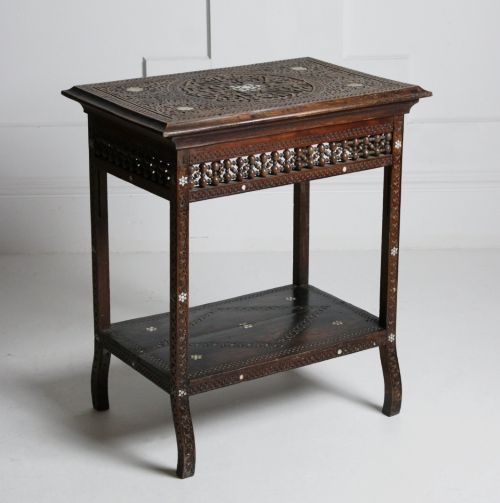
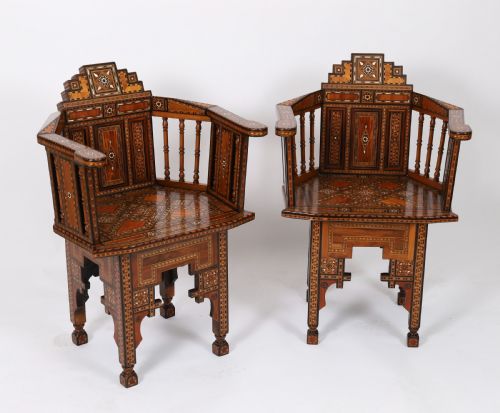
These 19th century syrian furniture pieces bring intricate bone and mother-of-pearl inlay into the home through tables, chairs, and cabinets.
19th Century Syrian Furniture
When you search for 19th century syrian furniture, you encounter heavily ornamented seating, tables, and cabinets originating from the Levant and associated revival movements. These works combine regional joinery traditions with European taste, particularly through the Moorish Revival and Anglo-Indian crossover pieces produced during the period.
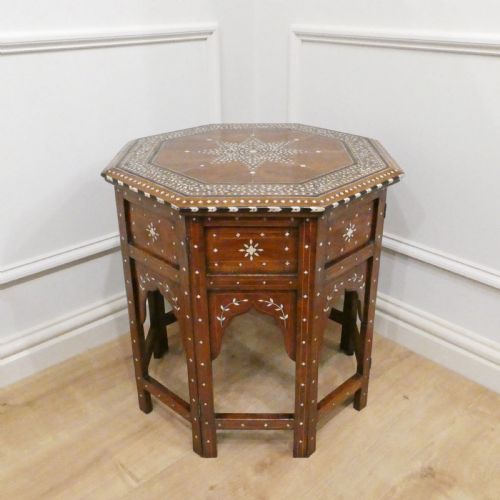
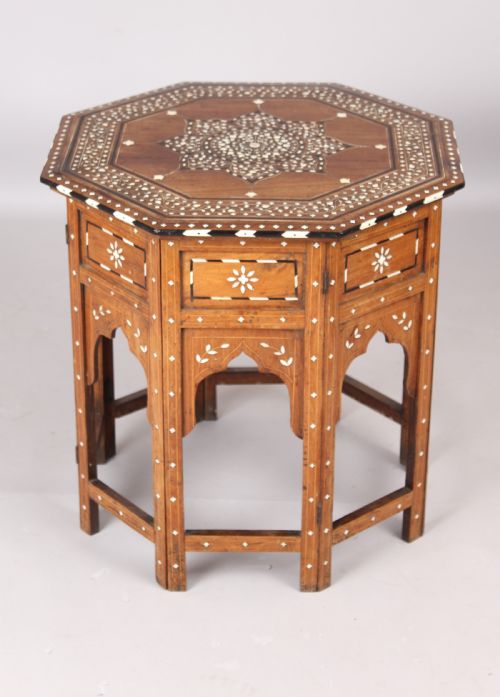
Side tables and occasional tables dominate the available forms, often featuring octagonal or hexagonal geometries designed for versatility in Victorian and Edwardian interiors. Alongside these small tables, you find armchairs, games tables, writing desks, and small wall cabinets built to showcase elaborate surface decoration.
The materials reflect a mastery of contrasting textures, pairing dark timbers like walnut, rosewood, and ebonised wood with luminous natural inlays. This regional output also encompasses specific regional traditions, including works associated with Hoshiarpur alongside Damascus production.
How They Were Made
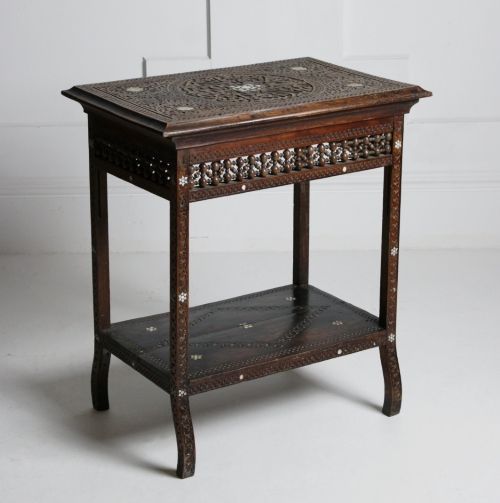
The construction of these pieces relies on hardwood frames shaped from walnut, rosewood, and general hardwoods to provide a stable structural base. Carved hardwood chairs and tables demonstrate deep relief work executed directly into the timber before assembly.
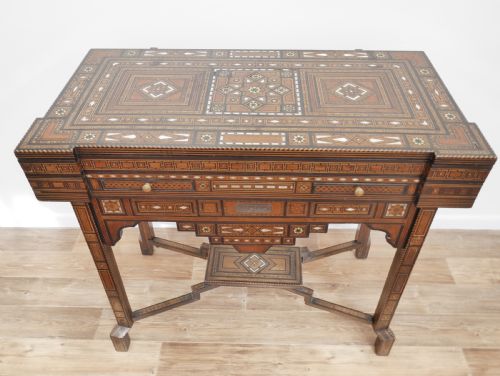
Surface decoration defines the craft, utilising geometric tessellation formed from individual pieces of bone, mother-of-pearl, and abalone. Craftsmen set these organic materials into precision-cut channels within the wooden carcase, securing them to create dense, shimmering patterns across every available plane.
19th Century Syrian Furniture Retail Price Guide 2026
Typical asking prices for 19th century syrian furniture among the pieces listed under this phrase on Sellingantiques today, from the lower quarter to the upper quarter. They describe what is for sale here now, not the wider market.
Several octagonal tables fold flat for easy transport across continents.
What Varies in Quality
The standard of these works depends largely on the density and precision of the inlay work across the surfaces. Superior examples display tight, uniform geometric tessellation with minimal filler between the bone, mother-of-pearl, and wooden matrix.
Structural integrity also separates the output, as complex forms like metamorphic writing tables and multi-tiered side tables require robust internal joinery to withstand daily use. The crispness of the carved relief work on chairs and tables further distinguishes accomplished workshop production from simpler output.
Liberty & Co
The 19th Century Syrian Furniture Glossary
- Moorish Revival
- A nineteenth-century architectural and decorative style that reinterpreted Islamic design motifs for Western domestic interiors. It heavily influenced the ornamentation found on tables and chairs from this era.
- Parquetry
- A geometric mosaic of wood pieces used for decorative surfacing on furniture. In Levantine pieces, this technique is frequently combined with bone and shell inlay.
- Hoshiarpur
- A North Indian centre of woodworking renowned for intricate inlaid tables and furniture exported during the late nineteenth century. These pieces often appear alongside Syrian works due to similar aesthetic influences.
- Ebonised Wood
- Timber treated to resemble ebony through a staining and finishing process. It provides a dark, high-contrast background that accentuates light-coloured bone and mother-of-pearl inlay.
19th Century Syrian Furniture: Frequently Asked Questions
What rooms suit 19th century syrian furniture?
These pieces function exceptionally well as accent items in studies, sitting rooms, and hallways where their detailed surfaces can be appreciated at close range. Compact forms like octagonal tables and side tables fit easily beside seating.
The rich combination of inlaid bone and dark timber adds textural depth to both traditional and contemporary interior schemes without overwhelming the surrounding space.
How do I clean inlaid furniture?
Maintain the timber and inlay by dusting regularly with a soft, dry cloth to prevent debris accumulating within the intricate geometric channels. Avoid using harsh chemical polishes or excessive moisture.
Applying a microcrystalline wax occasionally helps protect the wood and keeps the mother-of-pearl and bone elements stable within their settings.
Were these pieces made for export?
Many of these works were produced specifically to satisfy nineteenth-century European demand for exotic and revivalist interior furnishings. Makers in Damascus and surrounding regions adapted traditional forms to suit Western domestic habits.
This trade resulted in specialised furniture types, such as metamorphic writing tables and specific games tables, tailored to British and continental buyers.
How do I distinguish regional styles?
Distinguishing the origin relies on observing the specific combination of materials and carving styles inherent to each workshop tradition. Syrian and Levantine works often emphasise mother-of-pearl and bone geometric parquetry.
Items associated with Hoshiarpur typically display dense all-over carved floral and geometric motifs in hardwood without the same extent of shell inlay.