
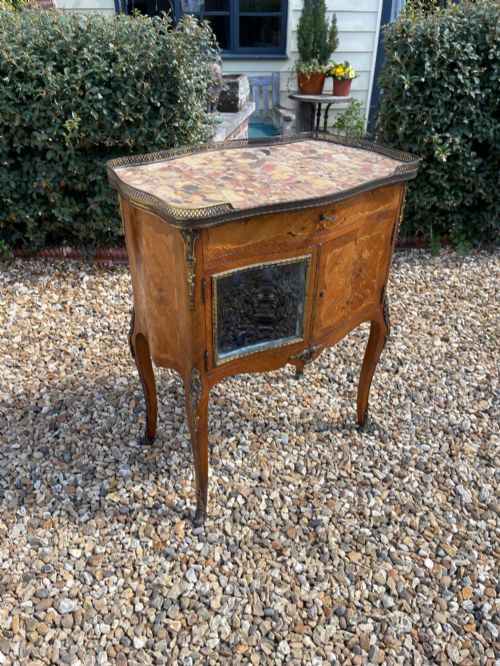


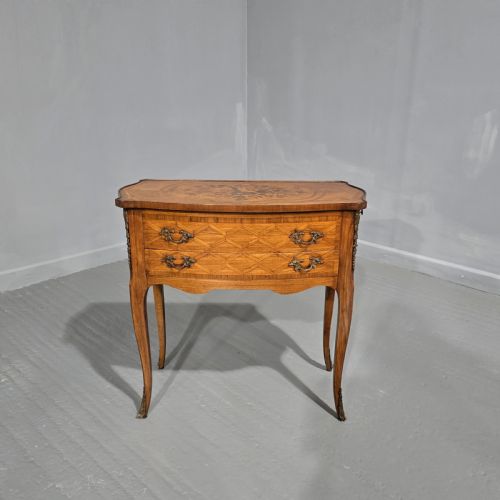


Antique Inlaid Chiffonniere
These antique inlaid chiffonniere selections are French and Victorian side cabinets and tables featuring marquetry and parquetry that anchor a formal room.
Antique Inlaid Chiffonniere
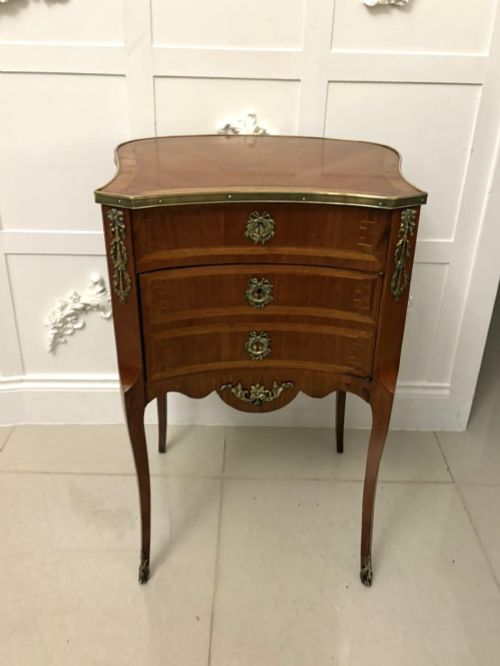
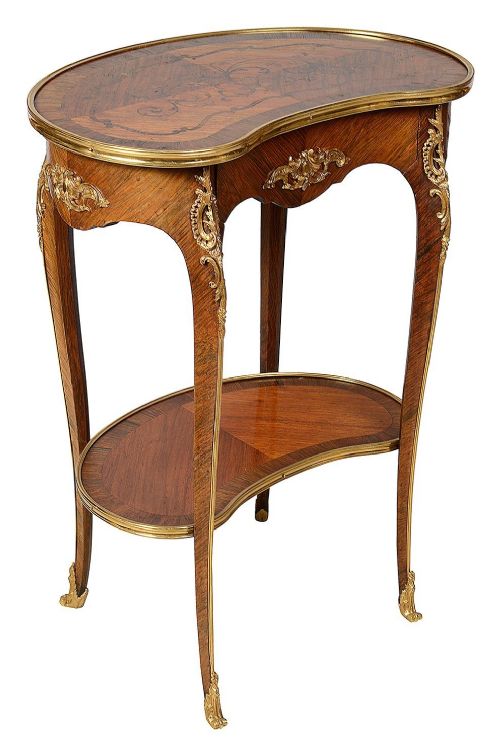
An antique inlaid chiffonniere on this page is typically a French side cabinet, side table, or vitrine dating from the nineteenth century. These low storage and display pieces serve formal rooms with surfaces for ornaments and enclosed space for treasured possessions.
You will most frequently meet pieces executed in the Louis XV Revival style and general French tastes of the 1800s. Makers shaped these cabinets and tables to catch the eye with serpentine outlines and decorative wooden surfaces.
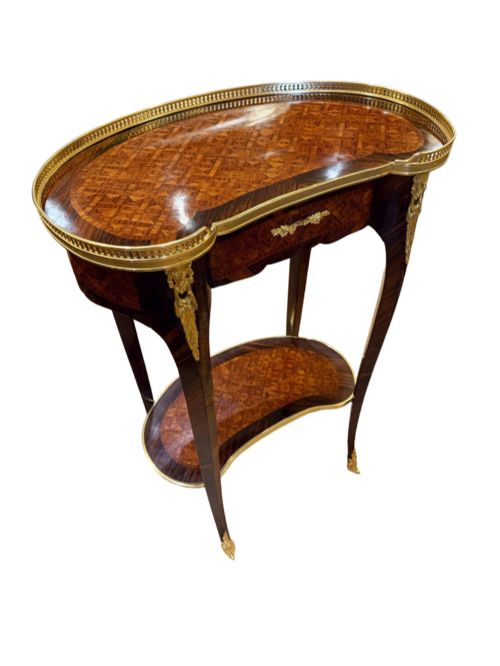
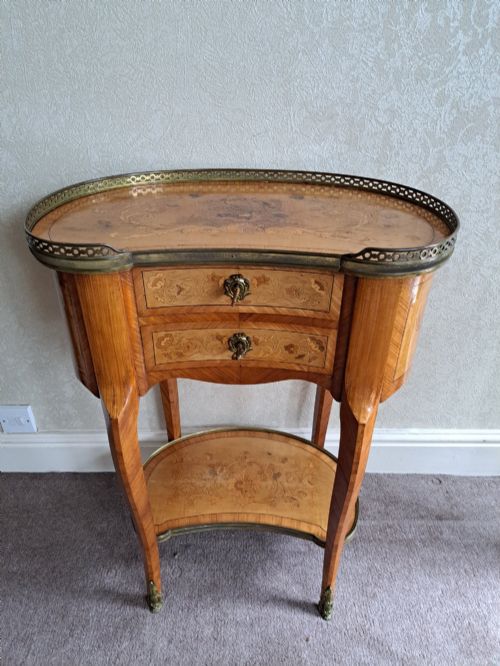
The objects combine practical furniture forms with ornate decorative arts traditions. They range from kidney shaped side tables to freestanding cabinets designed to command attention in a drawing room or parlour.
How they were made
Cabinet makers utilised fine timbers such as kingwood, walnut, and rosewood as the structural foundation and canvas for decorative schemes. These rich woods provided contrasting tones necessary for intricate surface patterns.
Craftsmen applied marquetry and parquetry inlay to create pictorial or geometric designs across the tops and doors. Ormolu mounts and brass details were then cast and fitted to accent the corners, legs, and borders.
Listings feature nineteenth century French side cabinets and tables built from kingwood, walnut, and rosewood.
What varies in quality
The distinction between ordinary and superior examples lies in the precision of the marquetry and the crispness of the cast brass and ormolu mounts. Finer pieces demonstrate meticulous cutting of wood veneers that fit together without visible gaps.
Construction methods and timber selection dictate longevity and visual weight, with dense hardwoods like kingwood and rosewood denoting higher ambition. The fluidity of the Revival curves and the integration of marble tops further elevate the status of individual items.
The Antique Inlaid Chiffonniere Glossary
- Marquetry
- Decorative veneer work forming pictures or floral patterns using various tinted woods. It covers flat surfaces on cabinet doors and tabletops.
- Parquetry
- Geometric wood inlay forming repeating patterns such as cubes or chequers. This technique decorates table tops and cabinet panels.
- Ormolu
- Gilt bronze mounts applied to furniture for decorative enrichment. These metallic accents highlight the corners and legs of French cabinets.
- Kingwood
- A dense, richly figured timber utilised in fine cabinet making during the nineteenth century. Its dark grain provides strong contrast for inlay work.
- Vitrine
- A glass fronted cabinet designed for the display of porcelain and small objects. These pieces often feature extensive marquetry and brass mounts.
Antique Inlaid Chiffonniere: Frequently Asked Questions
What is an antique inlaid chiffonniere?
An antique inlaid chiffonniere is a nineteenth century French cabinet or side table decorated with marquetry and parquetry. These pieces provide surface display space and enclosed storage.
They reflect revival styles such as Louis XV and French Rococo taste. Cabinet makers used fine timbers and metal mounts to create decorative focal points for period rooms.
How do I date these cabinets?
Dating relies on timber choices, construction techniques, and stylistic revival markers typical of the nineteenth century. Victorian and continental pieces often combine walnut or kingwood with brass mounts.
Changes in veneer thickness and the style of ormolu casting help narrow the decade of production. Makers active in the 1800s left distinct clues in their assembly methods.
Where should I place one?
These side cabinets and tables suit drawing rooms, hallways, or reception spaces where their decorative surfaces can be seen. They work well against panelled or neutral walls.
Keep them away from direct sunlight and strong heat sources to protect the delicate wood veneers and marquetry. Freestanding tables also suit the centre of a spacious room.
How do I care for the surface?
Maintain the wood and marquetry by dusting gently with a dry, soft cloth. Avoid modern silicone sprays and harsh chemical polishes that damage antique finishes.
Apply a traditional wax polish sparingly only when the timber appears dry. Protect the top from moisture by using coasters under any displayed items.