





Antique Industrial Landscape
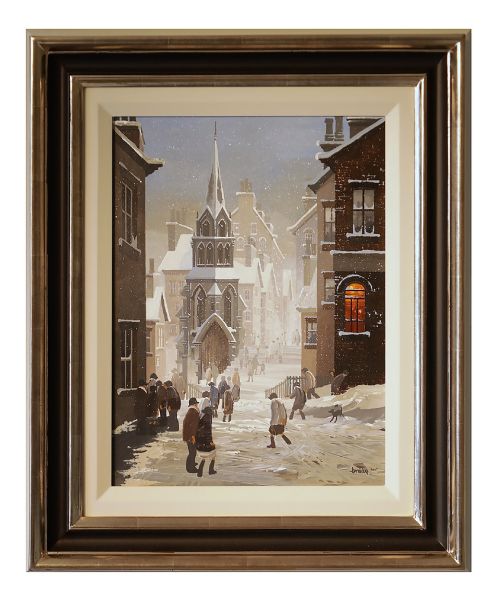
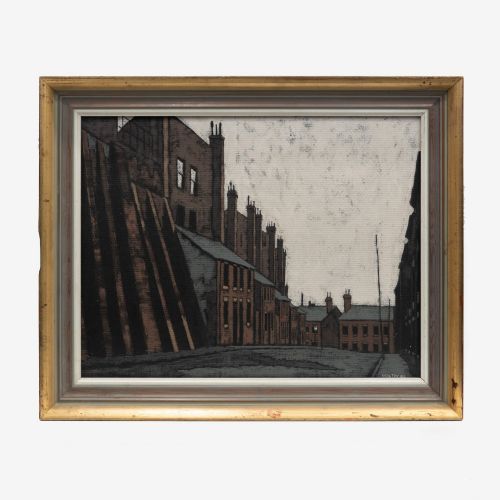
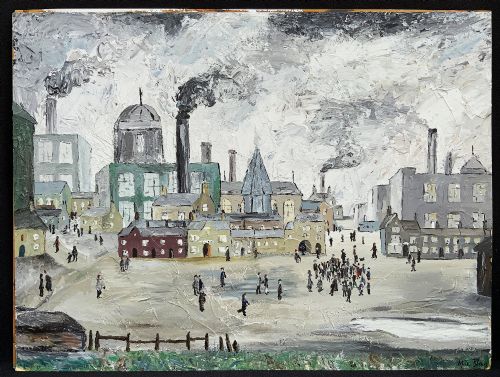
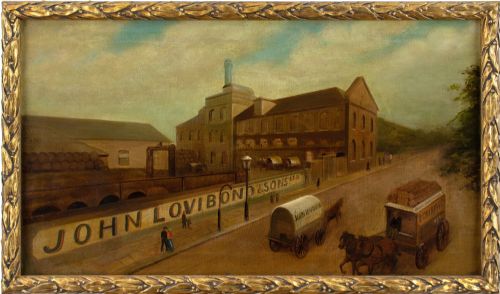
These antique industrial landscape works capture factories, docks, and shipyards through watercolours, oils, and pastels.
Antique Industrial Landscape
An antique industrial landscape records works depicting factories, breweries, quarries, docks, and urban towns spanning the nineteenth century through the mid twentieth century. These pieces document northern towns, southern shipyards, and maritime scenes through various schools of painting.
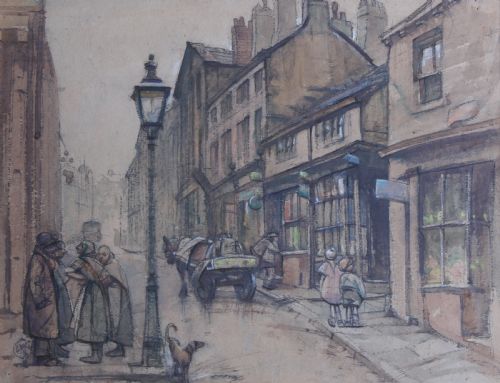
The watercolours and oil paintings appearing here range from nineteenth century depictions to early twentieth century British school creations and later northern school examples. Viewers encounter specific named locations such as Bradford, Fulham, Huddersfield, and Sheffield within the titles.
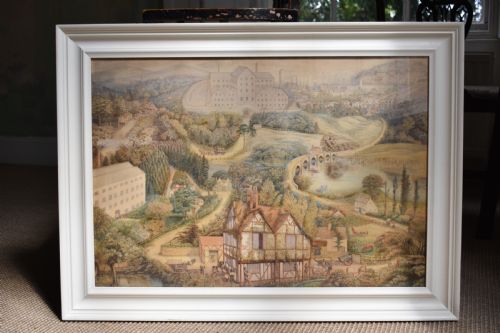
Artists record these subjects using oil on canvas, paper, watercolour, pastel, and ink. The visual styles encompass impressionism, British impressionism, modern British, and the northern school manner.
Materials and techniques
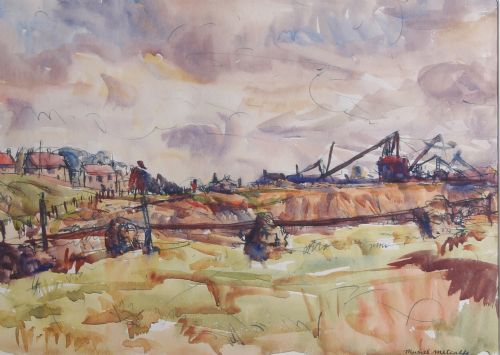
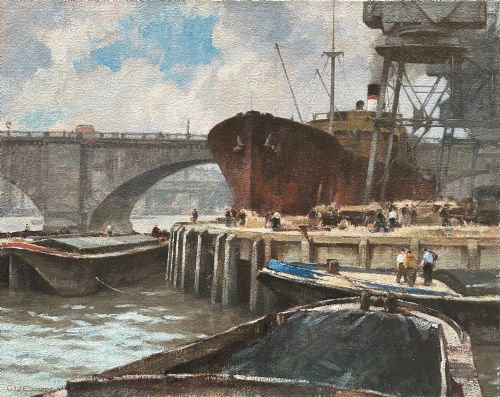
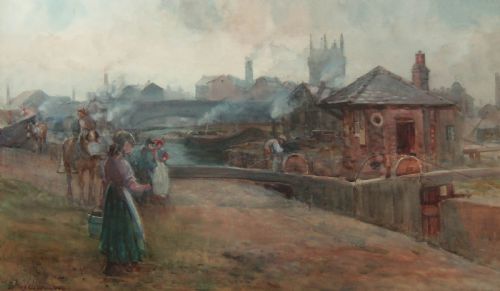
Makers apply oil paint onto canvas or panel to build substantial industrial scenes, utilising the pigment thickness to render murky atmospheres and heavy urban air. Watercolours on paper capture lighter topographical views of docks and riverbanks with fluid washes.
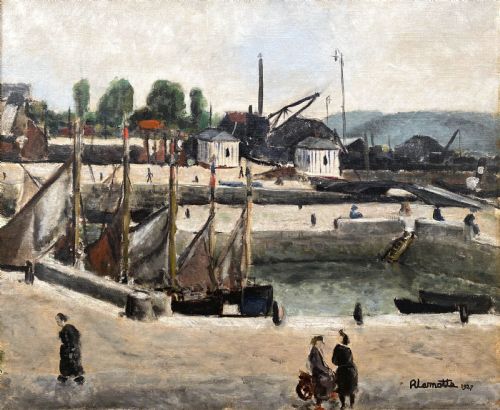
Pastel and ink mediums appear across French post impressionist harbour scenes and British townscapes, providing distinct textural depth. Lithography also records topographical Sheffield views on dated paper sheets.
Mediums include oil, watercolour, pastel, ink, and lithography representing British and French artistic schools.
Distinctions in quality
Execution depth separates routine topographical watercolours from accomplished oil paintings capturing specific maritime and manufacturing subjects. The handling of atmosphere, particularly smog and smoke effects over urban centres, defines the stronger works.
Documentary specificity elevates pieces that name particular breweries, quarries, and docks alongside the artist signature. Provenance and identifiable association with regional movements such as the Staithes Group or Northern School further distinguish individual pieces.
Muriel Metcalfe·Fred Lawson·Frank Shenton·Arthur Netherwood·Frances E Nesbitt·Herbert John Finn·James W Booth·Walter J Hall
The Antique Industrial Landscape Glossary
- Northern School
- A regional artistic tradition focusing on industrial towns, working class life, and urban landscapes of northern England.
- Topographical watercolour
- A painting style dedicated to accurately recording specific geographical locations, buildings, and towns.
- Post impressionism
- An artistic movement following impressionism that explores emotional and structural responses through bolder colours and forms.
- Oil on canvas
- A painting technique using pigments bound in a drying oil medium spread across woven fabric surfaces.
Antique Industrial Landscape: Frequently Asked Questions
What subjects do these paintings show?
These works depict industrial scenes including breweries, quarries, docks, shipyards, and urban townscapes.
Artists record these working environments across various British and European locations using oil, watercolour, and pastel.
How do I date an industrial painting?
Dates rely on artist signatures, framing materials, inscriptions naming specific locations, and stylistic movements.
Nineteenth and twentieth century periods appear across the listed watercolours and oils.
Where should I hang these artworks?
These pieces suit studies, libraries, or living spaces with neutral walls that complement traditional frames.
Direct sunlight should be avoided to protect watercolours and paper works from fading.
What is the Staithes Group?
The Staithes Group comprises artists inspired by French impressionism who painted coastal and industrial northern scenes.
Members produced works capturing local harbour life and maritime views.