







Antique Hunting Stand
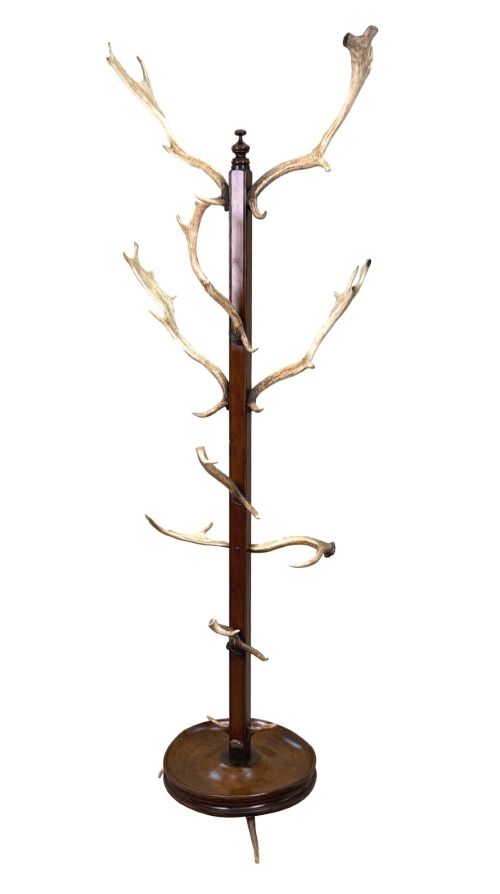
These antique hunting stand pieces bring dramatic sporting character into a room through carved horn, antler, and timber.
Antique Hunting Stand
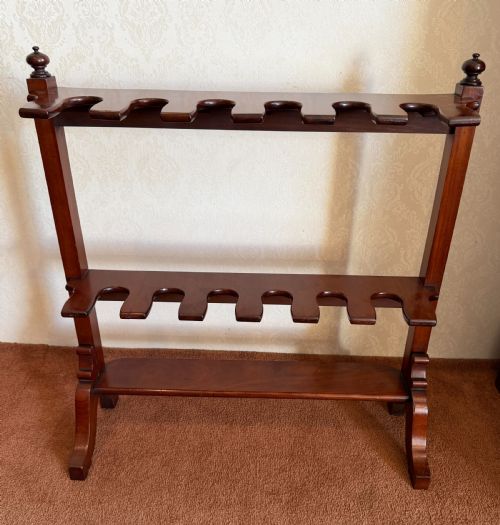
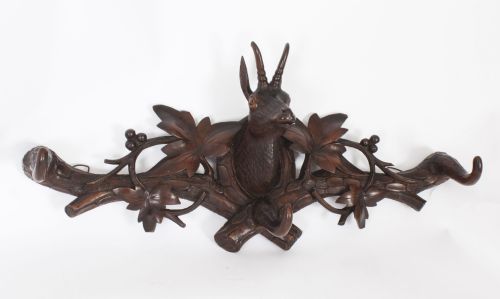
An antique hunting stand encompasses utilitarian hallway furniture and display pieces connected to the field sports of the nineteenth and early twentieth centuries. Pieces found on this page range from Victorian mahogany whip stands and boot holders to Black Forest wall-hanging hat and coat racks carved from linden wood.
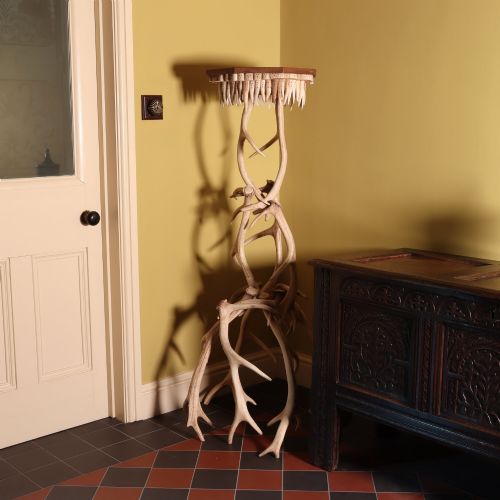
The materials reflect the sporting theme directly, utilising animal horns, mounted antlers, and heavy woods like oak and mahogany. Forms vary from hall stands and stick stands to specialised tack room fittings and desk accessories incorporating boars' feet.
Originating largely from British and continental European workshops, these items served practical purposes in country houses, hunting lodges, and tack rooms. Today they function as striking decorative elements that anchor an interior with robust natural textures.
How they were made
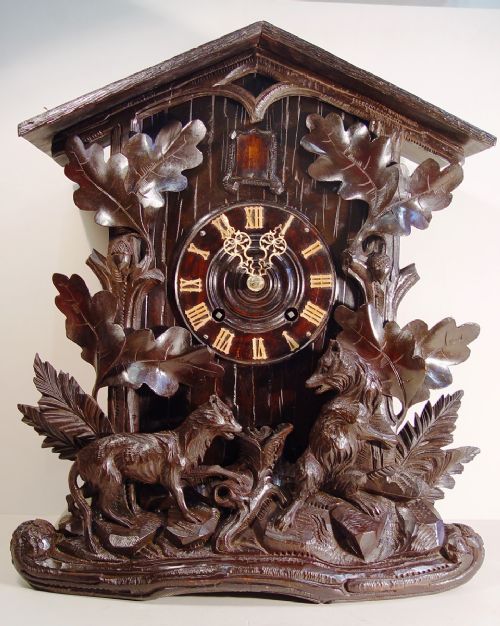
Makers shaped these pieces using traditional carpentry and carving techniques applied to sturdy hardwoods such as mahogany, oak, and linden wood. Surfaces often display deep hand-carving, particularly in Black Forest items where foliage and animal heads emerge from the timber.
Natural animal materials underwent careful preparation and mounting to form functional structures. Antlers, buffalo horns, and boars' feet were joined to wooden backplates or metal mounts using brass screws and brackets, combining organic forms with structural support.
Antique Hunting Stand Retail Price Guide 2026
Typical asking prices for hunting stand among the pieces listed under this phrase on Sellingantiques today, from the lower quarter to the upper quarter. They describe what is for sale here now, not the wider market.
A genuine chamois goat peers steadily from a nineteenth-century wall rack, guarding your keys.
What varies in quality
The selection of materials dictates the standing of a piece, with well-matched antlers, clean horn structures, and dense timbers indicating superior workshop production. Sound construction joints and original mounts preserve the structural integrity required for supporting heavy coats and riding crops.
Beha·James Dudson
The Antique Hunting Stand Glossary
- Black Forest
- A style of wood carving originating from the Swiss and German regions, known for highly detailed representations of animals and natural foliage. Pieces often incorporate real antlers alongside carved linden wood.
- Tack Room
- A utility space in a stable or hunting lodge where riding equipment, bridles, and whips are stored. Furniture designed for these rooms prioritises robust functional utility using heavy hardwoods.
- Torchiere
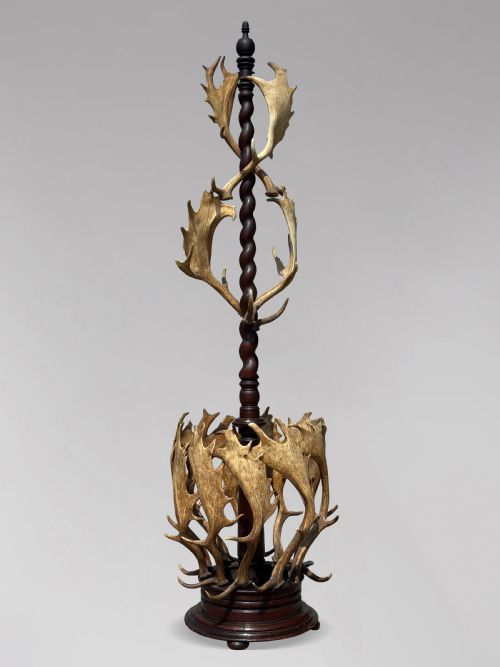
- A tall ornamental stand designed to hold a light source or candle. In sporting contexts, these are constructed from mounted antlers rather than traditional turned wood.
- Jasperware
- A type of fine stoneware developed by Josiah Wedgwood, characterised by a matte finish and contrasting white relief figures. It appears on tableware and cheese domes associated with dining stands.
Antique Hunting Stand: Frequently Asked Questions
What is an antique hunting stand used for?
These items served functional roles in country houses, country estates, and stable tack rooms for holding riding equipment, hats, coats, and walking sticks. Hallways and entranceways utilised them to keep outdoor gear organised and accessible.
Today, collectors use them in similar domestic settings as statement furniture pieces that bring distinct nineteenth-century sporting character into modern interiors.
How do I identify Black Forest stands?
Black Forest pieces are characterised by intricate hand-carvings of animals, foliage, and natural motifs executed in European timbers such as linden wood. They frequently incorporate actual animal horns and antlers into the structural design of wall racks and stands.
Originating primarily from Switzerland and South Germany during the nineteenth century, these items display a distinct focus on natural history and wildlife themes.
Are these stands made from real animal parts?
Many pieces incorporate genuine natural materials including deer antlers, buffalo horns, and taxidermy elements alongside traditional carved woods. These organic components were standard for nineteenth-century sporting and hunting lodge decor.
Craftsmen selected and mounted these natural elements to function as hooks, brackets, and structural supports for heavy garments and riding crops.
How do I date an antique hunting stand?
Dating relies on examining the construction methods, the wood types utilised, and the stylistic conventions of the period, which span the nineteenth and early twentieth centuries. Victorian and Edwardian examples often feature registration marks, specific brass hardware, or characteristic hand-carved motifs.
Comparing the specific form against established periods like the Victorian era or 1900s craftsmanship helps narrow down the decade of production.