



Antique House Bells
Antique house bells are the working signals of historic domestic service, bringing tactile brass and carved oak into modern rooms.
Antique House Bells
When you search for antique house bells, you encounter a range of functional hardware and service instruments spanning the Georgian, Victorian, and later periods. These pieces include wall bells, counter bells, door hardware, and servants' bell name plates.
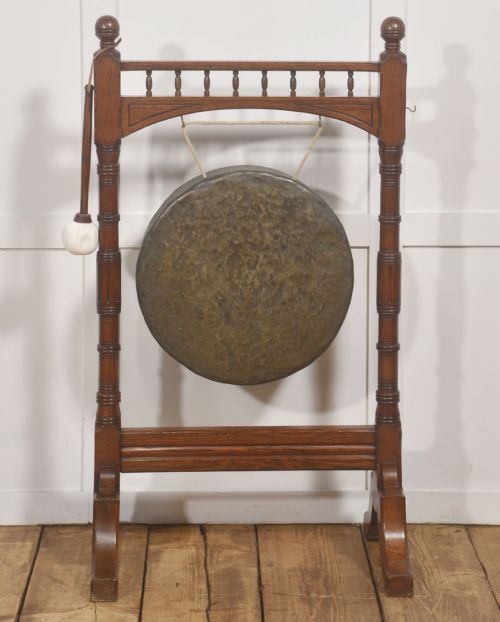
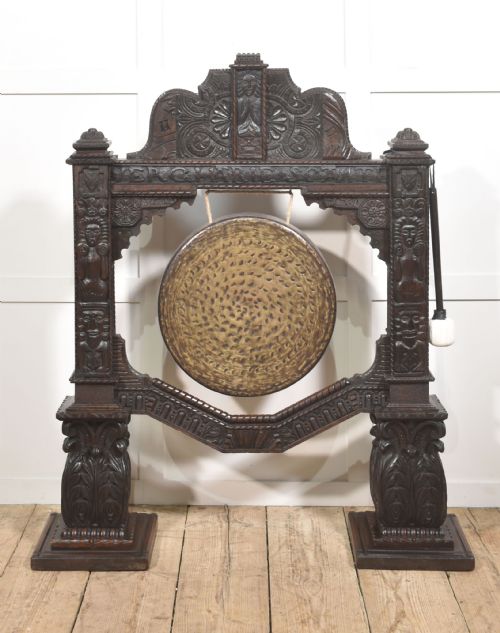
The most common versions on this page are dinner gongs set within carved oak frames and brass pull mechanisms. Such pieces reflect the complex hierarchy of the historical English country house, where service calls needed to be heard across considerable distances.
Objects range from simple brass counter bells to large, monumental carved oak dinner gongs and elaborate hand-embroidered silk and bead bell pulls. Each form illustrates a distinct method of communication within large domestic properties of the nineteenth and early twentieth centuries.
How they were made
Makers utilised cast brass for the striking components and bells, pairing them with heavy cast iron frames to ensure a resonant and lasting tone. Oak was carved to house the larger gongs, providing a dense and stable wooden backing that amplified the sound.
Pull mechanisms and hanging apparatus often incorporated materials such as steel, rope, leather, and wool. Finer domestic examples featured intricate hand embroidery executed in silk and glass beads on backing fabrics.
Antique House Bells Retail Price Guide 2026
Typical asking prices for house bells among the pieces listed under this phrase on Sellingantiques today, from the lower quarter to the upper quarter. They describe what is for sale here now, not the wider market.
The listings on this page span the Georgian, Victorian, and Edwardian eras, utilising brass, carved oak, steel, and silk.
What varies in quality
Quality in these domestic service pieces rests upon the crispness of the brass casting and the depth of the oak carving. Finer gongs and bells display clean, unblemished metal surfaces and robust woodwork that has survived decades of heavy daily use.
The sophistication of the secondary materials also dictates the standing of a piece. Textile elements like hand-embroidered silk and bead bell pulls demonstrate superior craftsmanship through tight, even stitching and well-preserved decorative patterns.
The Antique House Bells Glossary
- Bell pull
- A decorative strap or cord suspended in a room, connected by wires or cranks to a bell below stairs. They allowed inhabitants to summon servants without leaving their seats.
- Dinner gong
- A large metal disc or bowl struck with a mallet to announce meals in large country houses. They were frequently mounted in decorative carved oak frames.
- Counter bell
- A freestanding bell placed upon a desk or shop counter, featuring a spring-loaded plunger or dome. Staff pressed the top to ring the bell and attract attention.
- Servants' bell name plate
- A small indicator plaque associated with a mechanical bell system, inscribed to show which room was calling. They formed part of an extensive network across the service quarters.
Antique House Bells: Frequently Asked Questions
How did historic house bells work?
Most domestic systems relied on complex networks of wires, cranks, and bell cranks hidden behind walls and ceilings. Pulling a cord in a distant parlour would trigger a specific bell or drop a mechanical indicator in the servants' quarters.
Simpler devices, such as counter bells and door hardware, operated independently through direct spring action or gravity. Dinner gongs were strictly acoustic instruments played by hand to signal the household.
Where were bell pulls placed?
Bell pulls were hung beside fireplaces, near doorways, or beside beds in principal rooms of grand houses. Their positioning allowed residents convenient access from seating or resting areas.
Surviving examples often retain decorative mounts and long vertical straps made from embroidered silk, wool, and beadwork to complement the interior decoration of the room.
How do I date an antique bell?
Dating relies on the prevailing style, manufacturing materials, and mechanical construction methods evident in the piece. Georgian and early Victorian examples often display simpler brass castings and hand-forged iron components.
Later Victorian and Gothic Revival pieces frequently feature heavier oak carving, elaborate stamped brass, and more complex mechanical mountings characteristic of the mid to late nineteenth century.
How can I display a dinner gong?
Dinner gongs mounted in carved oak frames suit entrance halls, living rooms, or large dining spaces. Their substantial wooden frames allow them to stand securely on sideboards or hang from sturdy structural walls.
Care should be taken to mount heavy iron and brass elements securely to prevent strain on the surrounding woodwork or plaster.