



Antique Highland Cow
These antique highland cow pieces bring the romance of the Scottish landscape into your rooms through oil paintings, ceramic vases, and taxidermy.
Antique Highland Cow
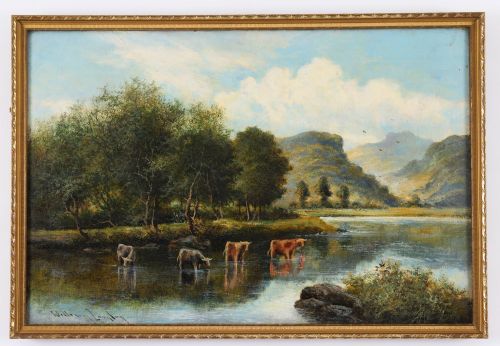
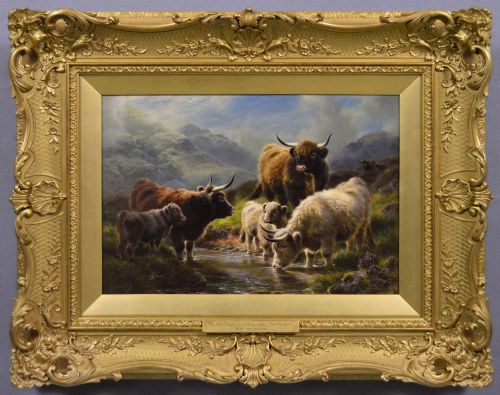
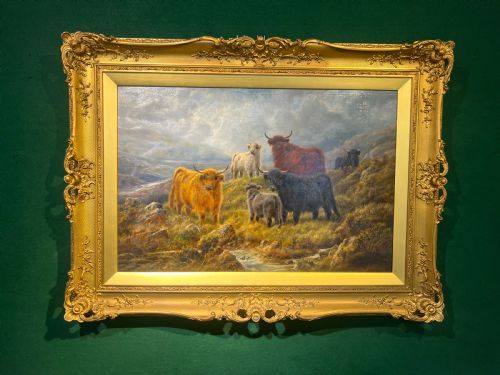
When you search for antique highland cow, you are looking at oil paintings, decorative vases, and taxidermy mounts depicting cattle in Scottish landscapes. These works capture the rugged scenery of the Highlands, often framing the animals near lochs and streams.
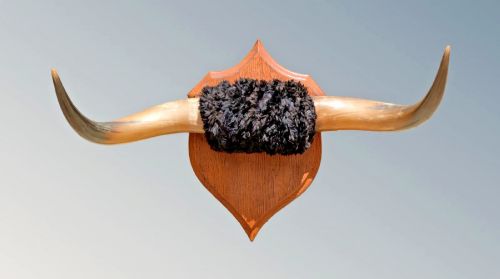
You are most likely to meet Victorian and Edwardian oil paintings on canvas, framed in giltwood. The selection also includes Royal Worcester vases painted with cattle and steer horns mounted on oak shields.
The subjects range from tranquil morning mists on Ben Lawers to pastoral scenes by established artists. Each piece reflects the nineteenth and early twentieth century fascination with Scottish nature and rural life.
How they were made
The paintings are executed in oil paint on canvas, capturing the texture of the cattle coats and the atmospheric light of the Scottish lochs. These canvases are typically housed in heavy giltwood and gold leaf frames that suit the period aesthetic.
Ceramic pieces, such as the vases, are hand-painted with detailed scenes of cattle before being glazed and fired. Taxidermy and horn pieces utilise natural steer horns mounted onto shaped oak shields or hall stands using traditional carpentry methods.
Antique Highland Cow Retail Price Guide 2026
Typical asking prices for highland cow among the pieces listed under this phrase on Sellingantiques today, from the lower quarter to the upper quarter. They describe what is for sale here now, not the wider market.
Several cattle have better hair than the artists who painted them.
What varies in quality
The distinction between items rests upon the skill of the brushwork in the oil paintings and the precision of the hand-painting on porcelain. Works by named artists demonstrate a superior command of light, anatomy, and atmospheric depth compared to unsigned decorative canvases.
Physical preservation also marks the range, from well-maintained gilt frames and crackle-free oil surfaces to worn mountings on horn and oak shields. The depth of the landscape composition and the naturalistic rendering of the cattle separate standard decorative items from finer works.
William Langley·Robert Watson·William Watson Jnr·Henry Robinson Hall·George Turner·John W Morris·Gustave De Brianski·Royal Worcester·Harry Stinton·Charles Jones
The Antique Highland Cow Glossary
- Giltwood
- Wood carved and covered with a thin layer of gold leaf or gold paint. This finish creates the ornate frames typical of Victorian oil paintings.
- Oil on Canvas
- Pigments bound in a drying oil medium applied to stretched woven fabric. This was the primary medium for nineteenth-century landscape and animal painting.
- Steer Horns
- The natural horns of cattle used in taxidermy mounts and hall stands. They are frequently attached to oak shields or wooden furniture.
- Pastoral
- A style of art that depicts rural life and domesticated animals in an idealized landscape. These scenes emphasise peaceful coexistence between nature and agriculture.
Antique Highland Cow: Frequently Asked Questions
How do I care for an oil painting?
Keep paintings away from direct sunlight and sudden temperature changes to protect the canvas and the giltwood frame. Dust the surface gently with a soft, dry brush without applying pressure to the oil paint.
Avoid using water or chemical cleaners on the canvas or the gold leaf. Professional cleaning should be left to a conservator if the surface accumulates grime over the decades.
Where were these paintings displayed?
These works were created to hang in nineteenth and early twentieth-century domestic interiors, particularly in country houses and drawing rooms. They brought the grandeur of the Scottish Highlands into urban residences.
The large canvases and ornate frames served as focal points above mantelpieces or along hallway walls, reflecting the Victorian taste for naturalism.
How do I identify a Victorian oil painting?
Examine the materials of the stretcher and the canvas preparation, along with the style of the giltwood frame. Victorian works often feature characteristic brushwork and subject matter such as pastoral landscapes.
Many pieces bear the signature of the artist or carry period framing techniques typical of the nineteenth century. Look closely at the craquelure in the oil paint to gauge its age.
What is a horn hall stand?
A horn hall stand is a piece of entrance furniture incorporating natural steer horns mounted onto oak or other woods. These items were used for hanging hats, coats, and walking sticks.
They combine taxidermy elements with practical woodworking, fitting into the Highland Lodge aesthetic popular during the Victorian and Edwardian eras.