






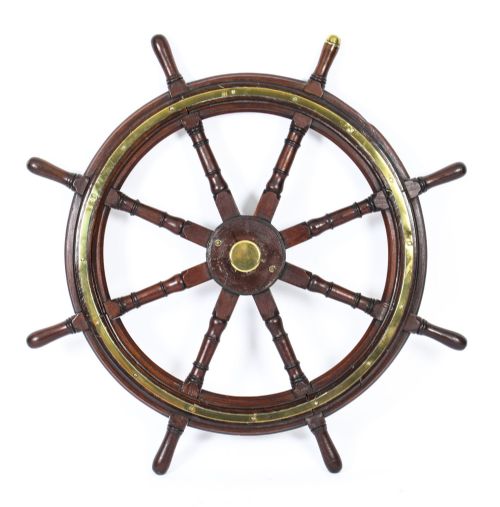

Antique Helm
When you look for an antique helm, you are tracking down timber ship's wheels and binnacles that bring maritime history straight into a room.
Antique Helm
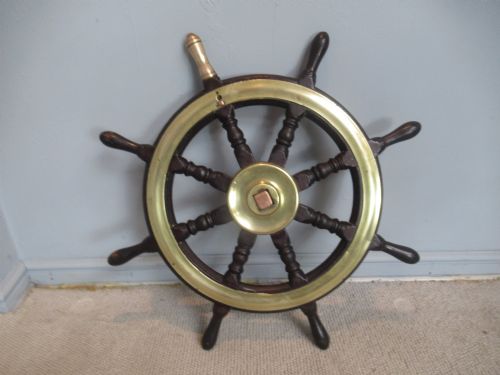
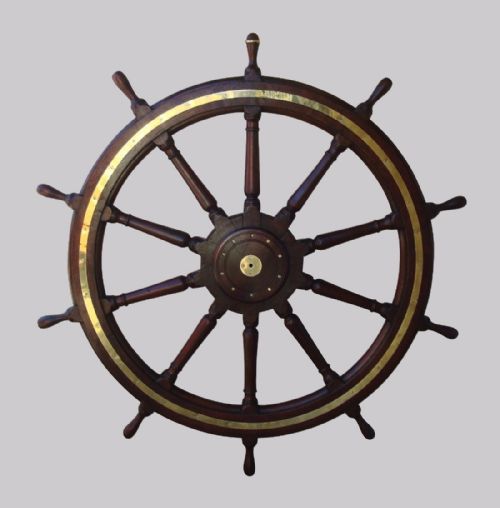
An antique helm primarily manifests as a ship's wheel or related marine apparatus from the nineteenth and early twentieth centuries. These timber wheels span from small Welsh examples in red paint to large teak and brass eight-spoke specimens.
Buyers frequently encounter items carrying specific regional or maker association, alongside maritime clocks housed within steering gear forms. The material record points firmly towards robust utilitarian objects adapted from nautical service into interior settings.
Materials and construction
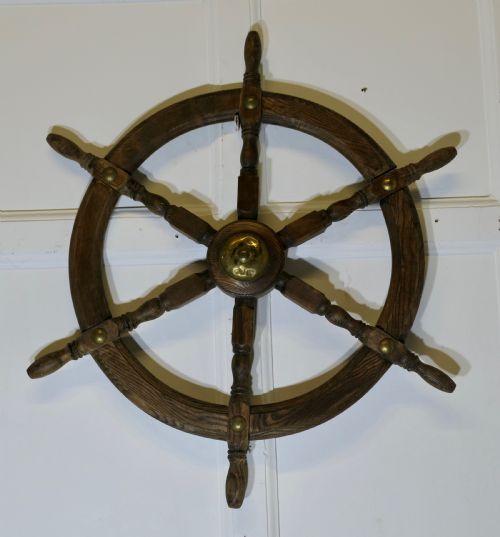
The construction of these helms relies on durable hardwoods such as teak and oak, selected for resistance to marine environments. Brass mounts, fittings, and clock bezels provide structural reinforcement and contrast against the dark timber.
Surface finishes include untouched weathered timber surfaces alongside painted treatments like deep red pigment recorded on Welsh variants. Iron and glass also feature in associated clock dials and binnacle housings.
Antique Helm Retail Price Guide 2026
Typical asking prices for helm among the pieces listed under this phrase on Sellingantiques today, from the lower quarter to the upper quarter. They describe what is for sale here now, not the wider market.
Carmarthenshire contributed a small red-painted wheel, proving that nautical timber occasionally fancied a bright Welsh coat.
Judging quality in marine pieces
Quality rests upon the integrity of the timber frame and the proportion of the spokes relative to the central hub. Larger diameters and original brass hardware elevate the visual presence of a wheel.
The presence of untouched patination and documented provenance or maker details distinguishes standard utility items from notable workshop productions.
Benson Electric Co USA·Gay Vicarino·Pascall Atkey of Cowes
The Antique Helm Glossary
- Binnacle
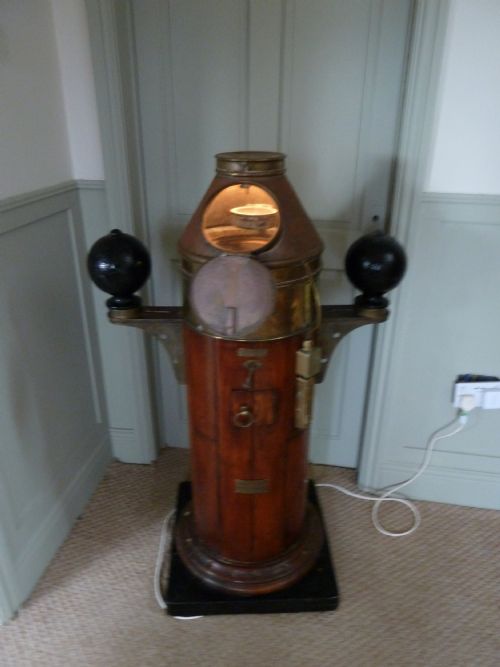
- A upright housing placed near a ship's steering compass to secure navigational instruments. It often incorporates brass and glass elements.
- Teak
- A dense, durable tropical hardwood utilised for marine applications due to its natural oils and resistance to moisture. It ages to a deep brown or grey patina.
- Spoke
- One of the radiating timber rods fitted into the central hub of a ship's wheel to provide leverage for steering. Larger wheels typically feature eight spokes.
Antique Helm: Frequently Asked Questions
What is an antique helm?
An antique helm is a steering wheel or binnacle salvaged from a vessel, dating generally from the nineteenth or early twentieth centuries.
These objects are constructed from hardwoods like teak and oak, often detailed with brass fittings and used today as decorative focal points.
How were these wheels used?
A ship's wheel was mounted on the deck and connected via cables or chains to the rudder, allowing the helmsman to steer the vessel.
They required robust timber construction to withstand heavy seas and constant physical strain during navigation.
How do I style an antique helm?
These large wooden wheels suit rooms with high ceilings, mounted directly to a wall or displayed on a custom stand.
Pair them with neutral backgrounds to highlight the grain of the teak or oak and the gleam of the brass.
How do I date a ship's wheel?
Dating relies on assessing the timber type, construction methods, wear patterns, and any associated brass plaques or maker signatures.
Nineteenth-century examples frequently show heavier timber dimensions and hand-turned joinery compared to later industrial pieces.