





Antique Heavy Sideboard
An antique heavy sideboard grounds a dining room or hall with deep timber and robust proportions.
Antique Heavy Sideboard
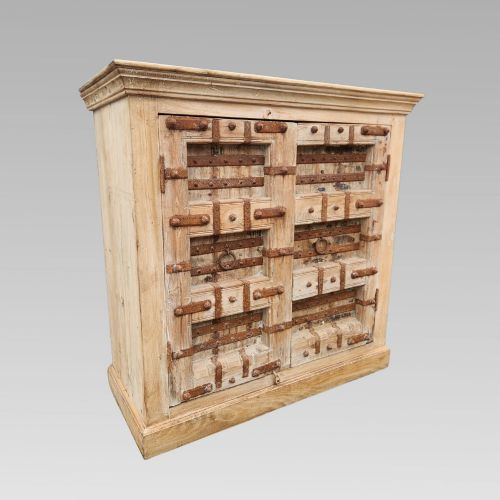
When searching for an antique heavy sideboard, collectors encounter substantial timber case pieces designed for storage and display in dining spaces and halls. These pieces span from the seventeenth century through the Victorian era and into the early twentieth century.
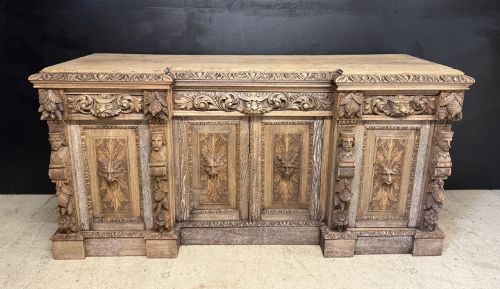
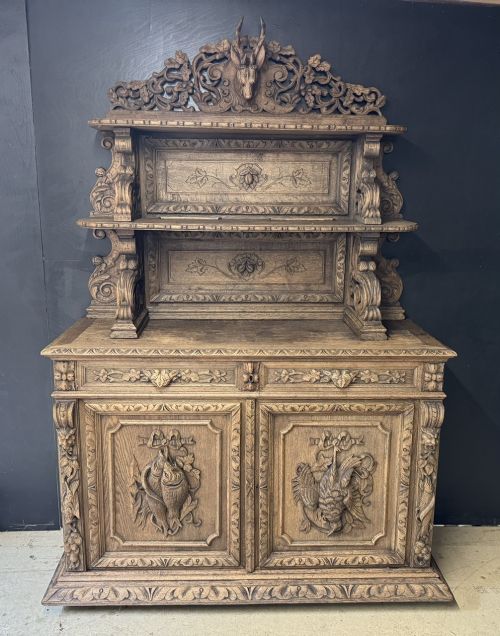
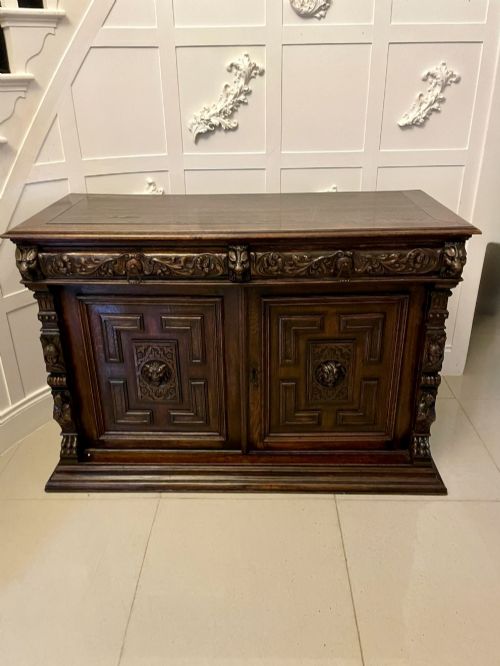
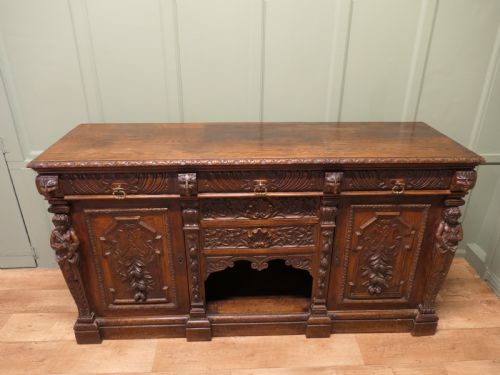
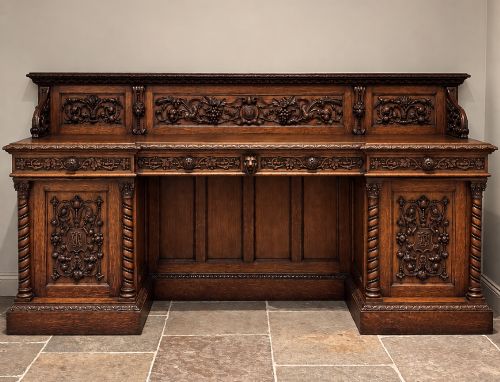
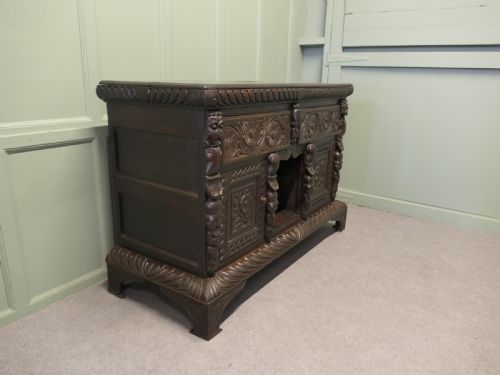
The version most commonly met on this page is the carved oak sideboard from the Victorian period or the early twentieth century. These incorporate deep mouldings, stretcher bases, and substantial panel doors.
Makers often drew upon revival idioms, producing pieces in Jacobean, Renaissance, and Gothic styles. Large proportions and dense timber define the category.
How they were made
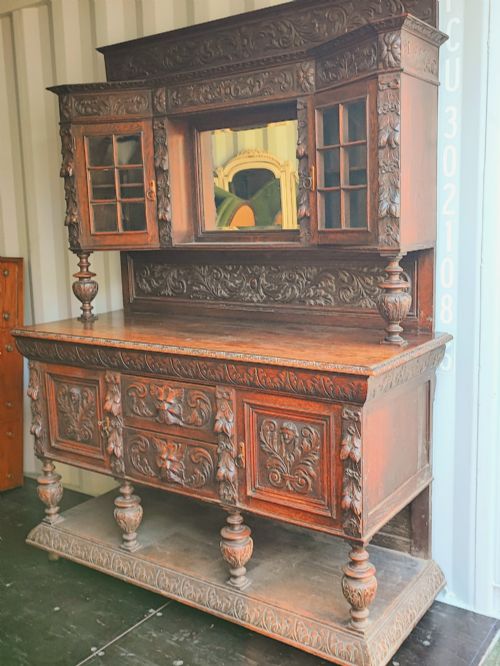
Cabinet makers relied primarily on solid oak, utilising its strength to support grand dimensions and deep relief carvings. Metal elements such as brass handles, iron fittings, and glass mirror plates appear across various examples to accent the timber frames.
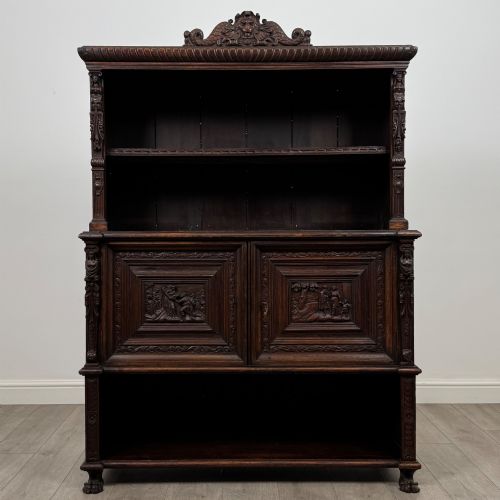
Construction techniques involve heavy joinery, pegged mortise and tenon joints, and board back panels. Carved scenes, green man motifs, and moulded fronts are executed directly into the solid wood surfaces.
Antique Heavy Sideboard Retail Price Guide 2026
Typical asking prices for heavy sideboard among the pieces listed under this phrase on Sellingantiques today, from the lower quarter to the upper quarter. They describe what is for sale here now, not the wider market.
Several sideboards incorporate watchful green man carvings peering out from dense oak foliage.
What varies in quality
The depth and clarity of the carved relief work separate standard production from superior examples. Crisp execution in foliage, figural scenes, and linenfold panels indicates skilled workshop output.
The choice of timber grain and the integrity of the original hardware influence overall distinction. Well-figured oak boards and substantial brass mounts elevate the presence of the piece.
The Antique Heavy Sideboard Glossary
- Stretcher base
- A horizontal timber connecting the lower legs of a piece to provide structural rigidity. This construction method adds stability to heavy case furniture.
- Renaissance Revival
- A nineteenth-century design movement drawing inspiration from sixteenth-century European architecture and ornament. Pieces in this style utilise heavy cornices, columns, and pronounced carvings.
- Green Man
- A sculptural motif depicting a human face entwined with foliage, leaves, or vines. This architectural and furniture carving symbolises rebirth.
- Court cupboard
- A formal enclosed storage piece with an upper recessed cabinet supported by columns or carved posts. These items provide shelved storage behind panel doors.
Antique Heavy Sideboard: Frequently Asked Questions
What rooms suit an antique heavy sideboard?
These large timber pieces suit spacious dining rooms, grand hallways, and drawing rooms with high ceilings. Their substantial footprint requires adequate wall space to sit properly without crowding the room.
They provide extensive interior storage for dining china, linen, and silver while offering a broad top surface for serving or display.
How do I identify a Victorian Gothic sideboard?
Victorian Gothic sideboards display architectural motifs drawn from medieval church design, including pointed arches, trefoils, and heavy linenfold panelling. The timber is typically dark oak.
Hardware often incorporates forged iron hinges and brass drop handles that complement the austere and monumental character of the style.
What is a green man carving?
A green man carving depicts a face surrounded by or emerging from leaves and branches. It appears frequently on nineteenth-century oak furniture and revival sideboards.
This decorative detail draws on ancient traditions and adds a distinct folkloric element to the woodwork.
How do I care for heavy oak furniture?
Keep oak furniture away from direct heat sources and strong sunlight to prevent the timber from drying out or splitting. Dust the carved surfaces regularly with a dry cloth.
Apply a traditional beeswax polish occasionally to nourish the grain and maintain the natural lustre of the wood.