



Antique Hearth Fender Rail
An antique hearth fender rail frames the fireplace, keeping stray embers in check while offering a solid place to rest your feet.
Antique Hearth Fender Rail
When you search for an antique hearth fender rail, you encounter a practical fireside barrier designed to protect the room and hearth rug. These pieces range from simple low kerbs to more substantial seating options.
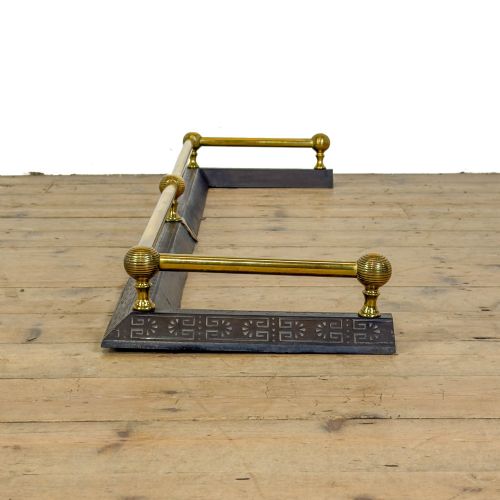
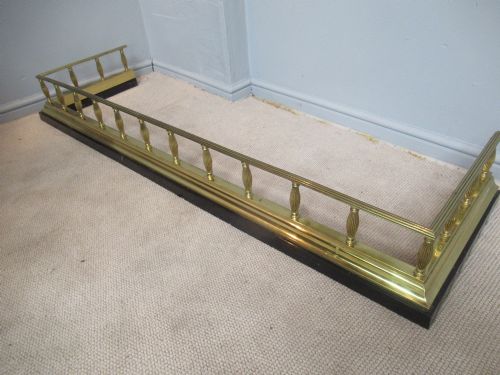
The versions most common on this page date from the Victorian and Edwardian periods, utilising brass, iron, and steel. Many examples feature adjustable mechanisms or integrated leather seats for fireside warmth.
How they were made
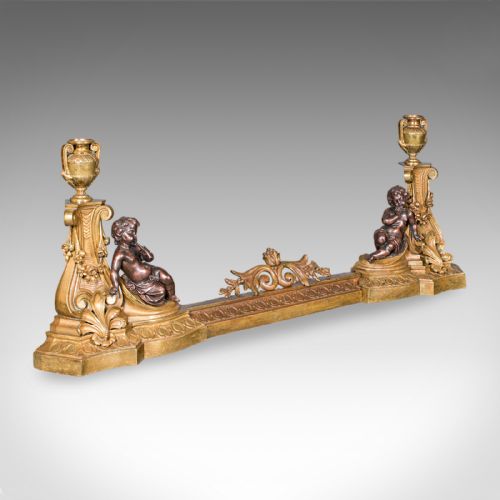
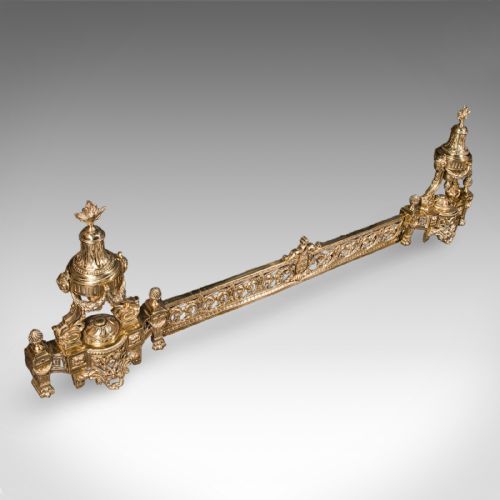
Makers shaped heavy cast and sheet brass, iron, and steel into rigid frames, often joining the components with secure mechanical fastenings. Gilding, polychrome finishes, and pierced detailing provided decorative contrast against the dark metal.
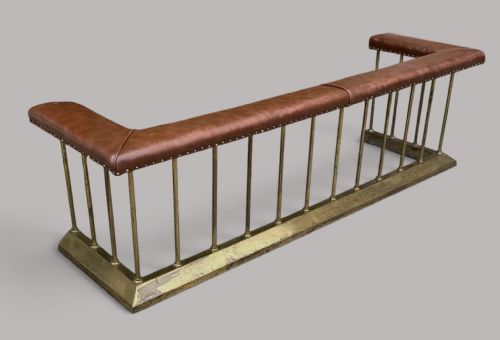
Club variations incorporated wooden internal structures upholstered in mature tan leather for seating. Specialised nursery designs added an elevated rail to keep children at a safe distance from the fire.
Materials span brass, iron, steel, and leather across nineteenth and early twentieth-century periods.
What varies in quality
The substance of the metal gauge dictates the primary difference between standard production and heavier, high-end examples. Substantial brass and thick iron frameworks retain their structural rigidity over decades of heavy hearth use.
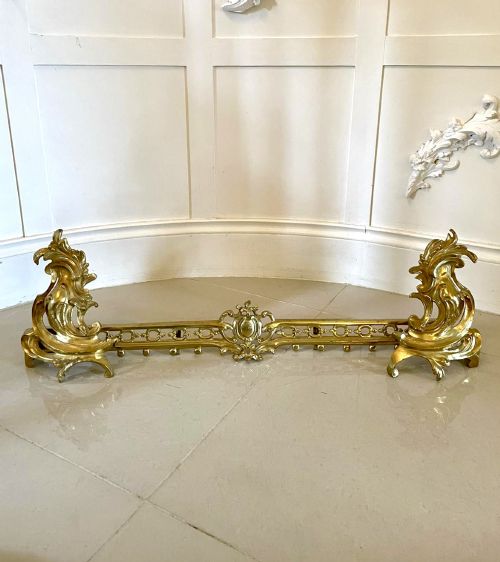
Refinement in surface decoration distinguishes the work, from simple pierced steel plates to ornate French cast brass scrollwork and finely stitched leather upholstery.
The Antique Hearth Fender Rail Glossary
- Club fender
- A low fireside barrier featuring a padded leather top designed for sitting. These originated in gentleman's clubs to provide close warmth to the fire.
- Fire kerb
- A low metal barrier fitted directly around the hearth stone. It prevents coals and ash from rolling onto the floorboards.
- Nursery fender
- An elevated protective guard designed to keep children away from open flames. Some examples incorporate an integrated top rail.
- Gilded brass
- Brass treated with a gold-coloured finish or gold leaf layer to enhance brilliance. This technique appears frequently on French and high-status English pieces.
Antique Hearth Fender Rail: Frequently Asked Questions
How do I choose the right size?
Measure the width and depth of your hearth stone carefully to ensure the metal frame sits properly within the perimeter. Adjustable models offer flexibility if your fireplace opening falls between standard dimensions.
Account for the clearance needed for fire irons and ensure the fender leaves sufficient walking space on the hearth rug.
Can I sit on a club fender?
Many club fenders feature sturdy internal framing and leather upholstery specifically built to support sitting by the fire. Check the internal structure and leather condition to ensure it remains stable for daily use.
Lighter brass and iron kerbs without upholstered tops are designed solely as protective barriers rather than seating.
How do I clean antique brass?
Dust the metal regularly with a soft, dry cloth to prevent soot accumulation. Avoid harsh chemical polishes that strip away the aged patina built up over decades.
Leather top rails benefit from occasional treatment with appropriate conditioning balms to keep the hide supple.
What is the difference between iron and brass?
Iron and steel provide a darker, heavier structural presence often associated with industrial or restrained Victorian designs. Brass offers a brighter metallic finish that reflects firelight and matches traditional hearth accessories.
Combinations of both metals appear frequently on nineteenth-century pieces to contrast dark iron bases with polished brass rails.