




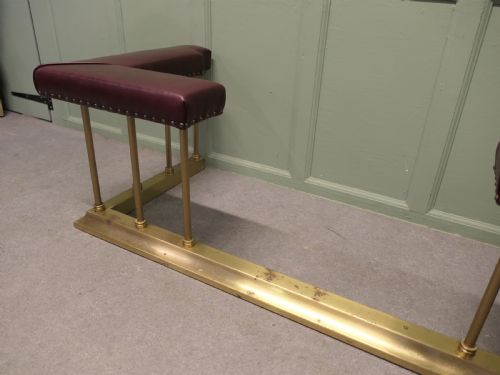


Antique Hearth Bench
An antique hearth bench provides fireside seating and structural support, spanning sturdy timber stools to heavy metal club fenders.
Antique Hearth Bench
When you search for an antique hearth bench, you encounter low fireside seating designed to sit directly around or near the fireplace. The listings here primarily comprise robust club fenders alongside timber stools spanning the eighteenth, nineteenth, and early twentieth centuries.
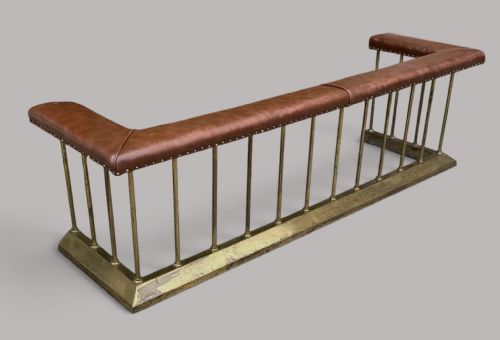
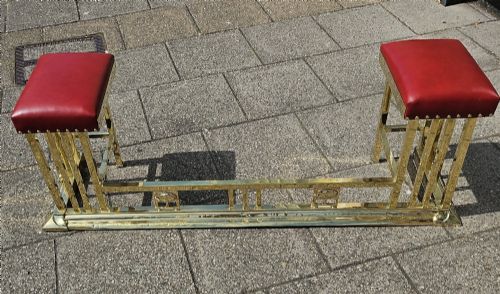
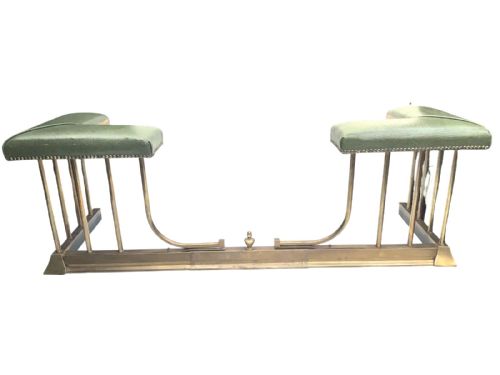
The club fender forms the most prominent group within these items, featuring metal frames paired with upholstered seats for fireside perching. These range from substantial brass iterations to steel and iron formats produced during the Victorian and Edwardian eras.
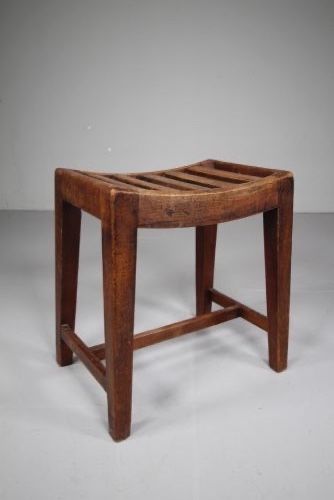
Alongside metal fenders, the selection includes traditional timber stools utilising woods such as oak, walnut, and mahogany. These take various formats including long foot stools, carriage stools, and carved seating originating from Georgian periods up to the nineteen-twenties.
How they were made
Makers constructed the metal frameworks of club fenders utilising cast steel, brass, and copper, frequently combining these with heavy iron bases. These metal components were often polished, silvered, or cast into rigid architectural shapes designed to withstand intense hearth heat.
Timber frames for stools and bench bases relied upon hardwoods like oak, walnut, and mahogany, shaped through traditional joinery and carving techniques. Craftsmen occasionally integrated cane panels or solid wooden tops into the construction.
Upholstery for the seating portions utilised durable materials including leather, fabric, tweed, and textile. Workshops frequently employed Chesterfield buttoning techniques to secure the leather padding to the firm internal frame.
One robust nineteenth-century steel club fender originates specifically from The In And Out Club.
What varies in quality
The calibre of metalwork dictates much of the distinction in club fenders, separating heavy cast iron or substantial brass assemblies from lighter fabricated tubes. Superior pieces demonstrate crisp casting detail, sturdy gauge metal, and secure structural joints that withstand regular fireside use.
Wood selection and carving execution define the standard among timber stools and bench frames. Finer examples exhibit carefully chosen mahogany, walnut, or oak with deeply articulated carving rather than mechanical shaping.
Upholstery finish and leather selection significantly influence the overall standard of the piece. High-grade items employ mature, thick leather hides properly secured to the frame, maintaining structural tension across the seat.
The Antique Hearth Bench Glossary
- Club Fender
- A low fireside seat built around an open hearth, typically featuring a metal frame and a padded leather top. These structures originated in gentlemen's clubs to provide comfortable proximity to the fire.
- Chesterfield Seat
- A deeply buttoned upholstered cushion style commonly found on club fender tops. This traditional method secures the leather padding with indented buttons for a firm surface.
- Carriage Stool
- A compact portable seating form designed for travel or domestic fireside use. These frequently incorporate durable upholstery such as tweed to endure frequent handling.
- Gothic Revival
- An architectural and decorative style drawing upon medieval forms, seen in nineteenth-century stool suites. This aesthetic incorporates pointed arches and heavy carved ornamentation.
- Slatted Stool
- A seating design featuring open wooden bars across the top surface rather than solid upholstery. These items rely on precise carpentry for stability.
Antique Hearth Bench: Frequently Asked Questions
What is a club fender?
A club fender is a specialised fireside bench featuring a metal frame that surrounds the hearth opening. It combines rigid structural metalwork with an upholstered top for seating.
These pieces emerged to offer comfortable seating close to the fire while protecting inhabitants from sparks.
How do I style a hearth bench?
Position your hearth bench directly in front of or around the fireplace hearth to anchor the room's seating arrangement. Match the metal finish or timber tone with existing fireside accessories.
Ensure adequate clearance around the fireplace opening for safe usage and unhindered access to the fire.
How do I date an antique stool?
Examine the underlying timber species, joinery methods, and the style of any carved ornamentation to determine the period. Georgian pieces often display refined mahogany or walnut construction, whereas Victorian examples favour heavier carved walnut or cast metal.
Check for tool marks and construction consistency that indicate period manufacturing techniques rather than later reproductions.
What materials were used for seats?
Leather serves as the predominant upholstery material for metal club fenders, often appearing in mature tan or green shades. Fabric, tweed, and textile options also occur on wooden stools and specific fender designs.
Internal padding relied on traditional stuffing methods secured beneath durable outer coverings.