


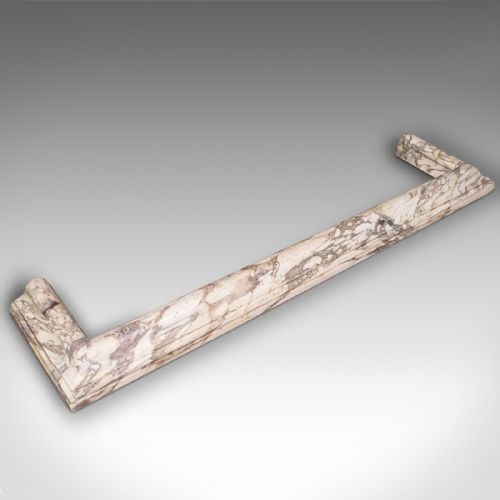
English Fireplace Surround
These English fireplace surround pieces bring authentic period warmth to a room, ranging from club fenders with leather seats to marble surrounds.
English Fireplace Surround
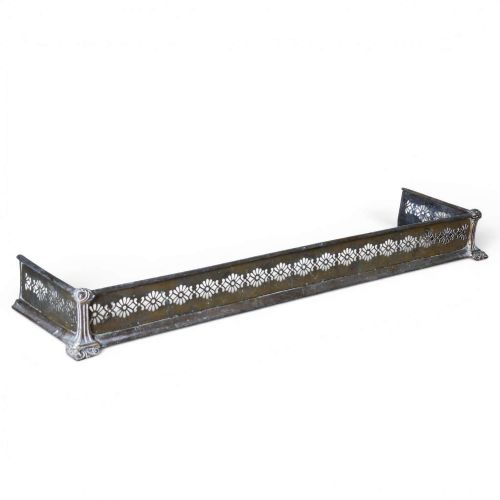
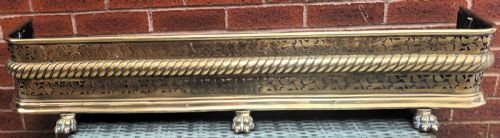
When you search for an english fireplace surround, you encounter a distinct assembly of hearth furnishings and architectural fixtures that anchor a period room. The selection spans sturdy club fenders with leather upholstery, pierced brass kerbs, and grand marble surrounds.
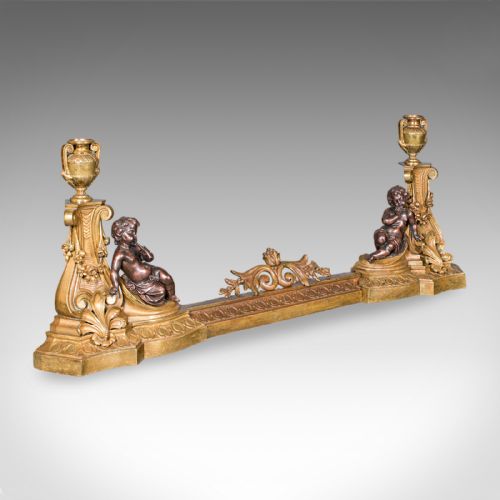
The versions you meet most frequently on this page date from the nineteenth century into the early twentieth century. They include traditional Victorian designs alongside Arts and Crafts oak pieces and flowing Art Nouveau copper and brass work.
Beyond the standard kerbs, the category embraces related hearth accessories and arched overmantle mirrors that complete the fireside composition. Each form reflects the domestic habits of its period, from formal Georgian marble installations to practical country house club fenders.
How they were made
Club fenders integrate functional leather upholstery across padded seats designed for fireside seating, combining metal frames with traditional hide. Overmantle mirrors employ carved wood and gesso frameworks finished with gilt detailing to reflect the light of the hearth.
The listings span the Victorian, Edwardian, and Georgian periods, utilising brass, steel, marble, and oak.
What varies in quality
The distinction between standard examples and superior pieces rests on the weight of the metal and the depth of the hand-finishing. Substantial brass, bronze, and thick oak framing demonstrate a commitment to longevity that lighter construction lacks.
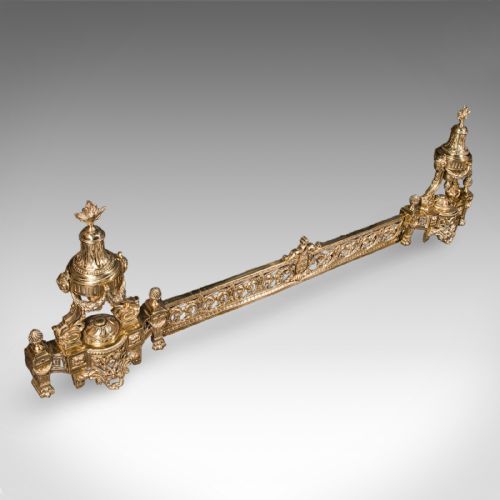
Subtle details such as finely pierced brass work, patinated bronze surfaces, and well-preserved leather upholstery elevate an item. Quality also shows in the architectural ambition of the piece, from simple adjustable kerbs to grand carved marble surrounds.
William Birch
The English Fireplace Surround Glossary
- Club fender
- A low fireside seat built with a metal frame and a padded leather top, allowing people to sit close to the hearth. These sturdy items originated in country houses during the Victorian era.
- Fire kerb
- A low metal barrier placed around the hearth to contain stray embers and protect the room. They appear in brass, steel, and copper.
- Gesso
- A plaster-like material applied to wood frames and carved before being gilded or painted. It provides a smooth base for ornate decorative moulding.
- Overmantle mirror
- A large mirror designed to hang directly above the mantelpiece, often matching the architectural style of the fireplace surround. They frequently feature arched tops and carved wooden frames.
English Fireplace Surround: Frequently Asked Questions
What is a club fender?
A club fender is a low, U-shaped seat built around the hearth, featuring a metal frame and leather-upholstered top rails. It allowed people to sit directly beside the fire for warmth in large country houses.
Over time, these pieces evolved in scale and upholstery style, becoming a central feature of traditional English interiors during the Victorian and Edwardian periods.
How do I date a brass fender?
Dating a brass fender involves examining the weight of the metal, the method of assembly, and the decorative style. Pierced designs often point to nineteenth-century Victorian manufacturing techniques.
Art Nouveau examples introduce flowing, organic motifs typical of the late nineteenth and early twentieth centuries, while simpler adjustable kerbs reflect later utilitarian designs.
What materials are common?
These hearth pieces utilise a range of robust materials suited to the fireside environment. Brass, steel, bronze, and copper provide durable metal frameworks that withstand heat and daily use.
Heavier items incorporate solid oak, carved gesso, and leather upholstery, while grand architectural surrounds employ carved marble.
How were overmantle mirrors used?
Overmantle mirrors were mounted directly above the fireplace to capture and reflect the light from the flames and windows into the room. Their arched frames and gilt finishes balanced the visual weight of the hearth below.
They served as the primary decorative focal point on the chimney breast in nineteenth-century reception rooms.