
Antique Hardwood Table
An antique hardwood table brings dense, characterful timber and intricate carving from distant workshops straight into a modern room.
Antique Hardwood Table
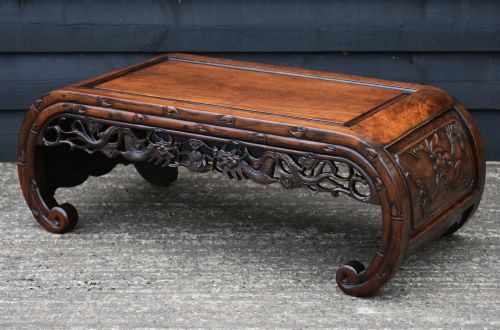
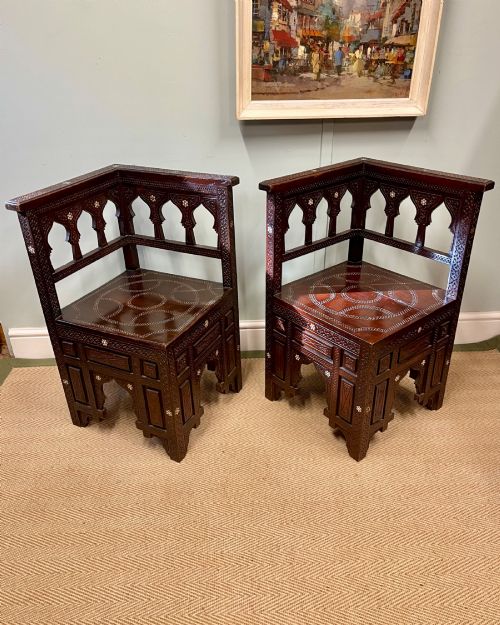
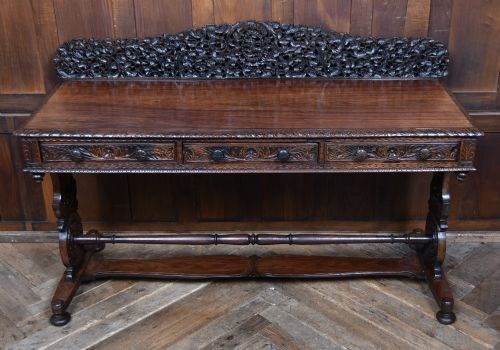
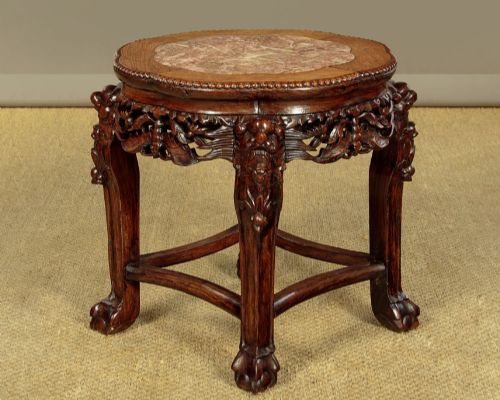
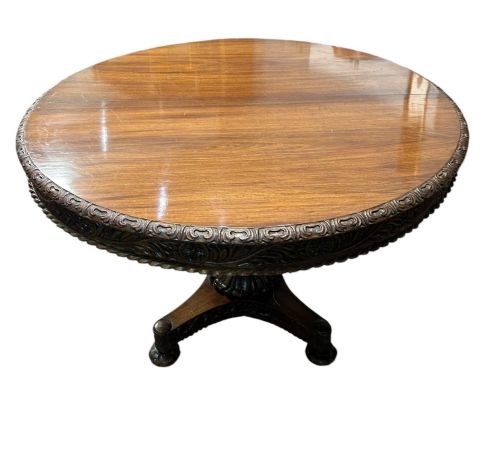
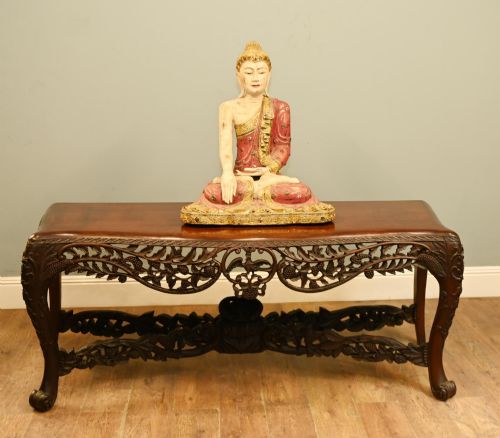
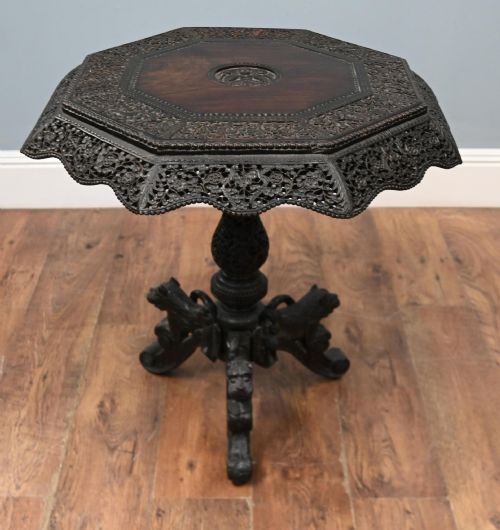
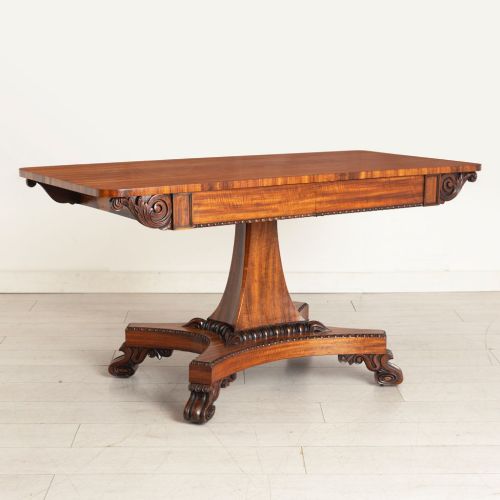
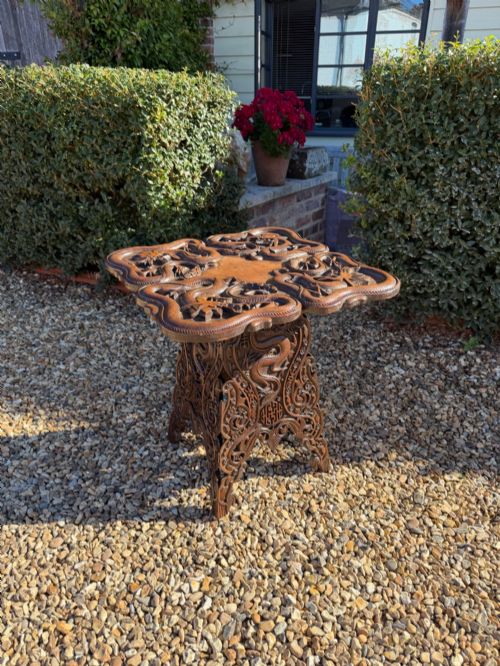
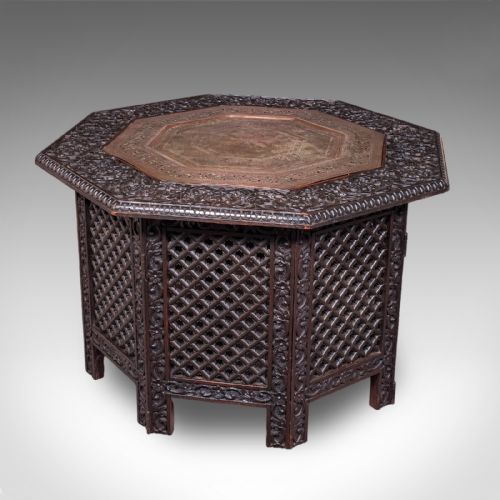
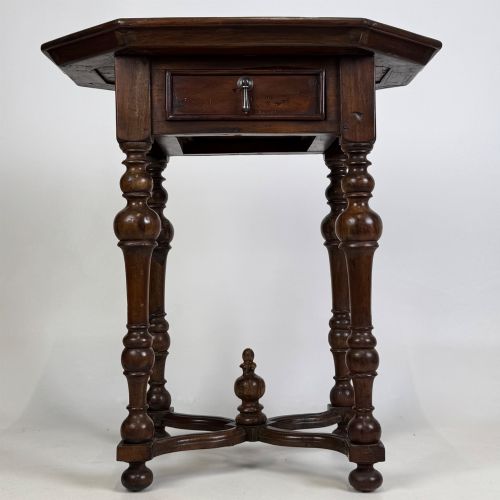
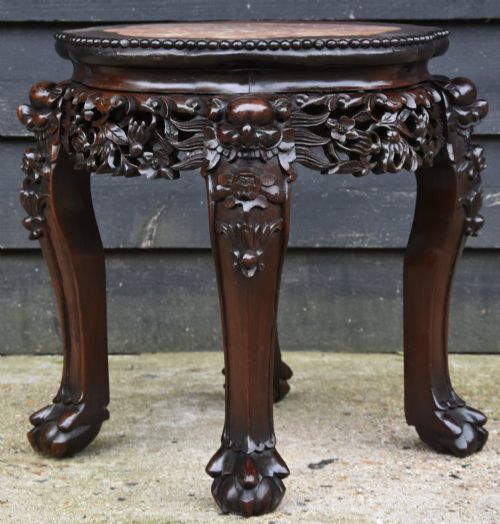
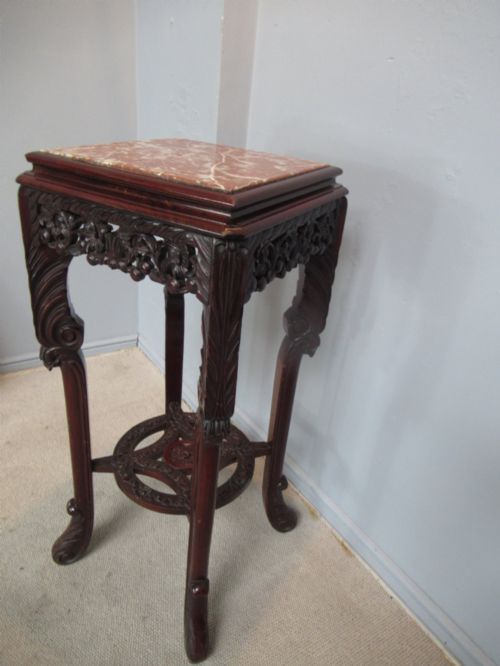
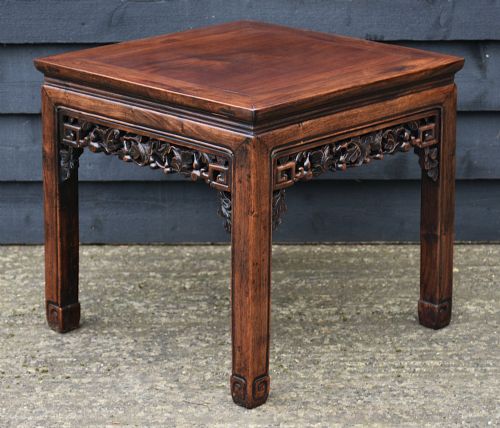
An antique hardwood table encompasses forms ranging from low plant stands and side tables to substantial console and centre tables. These pieces draw heavily on 19th-century Chinese Qing dynasty aesthetics, Anglo-Indian colonial traditions, and Moorish revival designs.
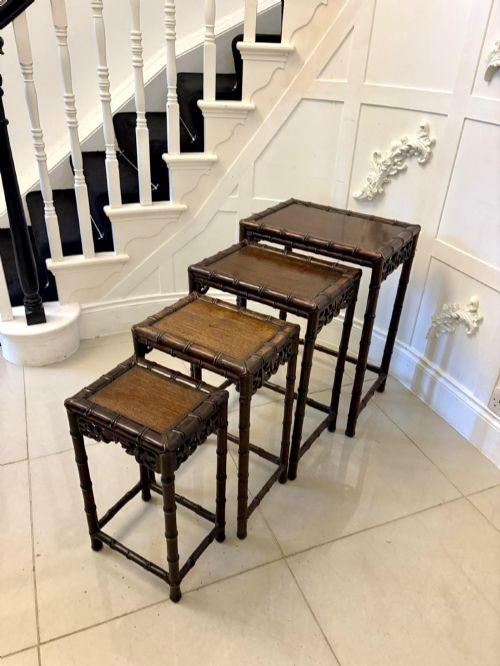
Buyers frequently encounter compact low tables and nesting sets alongside occasional tables intended for display or tea. Their origins span Burma, India, China, and Syria, bringing distinct regional carving and joinery traditions to each surface.
The term antique hardwood table covers heavy tropical timbers selected for their durability and rich grain. Makers utilised these dense materials to support deep relief carving and complex inlays.
How they were made
Craftsmen shaped these tables from dense tropical timbers such as rosewood, padauk, and hongmu, relying on their natural weight and strength. These heavy hardwoods allowed artisans to execute deep, undercut relief carvings without compromising the structural integrity of the frame.
Surfaces frequently incorporate contrasting materials, integrating marble insets, brass sheeting, copper, and mother of pearl. Bone and ivory also appear as fine inlaid details, creating geometric patterns or pictorial scenes across the dark timber tops.
The inventory spans Chinese Qing dynasty designs, Anglo-Indian colonial pieces, and Syrian two-tier side tables.
What varies in quality
Quality rests primarily in the crispness and depth of the hand carving, where sharp, undercut details distinguish superior work from softer, mechanical production. The density and selected grain pattern of the underlying timber also set the finest pieces apart.
The integration of decorative inlays dictates the tier of the piece, with precise, flush fitting of mother of pearl or bone showing superior workshop standards. Construction methods, such as traditional joinery that accommodates wood movement without metal fasteners, further define the better examples.
The Antique Hardwood Table Glossary
- Padouk
- A heavy, durable tropical hardwood with a reddish hue that darkens with age. It provides a stable canvas for intricate colonial and oriental carving.
- Hongmu
- A traditional Chinese term translating to red wood, used for dense, high-status tropical hardwoods. It encompasses dense timbers prized for furniture and scholars' objects.
- Altar table
- A traditional Chinese form featuring an elongated rectangular top with upturned ends or recessed legs. These pieces originated in domestic and ceremonial spaces before entering the export market.
- Nesting tables
- A set of graduated tables designed to slide neatly beneath one another. This space-saving form gained popularity in late 19th-century design.
- Shibayama
- A Japanese decorative technique utilising inlaid mother of pearl, ivory, and tortoiseshell to create pictorial panels. This intricate craft appears on small decorative screens and panels associated with furniture.
Antique Hardwood Table: Frequently Asked Questions
What woods were used for these tables?
Makers relied on dense tropical timbers such as rosewood, padauk, and hongmu. These heavy woods provided the structural strength required for deep carving.
Such timbers naturally resist wear and offer a dark, rich background for contrasting inlays of bone, mother of pearl, or marble.
How do I care for a hardwood surface?
Keep the timber away from direct heat sources and sudden temperature shifts to prevent the wood from splitting. Regular dusting with a soft cloth maintains the finish.
Avoid silicone-based polishes and instead use traditional beeswax sparingly to nourish the grain of the hardwood.
Where were these tables made?
Production centred across Asia and the Middle East, with major hubs in China, India, Burma, and Syria. Many pieces were created specifically for the export market.
Colonial administrators and European traders commissioned or purchased these items, blending local craftsmanship with Western furniture forms.
How do I identify Chinese export pieces?
Look for traditional motifs such as dragons, key-fret borders, and auspicious symbols carved into rosewood or padauk frames. Construction often incorporates traditional joinery without modern metal fasteners.
Insets of Dali marble or delicate mother of pearl inlay further signal the workshops of the late 19th-century Qing dynasty.